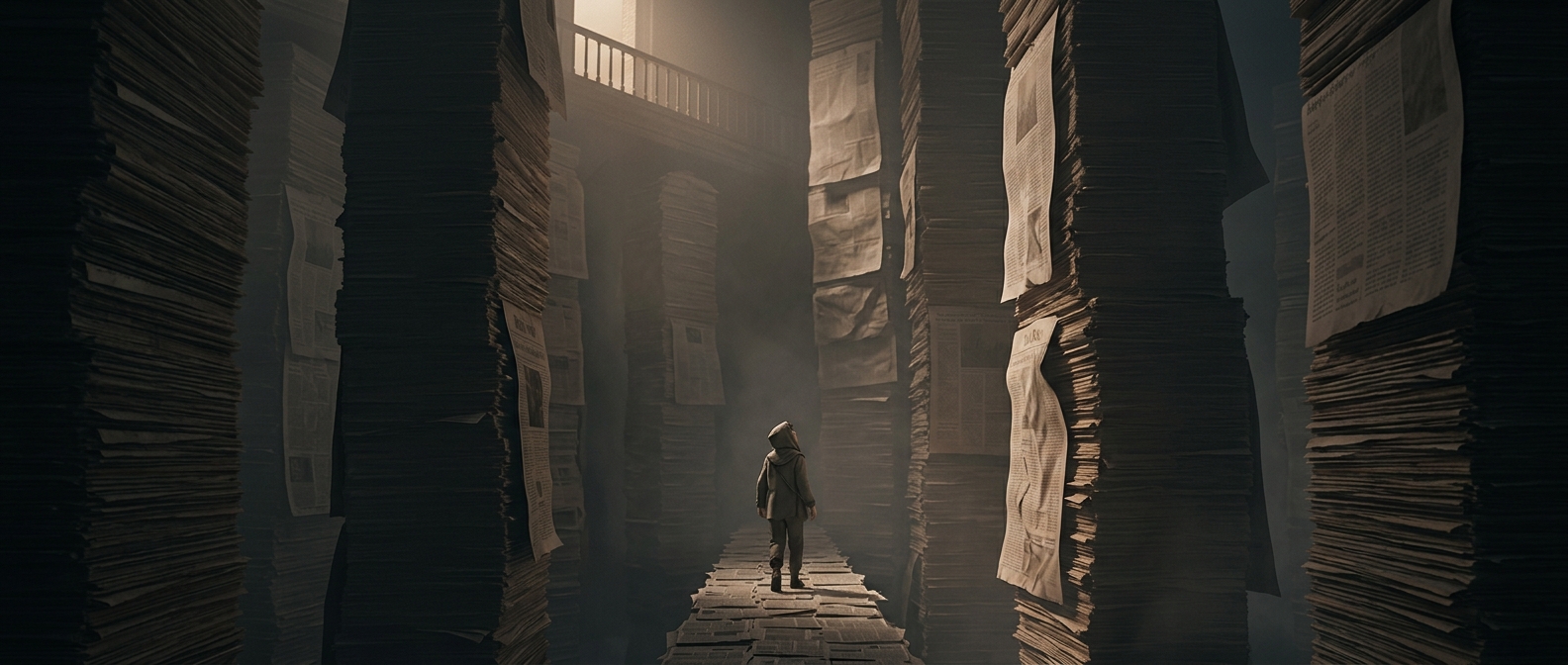
Why newspaper pages feel different
Newsprint is made to be produced quickly and cheaply, not to stay bright and pristine for decades. Its fibers are less extensively processed than those in smoother, longer-lasting papers, leaving a rougher, more absorbent surface. That helps keep material and production costs down, but it also affects how ink behaves on the page.
Where the ink goes
In many newspaper presses, ink is transferred onto paper that has not been coated to seal its surface. Some ink is drawn into the paper’s pores rather than sitting in a crisp, dry layer on top. Because the fibers and surface are uneven, fine details can look softer than they would on glossy magazine stock.
The paper can take up ink quickly, but that does not mean every trace is instantly fixed. When freshly printed sheets are stacked or handled, a little ink may transfer from one surface to another—or onto a reader’s fingertips. The effect is especially noticeable with heavy areas of dark printing.
A tradeoff built into the format
A newspaper has to carry a large amount of information on a tight production schedule and at a price that makes broad circulation practical. Smooth coated paper could give photographs sharper edges and keep ink more firmly on the surface, but it would add cost and weight. Newsprint makes the daily run more economical, while accepting pages that crease easily, fade or yellow with age, and may leave a faint dark mark on a hand.
That smudge is a small physical reminder of the newspaper’s bargain: fast, inexpensive paper designed to be read now, rather than preserved like a book.