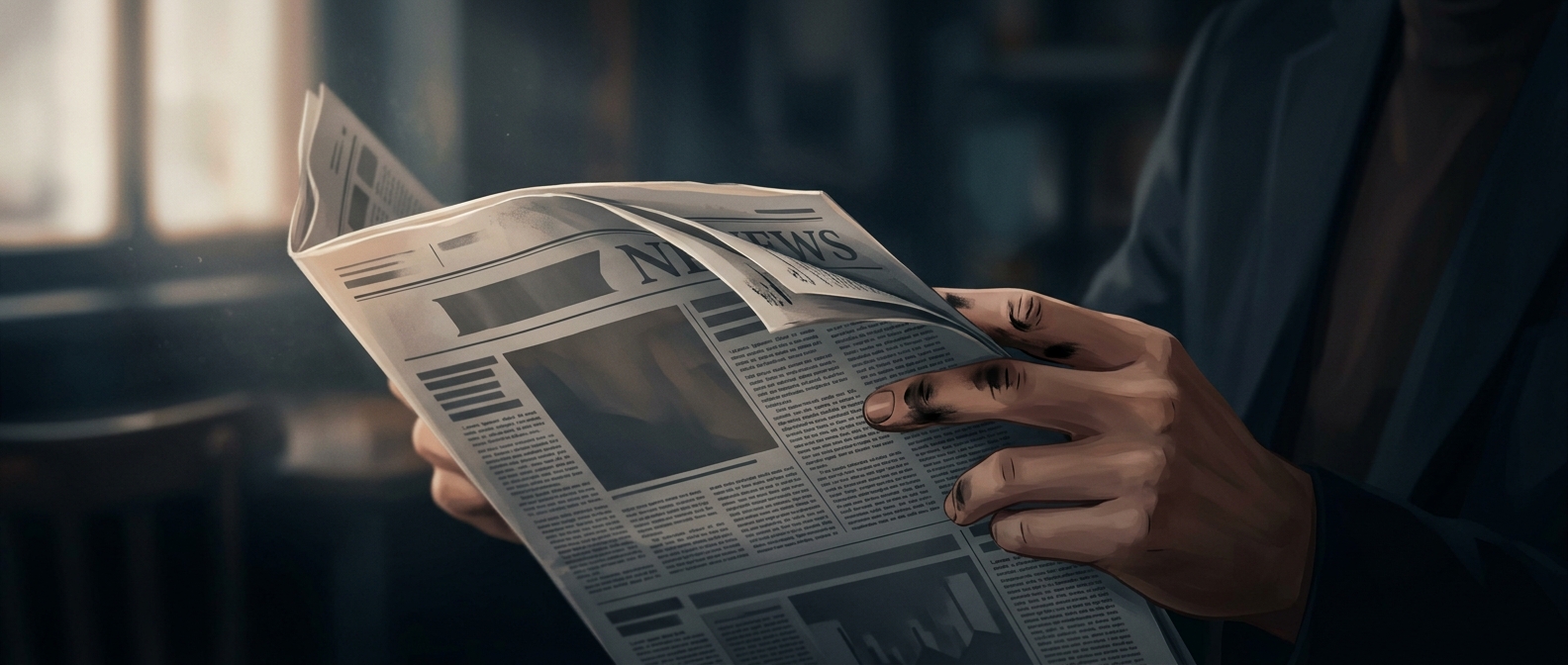
Why Yesterday’s Headlines Left a Mark
The dark smudge on a reader’s hand was a small consequence of how newspapers were made. Unlike glossy magazine stock, newsprint is thin, porous paper. It absorbs much of the printing ink, but the surface can still carry a little loose pigment and oily binder—the material that helps ink cling together. When a hand pressed against a page, friction could lift some of that residue, especially from heavily printed areas or a copy that had not fully dried.
Newspapers also had to be printed quickly and cheaply in enormous quantities. That made inexpensive, absorbent paper a practical choice, even if it was less clean to handle than coated paper. The same qualities that made a paper easy to print and distribute helped make ink transfer part of the reading experience.
The Broadsheet Was a Paper Puzzle
A large newspaper page, often called a broadsheet, gave editors room for long stories, multiple columns, photographs, and prominent headlines. But its size made it awkward to hold open. Readers commonly folded the paper into smaller sections, turning one sprawling sheet into a sequence of manageable pages. The trick was keeping the sections aligned while finding a comfortable way to read without covering a column or letting the rest of the paper spill open.
So the morning paper demanded a little hands-on work: fold it, refold it, and accept that a thumb might come away dark. The smudge was evidence of a medium built to carry a lot of news on one large, inexpensive sheet.