A contest built around balance and pain
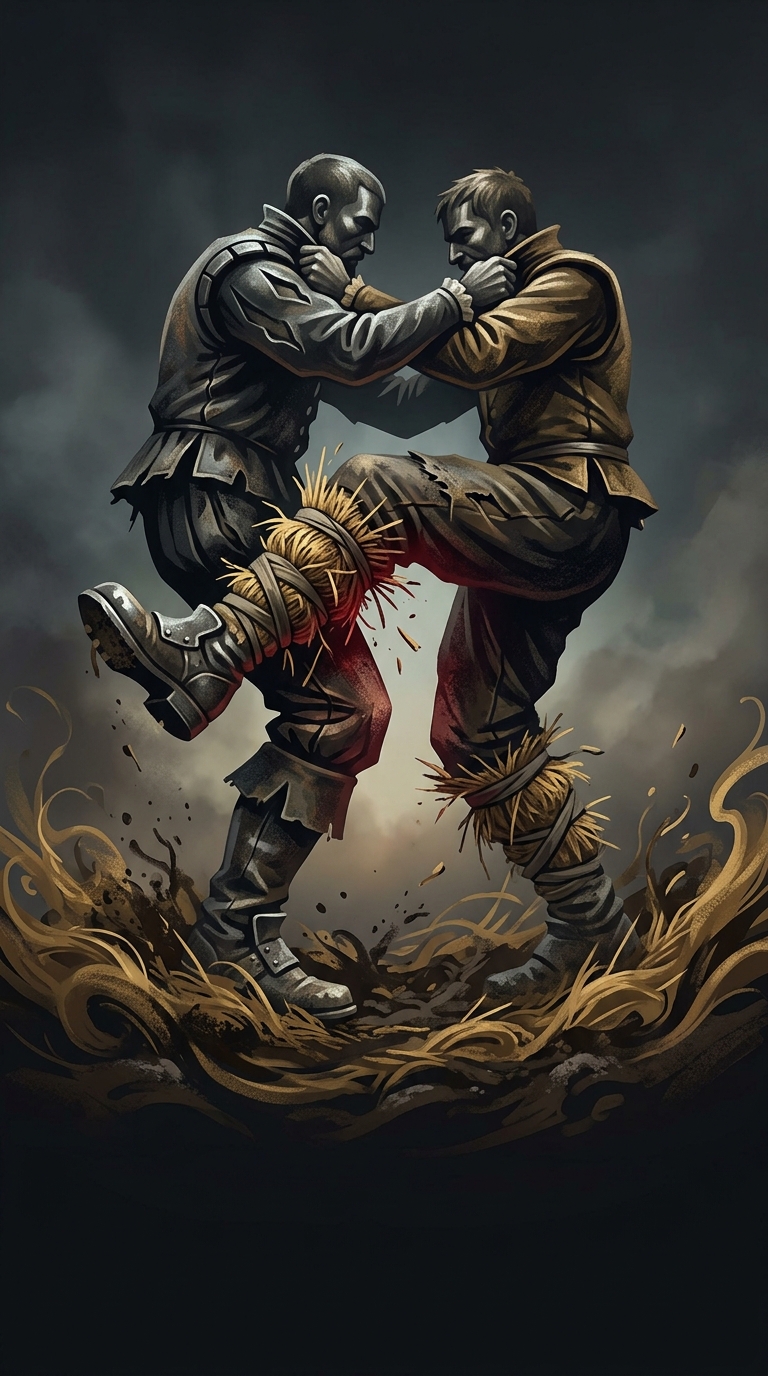
Shin-kicking turned a simple movement into a test of endurance. Each competitor gripped the other by the collar, limiting the chance to dodge or retreat, then tried to land kicks while keeping upright. The contest ended when someone could no longer stand. That rule made balance as important as toughness: a fighter had to absorb blows without losing footing while trying to unbalance an opponent.
Straw tucked into clothing softened the impact but could not reliably prevent bruising or broken bones. The danger was part of the contest’s stark appeal—not a side effect that modern protective gear had removed.
A country festival, not a modern Olympic event
Robert Dover’s games were a local sporting gathering on Dover’s Hill in the Cotswolds. Their name borrowed the prestige of the ancient Olympics, but the event belonged to a very different world: an outdoor festival where contests and spectacle drew a crowd. Shin-kicking stood out because its rules made the struggle easy to understand from the sidelines: hold on, keep standing, and make the other person give way.
The games did not continue uninterrupted. They were revived in the twentieth century, and shin-kicking remains part of the event. Its survival preserves an unusually physical kind of folk sport: one in which the decisive moment is not a finish line or a score, but the instant a competitor can no longer stay on their feet.