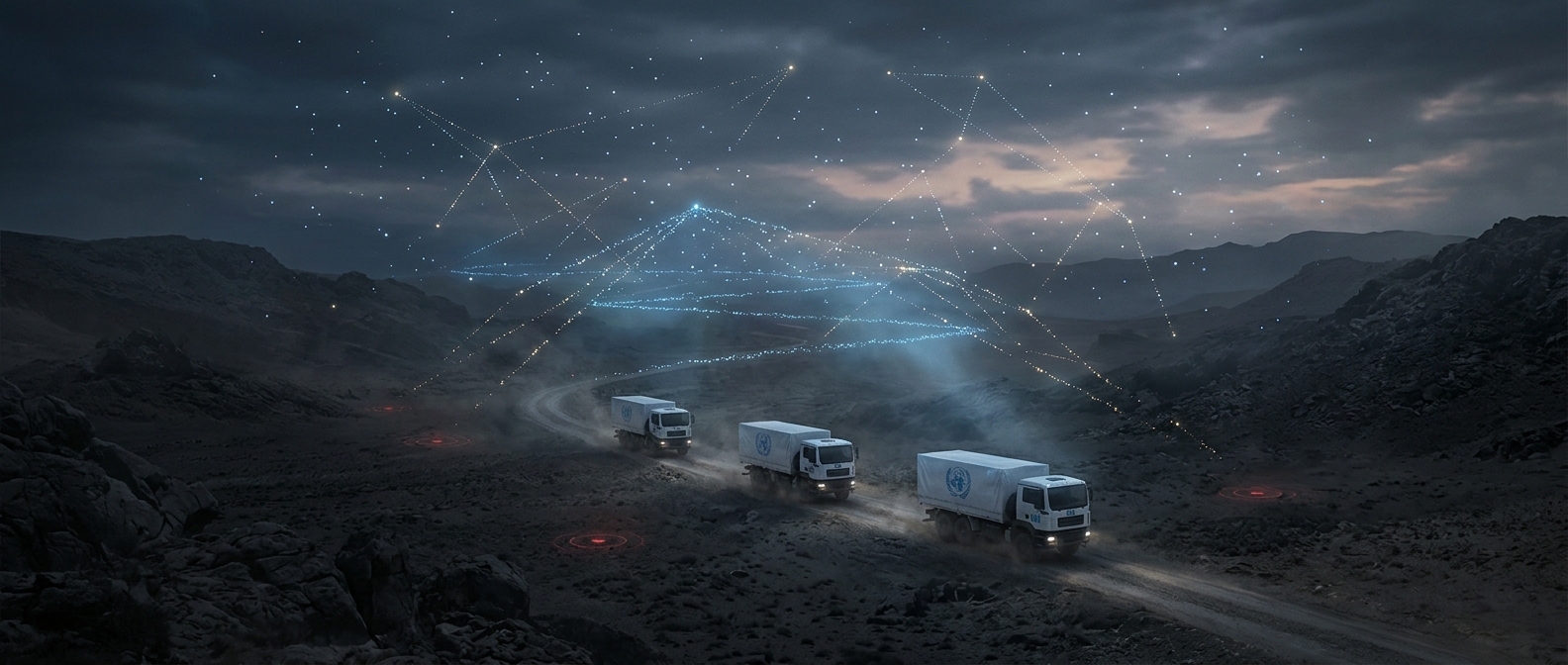
A convoy is a moving plan, not just a line of trucks
In a war zone, choosing a road is only half the routing problem. The group also needs a window when it can travel, and the people managing the delivery must keep that plan usable as conditions change. A route that looked workable before departure may no longer be the right one later; a delay can also leave less time to reach the destination within the planned window.
That makes each vehicle part of a larger system. Drivers, escorts and aid teams need a shared picture of where the convoy is and whether it can continue as planned. If one vehicle falls behind or the group takes a wrong turn, the problem is not confined to that driver: the convoy’s timing and coordination may be affected too.
Radio check-ins keep the plan connected to the road
Regular radio contact gives the group a way to report progress and pass along warnings. This matters because a route plan is made before the convoy has experienced every condition it will meet. Check-ins let the team compare the plan with what drivers are actually encountering and respond to new information while the vehicles are still moving.
The aim is not simply to keep everyone in contact. It is to prevent small changes from becoming separate, uncoordinated decisions. A missed turn, for example, can split attention between finding the route and keeping the group together. When food is the cargo, that coordination determines whether a planned delivery can continue—not merely whether a truck reaches the road’s end.