Why a Dive Can Feel Safer Than Standing Still
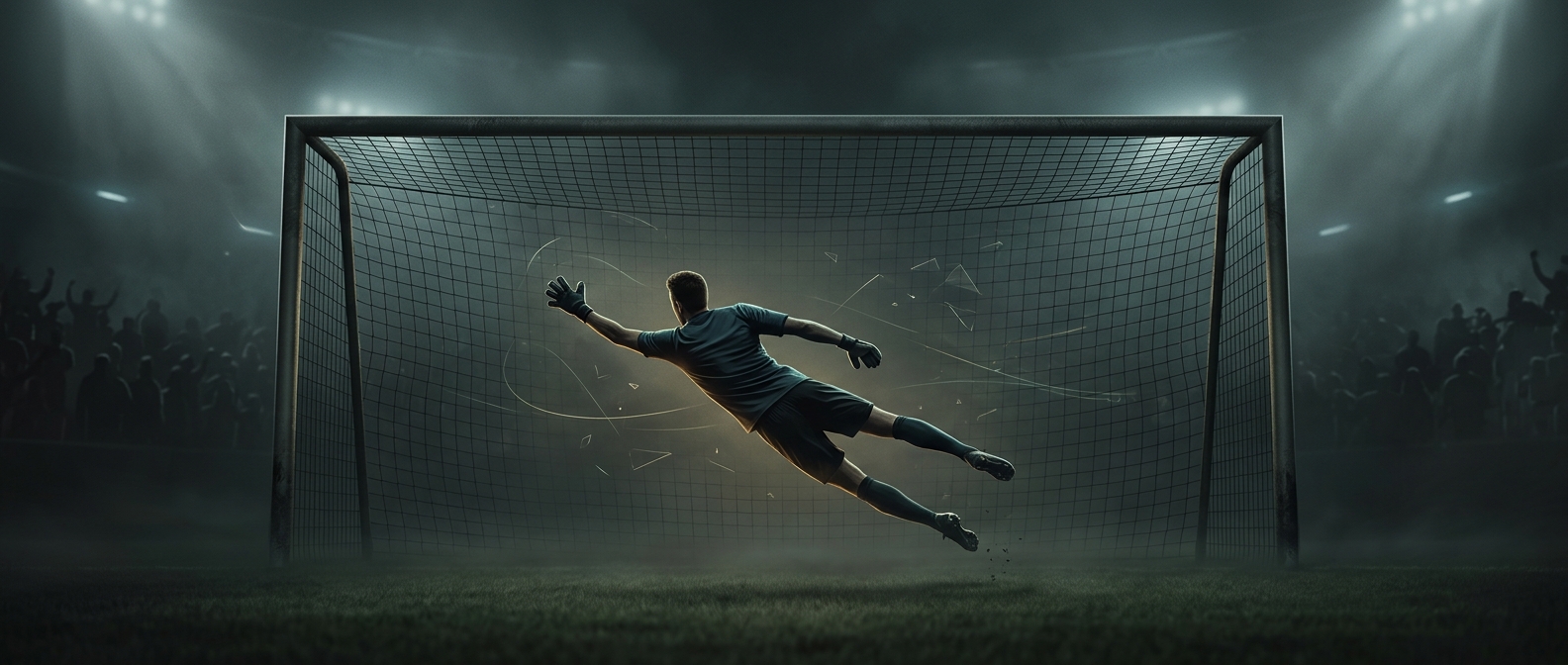
A goalkeeper’s split-second choice is not only about where the ball is likely to go. It is also about how the choice will look afterward. If the keeper stays central and the shot goes elsewhere, spectators can see that no attempt was made. A dive, even a futile one, makes the effort visible.
That difference matters because people often judge decisions by their outcome and by whether the person appeared to act—not just by what the odds favored at the time. A keeper who dives and misses can point to an attempted save; one who remains still may look as though they failed to try. The first mistake is easier to explain, even if the second choice had a better chance of stopping the shot.
The Pull of Blame Avoidance
This is a form of omission bias: people may fear blame for failing to act more than blame for taking an action that turns out badly. In a penalty kick, the decision is especially exposed. The goalkeeper must commit while the ball is on its way, and everyone can immediately see the result.
The dive also serves as a public signal of effort. It tells teammates, coaches, and fans that the keeper tried. That can protect the keeper’s reputation in the moment, even when it does not protect the goal. The incentive is not necessarily a conscious calculation; under pressure, an action that looks defensible can simply feel like the safer choice.
A Visible Effort Is Not the Same as a Better Save
From the goalkeeper’s perspective, moving toward a likely shot can be sensible. But if the probabilities favor staying central, a reflexive dive may sacrifice the chance to stop a ball that comes straight at them. The important distinction is between choosing well and looking as if you tried: observers often see the dive more readily than they can evaluate the odds behind it.
That makes the penalty kick a vivid example of how fear of judgment can shape behavior. A keeper may leave the center not because movement guarantees a save, but because standing still makes a miss look unmistakably like inaction.