How a stadium wave travels without a conductor
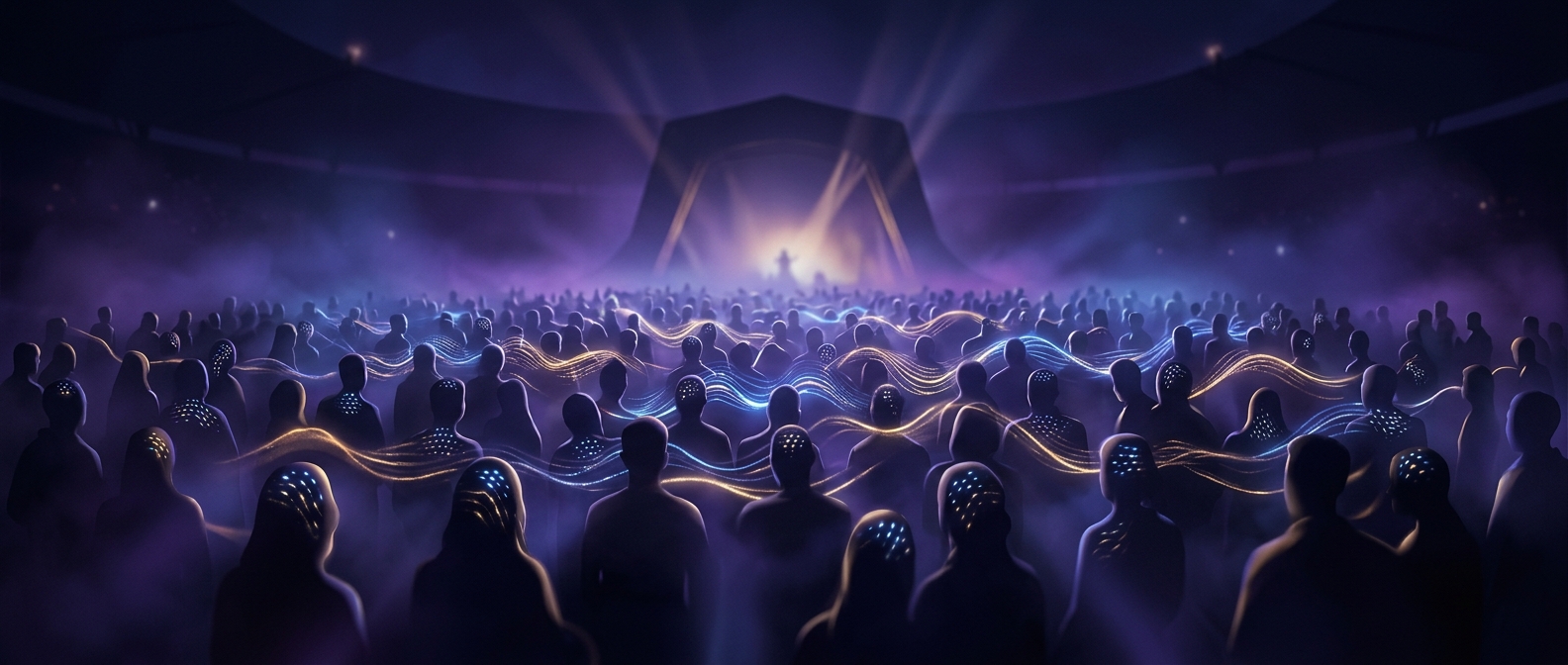
A stadium crowd does not need a leader to tell each section when to stand. People can use the movement around them as a cue: a nearby row rises, the next row notices, and some of its spectators follow. Their movement then becomes the cue for people farther along.
This is local coordination: each person responds to what is happening nearby, rather than following a plan shared by the entire crowd. The pattern can look remarkably unified from a distance even though spectators are making individual decisions, often with a slight delay as the movement reaches them.
Why the motion can spread—and why it can stop
The key is visibility. In a stadium, people can often see activity in adjacent sections, making it easier for one small burst of movement to prompt another. A person who is unsure whether to stand may take a neighbor’s action as a signal that the moment is right. When enough people respond, the moving boundary becomes easier to see, and the sequence can continue.
But imitation is not automatic. Some spectators may not notice the movement; others may choose not to join. If too few people respond, the motion can fade instead of traveling onward. The crowd’s apparent unity comes from many nearby reactions lining up in sequence—not from everyone acting at once. That is why the same stands can look still one moment and, a few sections later, seem to move as a single body.