A coffin built for a living performer
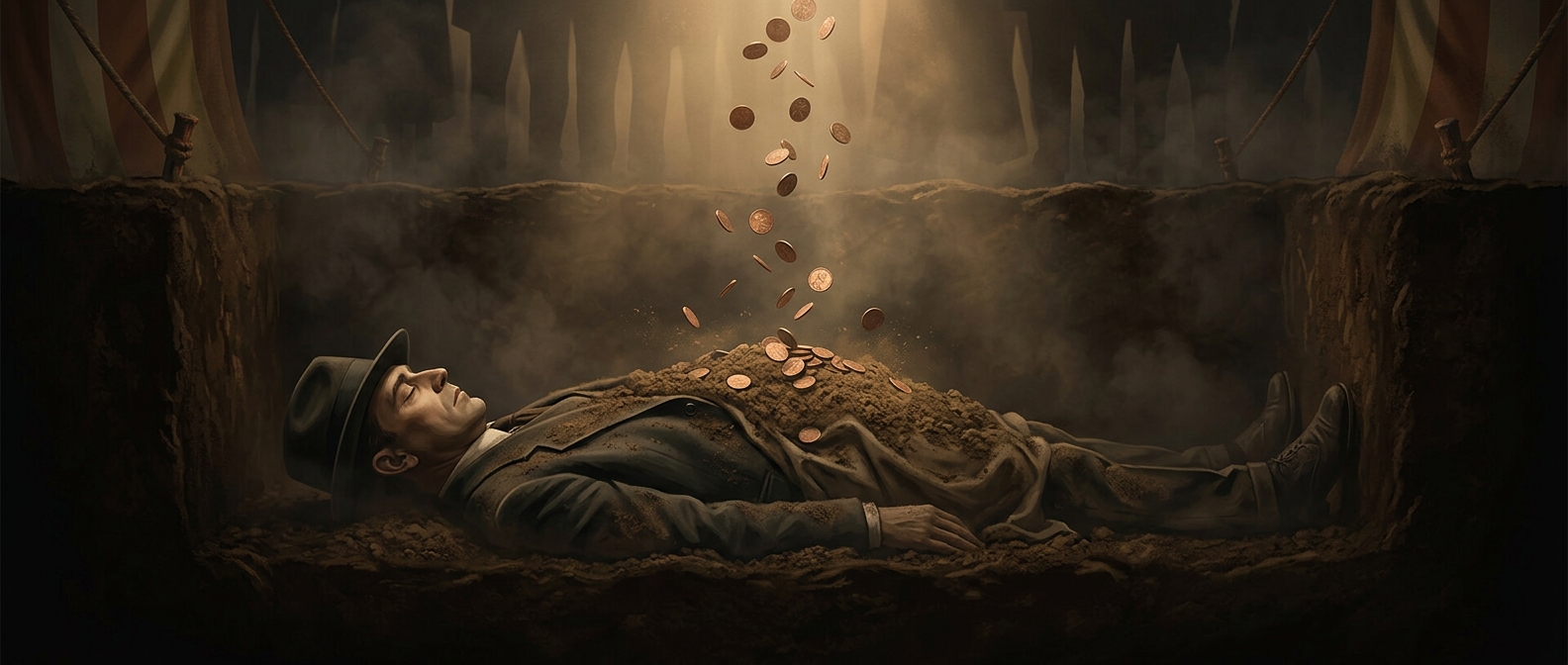
Tod Browning’s buried-alive act depended on a carefully managed illusion: the audience saw a person disappear underground, but Browning was inside a ventilated coffin, not an airtight tomb. Air could reach him, and emergency snacks gave him a backup while he waited. The practical details mattered because the stunt had to feel perilous without becoming an actual burial.
That contrast was the act’s engine. A crowd could imagine the danger of being trapped below ground, while the performer relied on precautions hidden from view. Browning also worked as a contortionist, another kind of carnival performance built around making the body seem capable of the extraordinary.
From spectacle to the director’s chair
Carnival work paid performers by turning unusual skills into attractions. Browning’s role was first to embody the spectacle himself; later, he directed films, including Dracula. The two jobs were different, and the buried-alive act should not be treated as a direct blueprint for his movies. But the story does reveal an early career spent making danger and strangeness visible to an audience.
The memorable detail is not simply that Browning went underground. It is that the illusion required a hidden margin of safety: a coffin with air and food could look like a death trap while remaining a place a performer could endure.