A Rally Became a Travel-Planning Problem
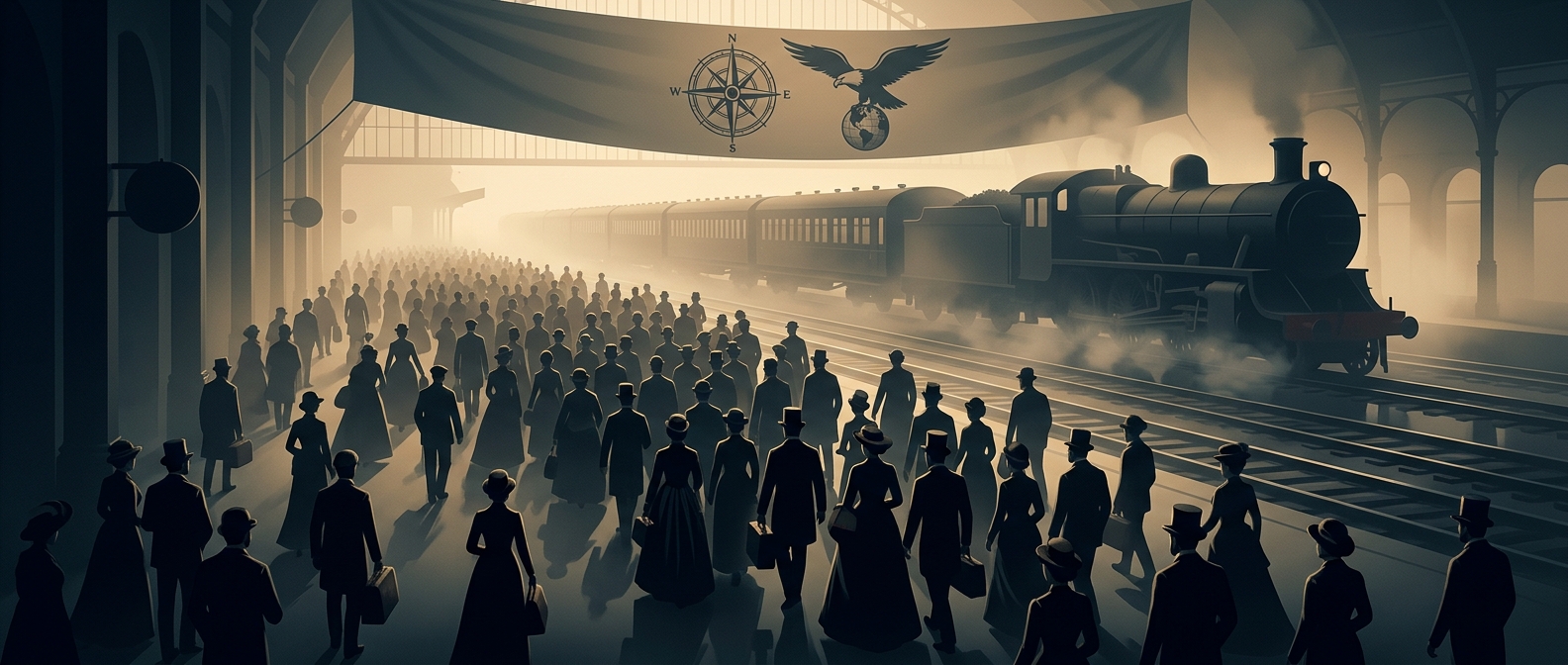
Getting a crowd to a meeting outside town took more than finding a train. Someone had to gather passengers, arrange transport with the railway, set a shared departure, and make the journey affordable enough for ordinary people to join. Thomas Cook’s excursion showed how those pieces could be organized as one event rather than left to each traveler.
The destination mattered, too: the rally promoted temperance, the movement against drinking alcohol. Cook was an advocate of the cause, so the trip served two purposes—carrying people to the meeting and helping them take part in it. The railway supplied the transport; Cook supplied the coordination that turned a local journey into a group outing.
From One-Off Trip to a New Business
The model could be repeated for other destinations and occasions. Instead of every passenger separately working out how to travel, an organizer could bring the group together and handle the arrangements in advance. That made leisure and organized travel more accessible to people who might not have planned a railway journey on their own.
Cook’s first excursion was not yet the elaborate holiday package people might associate with a travel agency. Its significance was practical: it demonstrated that arranging transport for a group could itself become a service. A single trip to a nearby rally offered a blueprint for making travel an organized experience, not merely a seat on a train.