How a cemetery became an ossuary
Beneath the Cemetery Church of All Saints in Sedlec, near Kutná Hora, lies an ossuary: a room used to store human bones after graves were cleared to make space for new burials. The cemetery became especially crowded over centuries of burial, including during epidemics and periods of conflict. Rather than leave the bones scattered or discard them, caretakers gathered them inside the church.
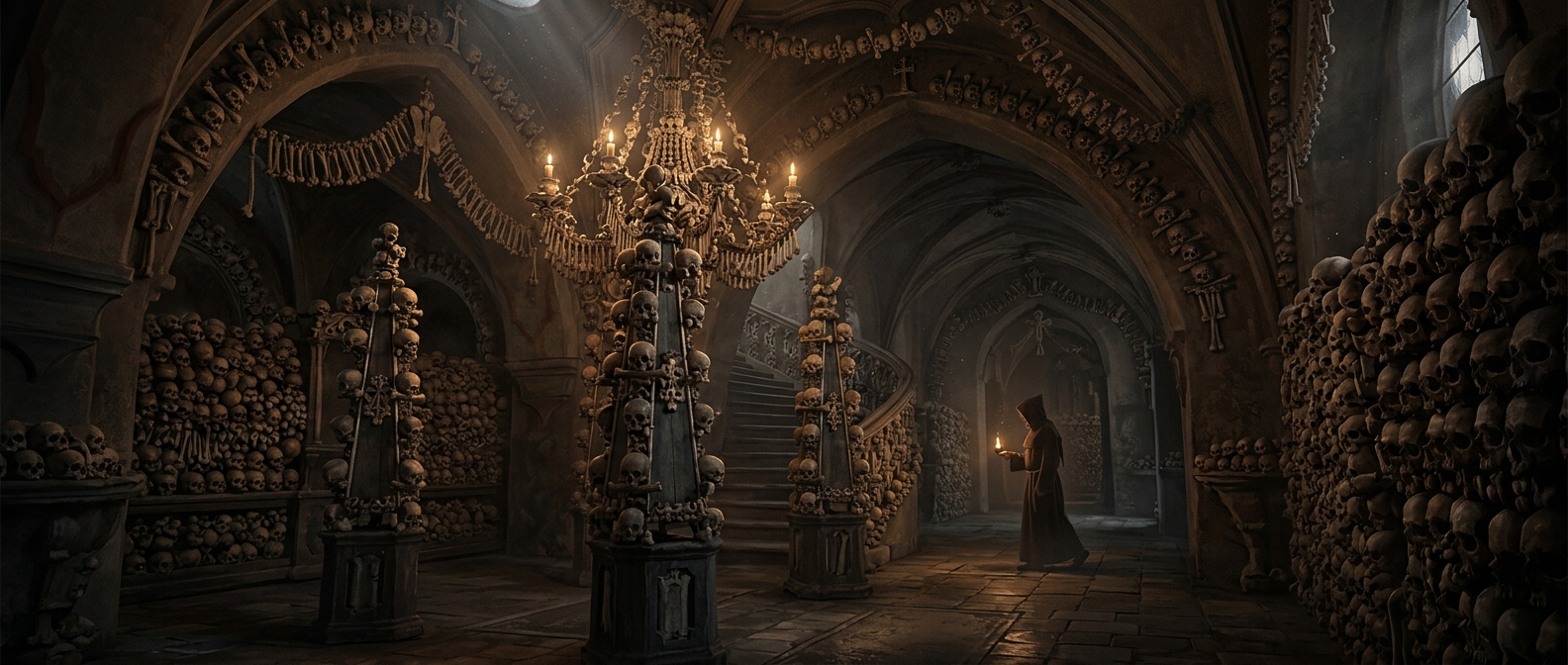
Tradition credits a medieval monk with arranging some of the bones into orderly piles. The transformation into elaborate decoration came much later, in 1870, when the Schwarzenberg family commissioned woodcarver František Rint to reorganize the ossuary. Rint cleaned and bleached the bones, then built them into forms that turn a practical storage space into a stark, carefully composed interior.
What the bone chandelier means
The most famous object is a chandelier said to contain at least one of every bone in the human body. It is not just an unusually macabre ornament: it makes the room’s central idea visible. The bones are individual human remains, but their arrangement also recalls a broader Christian message about mortality and the shared fate of the dead.
That tension is what makes the ossuary striking in person. Its decorations invite close inspection—the chandelier, bone garlands and carefully stacked skulls—while their material keeps attention on the people beneath the artistry. The result is a church interior where craftsmanship and remembrance cannot be separated.