Why chasing a shadow disrupts a child’s sense of the path
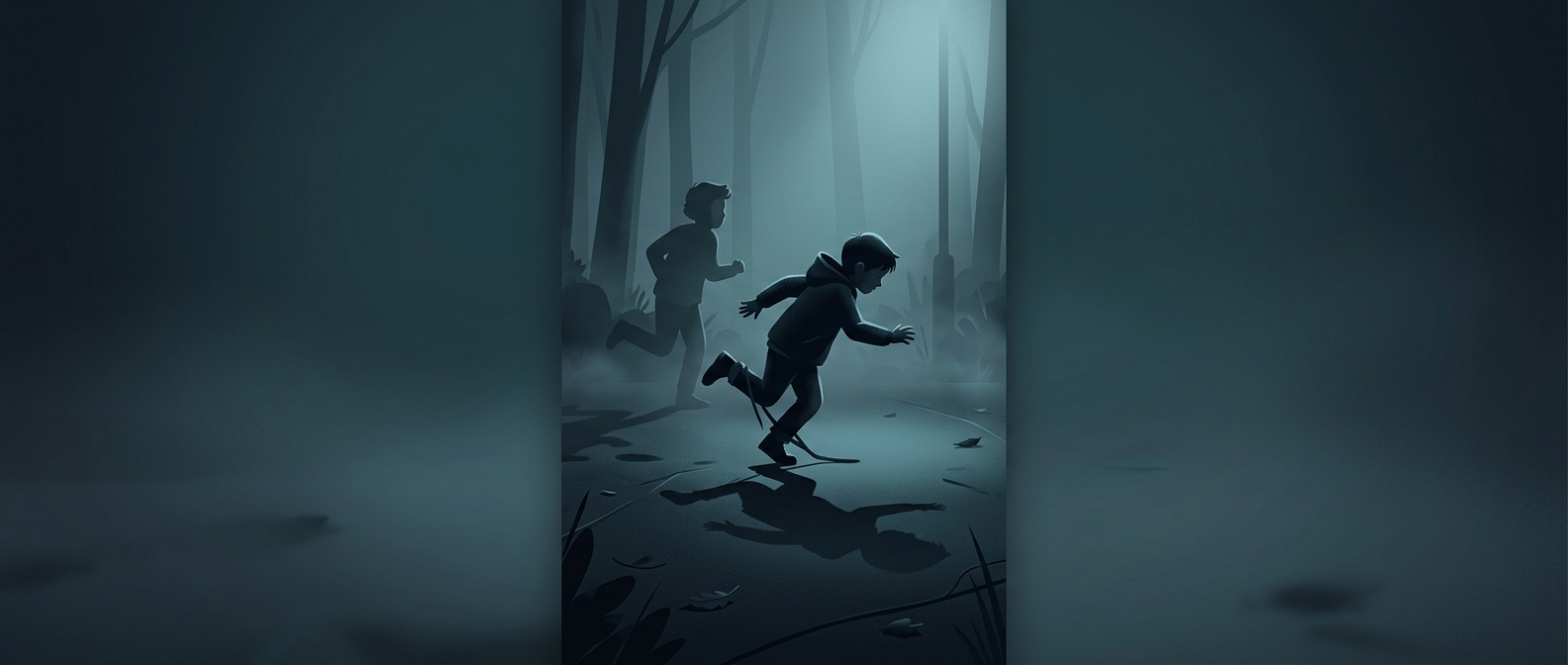
Shadow tag turns a moving patch of darkness into the target. To stomp on it, a child has to keep checking where the shadow falls—often near their feet—while running. That repeated shift of attention competes with the task of scanning ahead for obstacles.
Running safely depends on more than looking straight forward. The brain combines what the eyes see with movement and balance signals to adjust steps and direction. When attention is fixed on a shadow, a child may notice a tree, pole, or another player later than they otherwise would. A sudden shadow shift can also prompt a quick turn or lunge before there is time to check what lies in that direction.
The play area changes the risk
The game is most demanding when shadows move unpredictably: players run in different directions, and the target can slide across the ground as the sun or a nearby object changes the light. That makes shadow tag harder to navigate than a simple race along a clear path.
A broad, open space gives players more room to react than a crowded yard or playground with fixed obstacles. The key tradeoff is built into the game: the more closely children track the shadow, the less consistently they can watch the route under their feet and ahead of them.