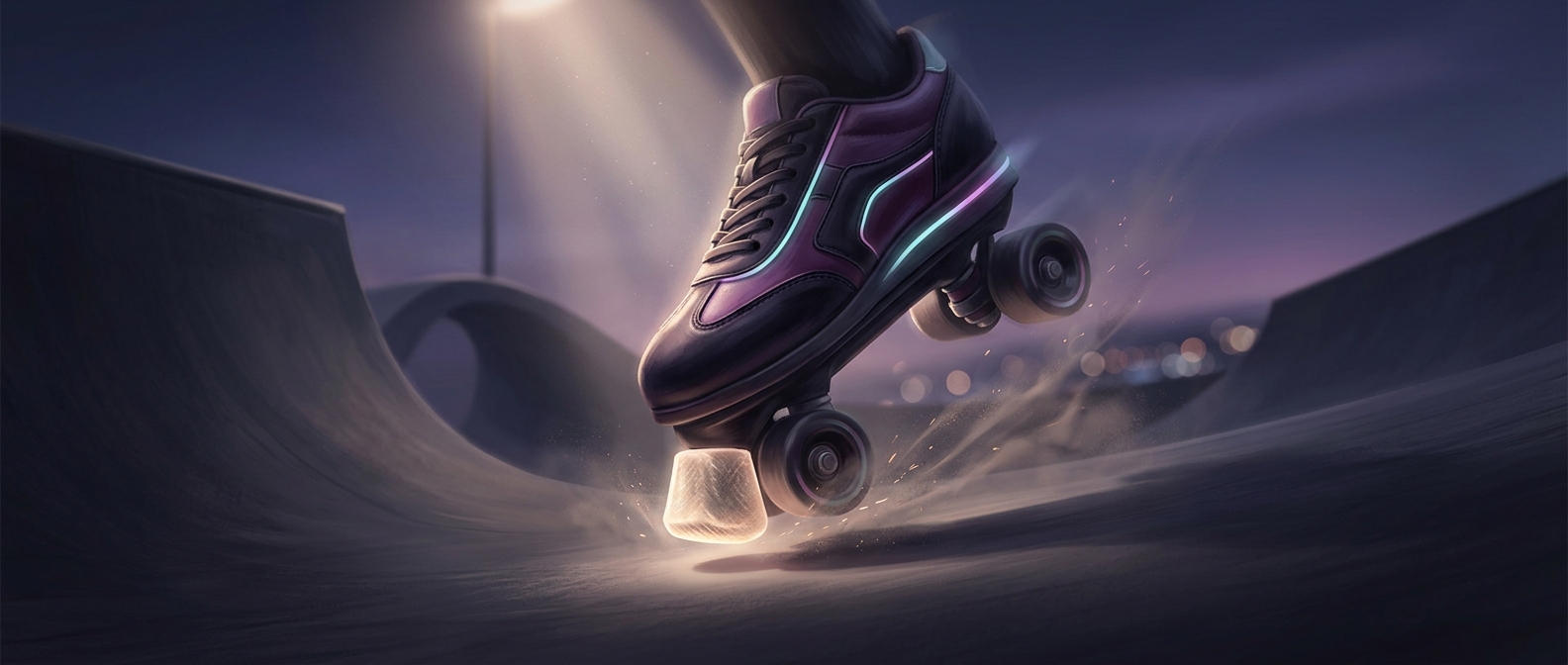
Why a Skateboard Can Sound Bigger Than It Is
A skateboard’s clatter starts at the wheel–pavement contact. Hard wheels barely deform when they meet a crack or rough patch, so more of the jolt travels into the trucks—the metal parts holding the wheels—and the deck. The deck can vibrate like a sounding board, turning a series of small impacts into a sharp, hollow rattle.
Wheel size matters too. Typical skateboard wheels are relatively small, so a pavement seam that a larger wheel might roll over smoothly can hit them abruptly. The result is especially noticeable on sidewalks, where concrete joints and worn edges are close together.
The Tradeoff Behind the Noise
Hard wheels roll efficiently on smooth surfaces, which suits skateparks and other clean, even pavement. Softer wheels flex more and absorb some bumps, making rough ground quieter and more comfortable, but they feel less responsive for certain tricks and maneuvers. There is no single wheel choice that works equally well for every surface and style of skating.
The same design that makes a board lively on smooth ground can therefore make it loud and less forgiving on a sidewalk. And because a skateboard has no hand-operated brake, a rider must slow by steering, dragging a foot, or stepping off—actions that take room and attention around pedestrians.
A Small Object in Shared Space
On a quiet stretch, wheel noise may be brief. In a busy pedestrian area, repeated impacts can carry, while the rider’s path and stopping space compete with people walking in different directions. The nuisance comes from this combination: a rigid, noisy ride over imperfect pavement, moving through a space built for foot traffic.