How a still photograph became a moving scene
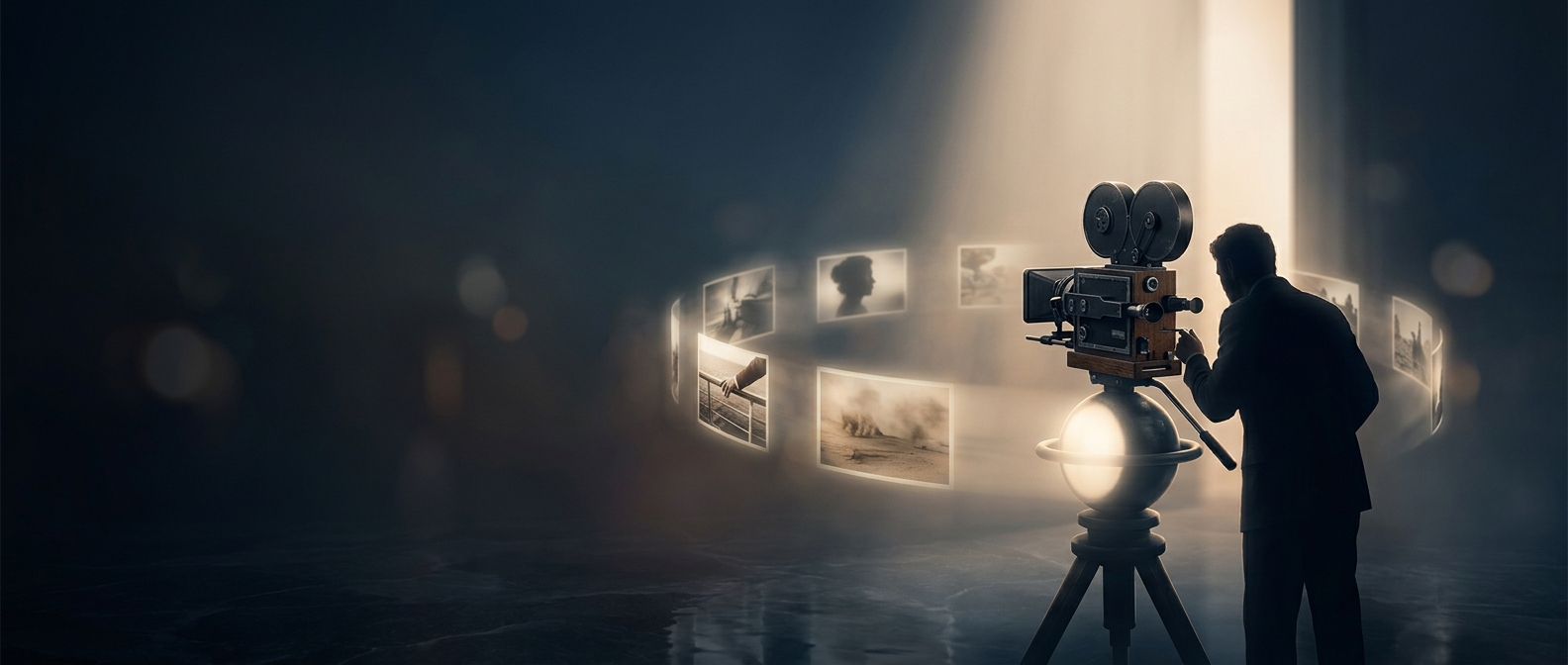
A photograph can hold more story than fits in a single glance. A slow move across it lets a filmmaker decide what the viewer notices first: a face at the edge, a crowded street, or a small detail that changes how the whole image reads. A gradual zoom can make one person or object feel newly important. The image itself does not move; the camera’s framing does.
That simple technique offered Ken Burns a way to give archival photographs visual momentum without staging events with actors or building reenactments. It was a practical response to limited resources, but it also suited the material: when the past survives in still images, movement can guide attention without pretending the photograph is live footage.
Movement with a point of view
A pan or zoom is not merely decoration. Choosing where to begin, where to travel, and where to stop shapes the photograph into a small sequence. The viewer may first take in a broad setting, then arrive at a face or object that carries the emotional weight. In that sense, the editor supplies a kind of camera movement after the moment has passed.
The method also has limits. A still image cannot show what happened just outside the frame, and a slow move cannot establish details the photograph does not contain. Its strength is narrower: it gives viewers time to inspect an image and helps connect one archival picture to the next. A budget workaround became a recognizable documentary language because it made still evidence feel active while leaving it visibly rooted in the past.