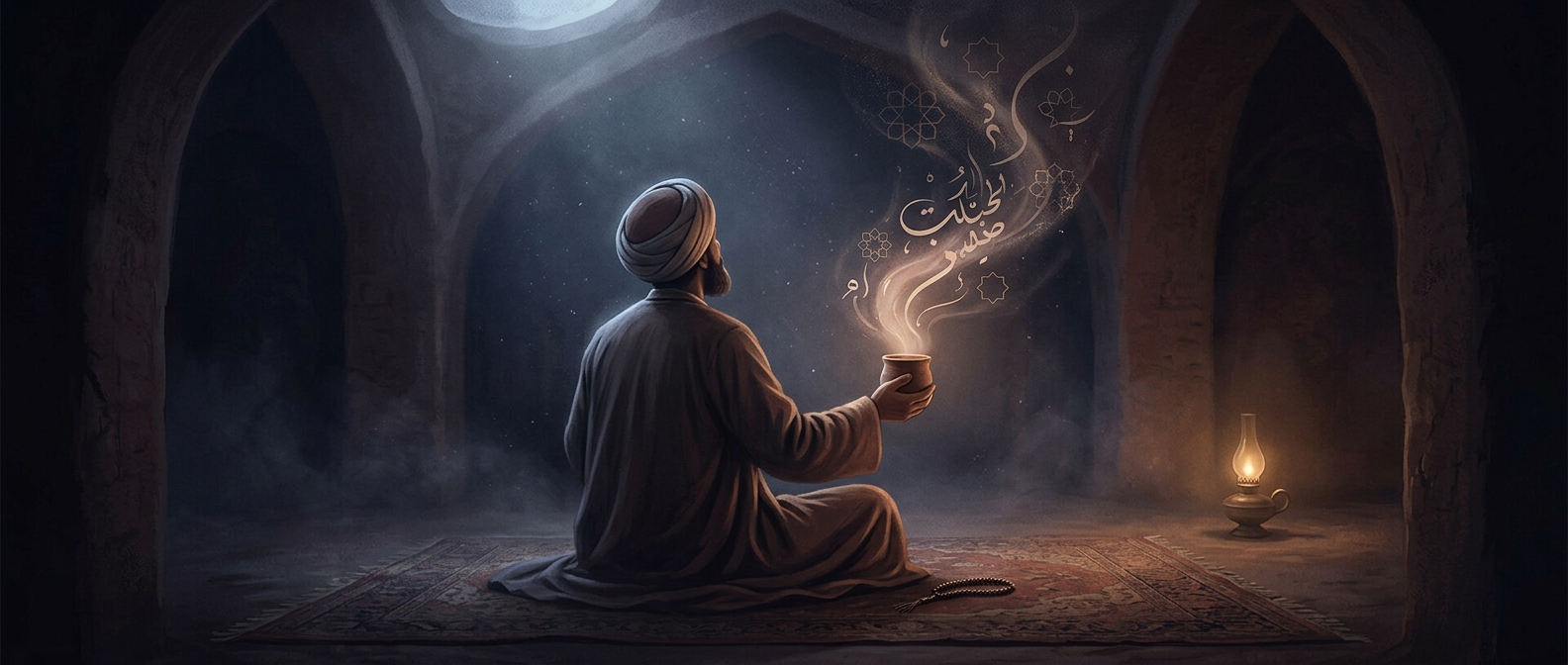
Why Sufi writers call ecstasy “intoxication”
In Sufi Islam, sukr—Arabic for “intoxication”—names a spiritual state in which awareness of God overwhelms a person’s usual attention to the self and the surrounding world. The word is metaphorical: it describes a loss of ordinary restraint, not drinking alcohol. A person in this state may speak or act in ways they would not when composed.
The contrast is often made with sahw, or sobriety: a steadier condition in which spiritual awareness is joined to self-command. The contrast gives the metaphor its force. Sukr suggests absorption so complete that the person no longer carefully weighs how their words will sound to other people.
When ecstatic speech sounds dangerous
Accounts of sukr describe outbursts that can seem boastful, irreverent, or even heretical when heard literally. Within the mystical framework, such words may be understood as expressions of overwhelming experience rather than carefully reasoned claims made by the speaker’s everyday self. That interpretation does not make every utterance harmless or settle how it should be judged; mystical traditions have differed over how to understand and respond to them.
The distinction matters because it separates the experience being described from the public meaning of the words spoken during it. A cry that sounds like a theological declaration to listeners may, in a Sufi account, be treated as a sign of a person’s absorbed state—not as a doctrine to repeat. The image of intoxication captures both the intensity of the experience and the risk of trying to express it in ordinary language.