Why a Sleeping Passenger May Feel Ear Pressure
The eardrum separates the air-filled middle ear from the air in the cabin. For the eardrum to move comfortably, pressure on both sides needs to stay close. A narrow passage called the Eustachian tube connects the middle ear to the back of the nose and throat, letting air pass through to balance that pressure.
Swallowing Opens the Pressure Path
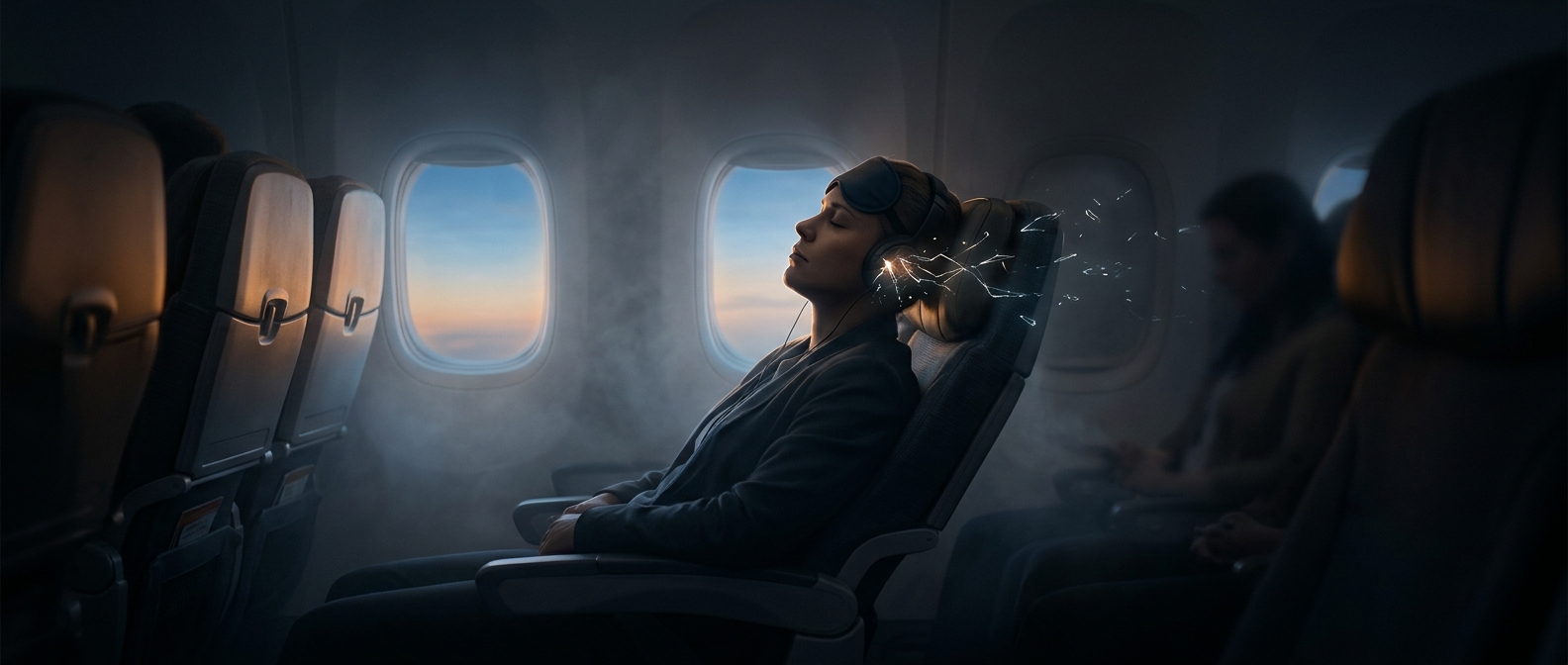
The tube is usually closed, but swallowing or yawning briefly opens it. As cabin pressure shifts during a flight, those small openings let the middle-ear pressure catch up. If you sleep through takeoff, you may swallow less often, so the adjustment can happen less frequently. A mismatch can tug on the eardrum and feel like fullness, muffled hearing, or pain.
The pressure change does not stop just because you are asleep. During ascent, air in the middle ear tends to expand and escape; during descent, cabin pressure rises and air must move back into the middle ear. Either phase can cause discomfort, though the inward adjustment on descent can be harder for some people.
Small Movements Can Help
Waking enough to swallow, yawn, or sip water gives the Eustachian tube chances to open. That is why ear pressure may ease after a yawn or a few swallows: the sensation is not simply “in the ear,” but a sign that air is moving through the passage that balances it. A quiet flight can therefore leave a sleeping passenger with more pressure to clear upon waking.