How a Braille Scrabble Board Makes the Grid Readable
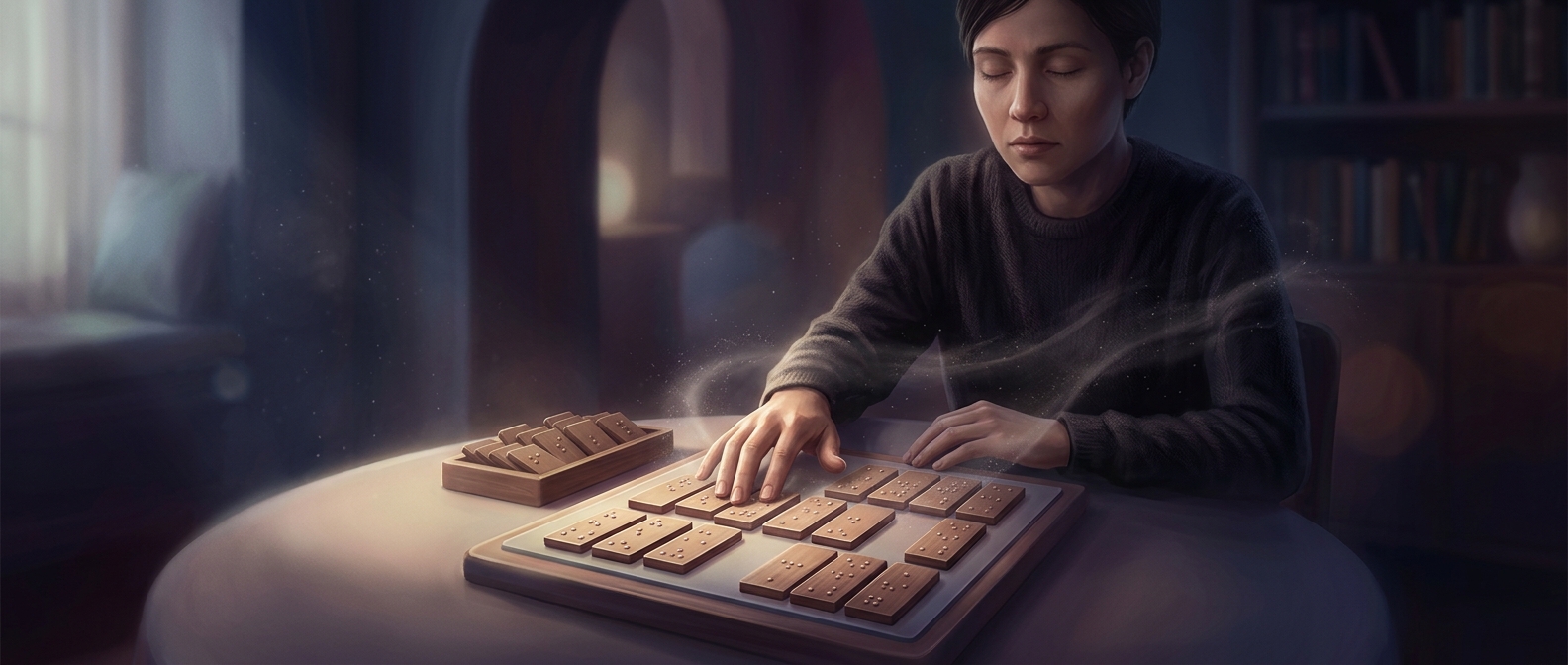
Scrabble depends on more than recognizing letters: players must keep track of where each tile sits and how new words connect to those already on the board. A Braille edition makes those spatial relationships available through touch. Its raised grid lines mark the squares, while the tactile divisions help keep tiles from sliding out of position as players feel the board.
That stability matters because a small shift can change which squares a word crosses—and therefore how it scores. The grid gives players a dependable map they can inspect by hand instead of relying on sight.
Letters and Points, Not Just Tile Shapes
Each tile carries its letter and point value in Braille. Braille is a system of raised dots that readers identify by touch, so the markings let a player distinguish both what a tile says and what it is worth. The point value is essential information: Scrabble’s strategy often turns on comparing a word’s possible score with the opportunities it leaves for later turns.
The tactile markings therefore do more than label pieces. They make the same two decisions available through touch that printed tiles make available visually: which letters are in play, and how much each one contributes.
Keeping the Game’s Strategy Intact
The adaptation preserves Scrabble’s central challenge—forming words on a shared, scored grid—while changing how players access the board and tiles. A player can feel the layout, identify the pieces, and judge how a move fits into the existing arrangement. The tactile grid also helps keep the physical board organized during that close inspection.
That is the useful design choice: accessibility comes from making the game’s information and layout tangible, not from replacing its rules. The result is still a contest over words and points, played square by square.