A pomegranate is built around its seeds
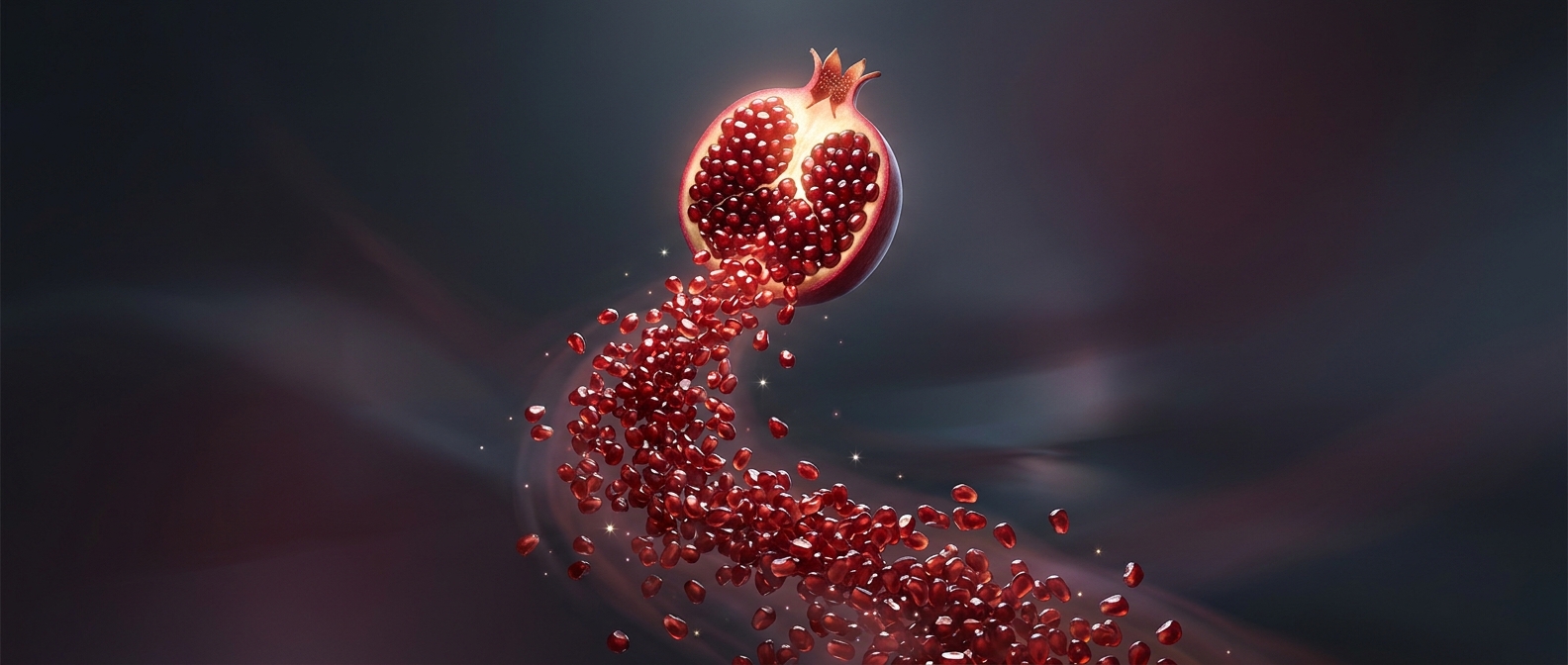
The juicy red part people call a pomegranate seed is technically an aril: a fleshy covering around a hard seed. Botanically, the fruit is a berry, and its many seeds develop inside chambers separated by thin, pale membranes. The arils crowd those chambers until the cut fruit looks like a tightly packed mosaic.
How the crowded arrangement forms
After pollination, each fertilized ovule—the structure that can develop into a seed—grows into a seed with a juicy coating. The ovules sit in groups within the flower’s ovary, which develops into the fruit. As the fruit swells, its internal walls divide the space into sections, but there is no single large cavity for the seeds to rattle around in. Instead, the arils fill the compartments around those walls.
That layout is why a pomegranate does not yield a simple mouthful of pulp. Its edible flesh is attached to individual seeds, packed together in clusters and separated by membranes. The pale partitions are not wasted space: they mark the fruit’s internal structure and help keep the clusters in place as it ripens.
A fruit that rewards taking it apart
The arrangement also shapes how people eat pomegranates. Breaking the fruit along its natural sections exposes clusters of arils, which can be loosened from the membranes rather than bitten from a continuous rind of flesh. What feels like a maze is the visible result of the fruit’s reproductive design: many seeds, each wrapped in its own small, juicy package.