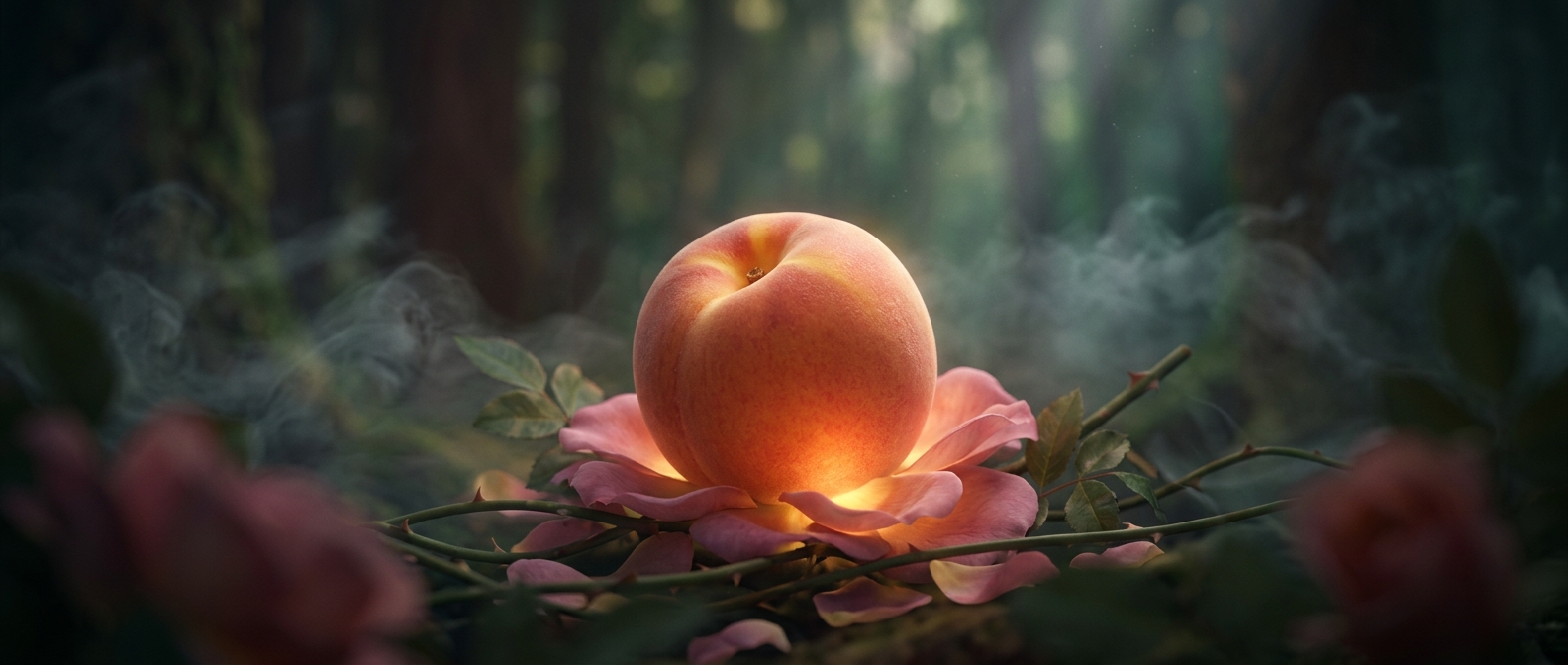
A family resemblance in the flower
Botanists group plants into families by shared ancestry, using a bundle of traits rather than one look-alike feature. In the rose family, or Rosaceae, many flowers have five sepals and five petals, with numerous stamens—the pollen-producing parts—arranged around the center. Their reproductive structures and how they are arranged can offer clues to relationships that a ripe fruit cannot.
Those floral patterns are not identical across the family, and no single feature proves kinship by itself. Botanists compare flowers alongside other evidence, including leaves, seeds, and genetic data. The point is that a flower’s construction can preserve signs of shared ancestry even when plants have evolved very different ways to package their seeds.
Different fruits, related plants
A peach and a plum each form a drupe, a fruit with a fleshy outside and a hard inner layer around the seed. Apples develop a different kind of fruit, called a pome, in which much of the edible flesh comes from flower tissue around the ovary. A strawberry is different again: its tiny surface specks are the true fruits, while the red flesh is swollen flower-stalk tissue.
These varied forms reflect different evolutionary routes for protecting seeds and attracting animals that may disperse them. Family membership does not require matching fruit; it traces a branching history. That is why a strawberry’s flower can tell a botanist more about its relatives than its familiar red “berry” does.