From cherry to coffee seed
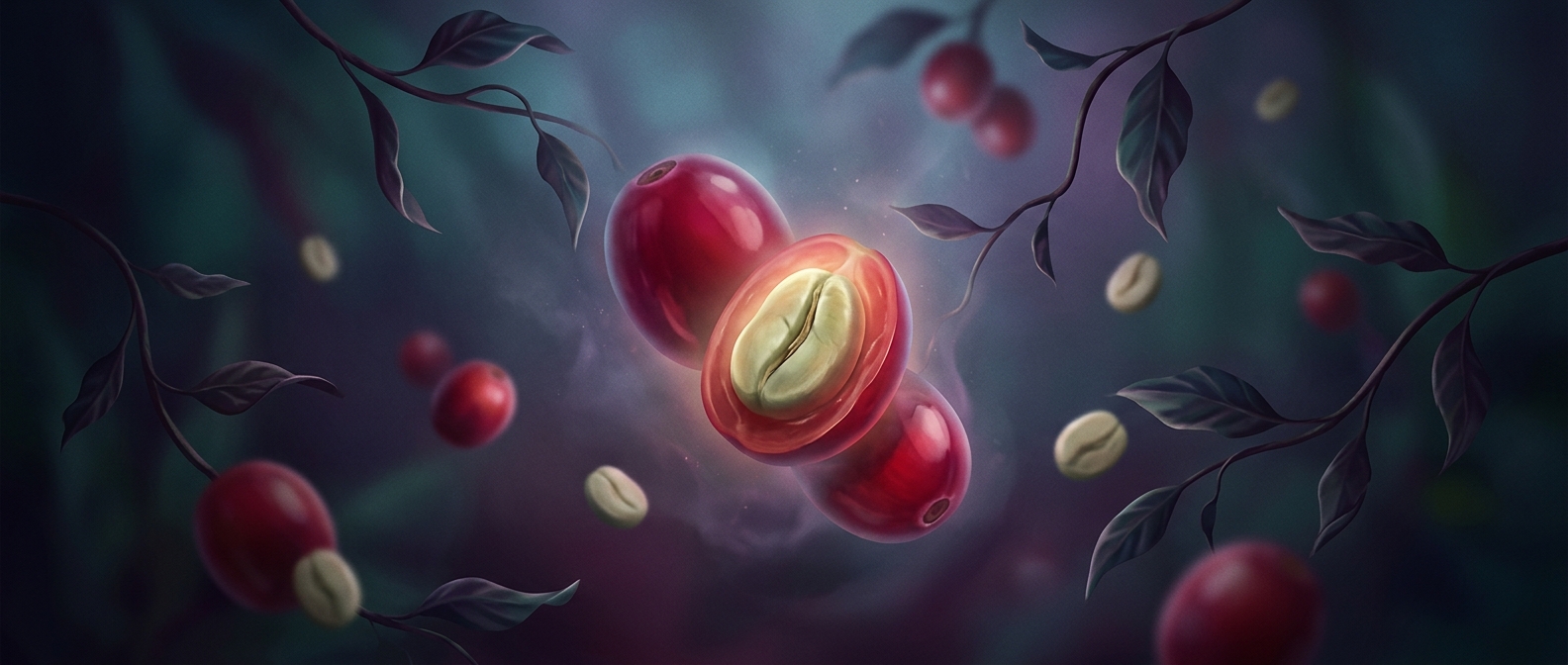
A coffee cherry is a small fruit that grows on a coffee plant. Beneath its skin and sweet, pulpy flesh are usually two seeds, each wrapped in several thin layers. These seeds are what people call coffee beans, though they are not beans in the botanical sense.
After harvest, processors remove the surrounding fruit and layers. In one common approach, the fruit is pulped and the seeds are fermented and washed; in another, cherries are dried whole before the dried fruit is removed. Either way, the goal is to free the seed while controlling moisture so it can be stored and shipped without spoiling.
Why roasting changes everything
The cleaned seed is greenish and hard, with little of the aroma associated with a brewed cup. Roasting heats it until its internal chemistry changes: sugars and amino acids react, and other compounds break down or form. These reactions generate much of coffee’s familiar flavor and smell, while also turning the seed brown and making it brittle enough to grind.
The transformation is strikingly practical: a fruit that could be eaten fresh becomes a durable seed that can be transported, roasted, and brewed. The coffee flavor most people recognize is created not by the cherry’s flesh, but by what heat does to the seed inside it.