Sugar ties up the water microbes need
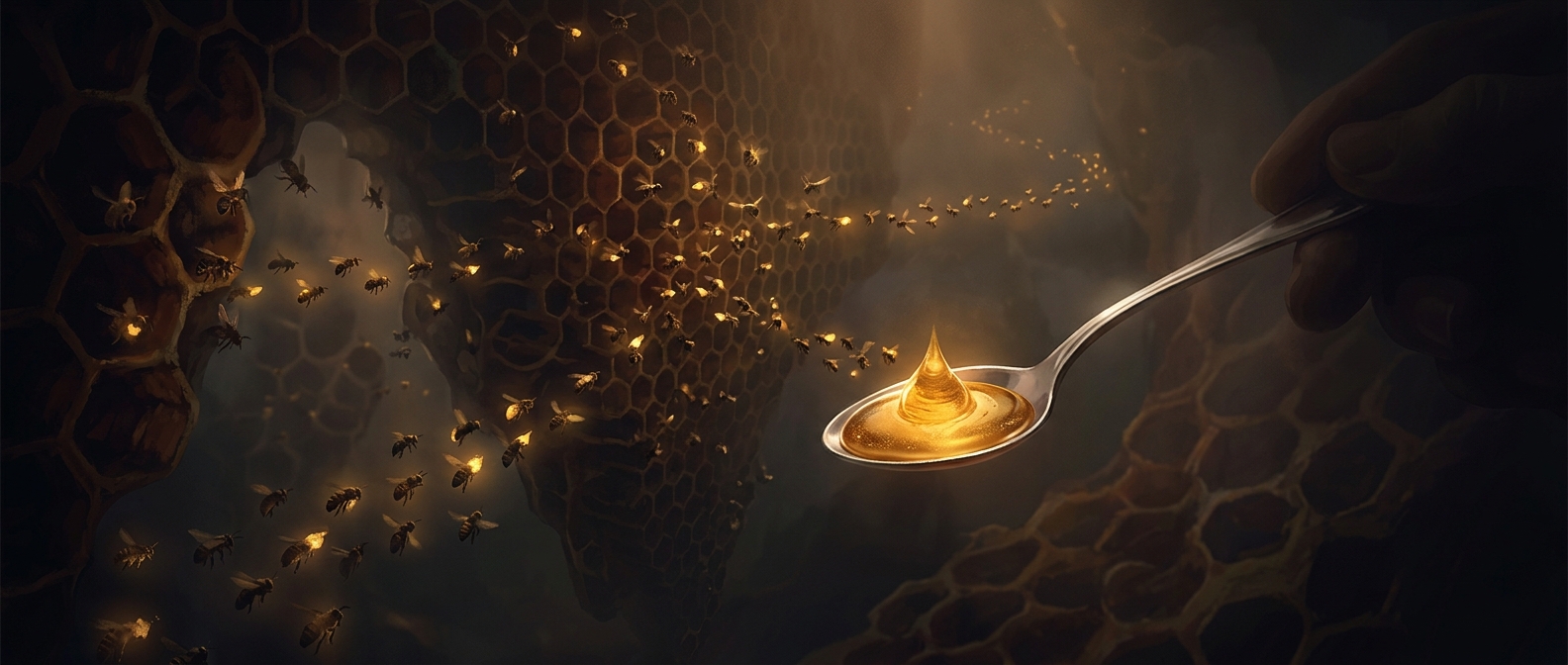
Honey is mostly sugar, but the important detail is how little of its water is available for microbes to use. Its dense sugars bind water molecules and create low water activity—a measure of usable water, not simply how wet something looks. In that concentrated environment, many bacteria and other microbes struggle to grow; the sugar can also draw water out of their cells, disrupting their normal function.
Honey’s acidity adds a second hurdle. Together, these conditions make it difficult for most spoilage organisms to multiply. They do not make honey sterile, but they help explain why properly stored honey resists spoilage far longer than foods that contain more usable water.
The seal is part of the preservation
Honey can absorb moisture from the air. If water gets into it—for example, through a wet spoon or a poorly sealed container—the mixture becomes less concentrated, and its water activity can rise. That can allow osmophilic yeasts, which tolerate sugary conditions, to grow and ferment the honey. The result may develop bubbles, a yeasty smell, or other signs of fermentation.
Keeping honey covered and dry preserves the conditions that make it resistant to microbes. A tight seal matters not because honey needs special treatment, but because it helps prevent the surrounding air—and any added moisture—from changing its composition.
Changes in texture are not necessarily spoilage
Over time, glucose in honey can form crystals, turning a smooth liquid into a grainy or solid mass. This is crystallization, a natural change in the arrangement of its sugars, not by itself evidence that microbes have taken hold. Honey may also darken or lose some aroma as it ages, while remaining recognizably honey.
That distinction is why an old container’s condition matters: age alone does not tell you whether its contents stayed dry and sealed. A jar can preserve honey remarkably well, but it cannot preserve the storage conditions that were lost along the way.