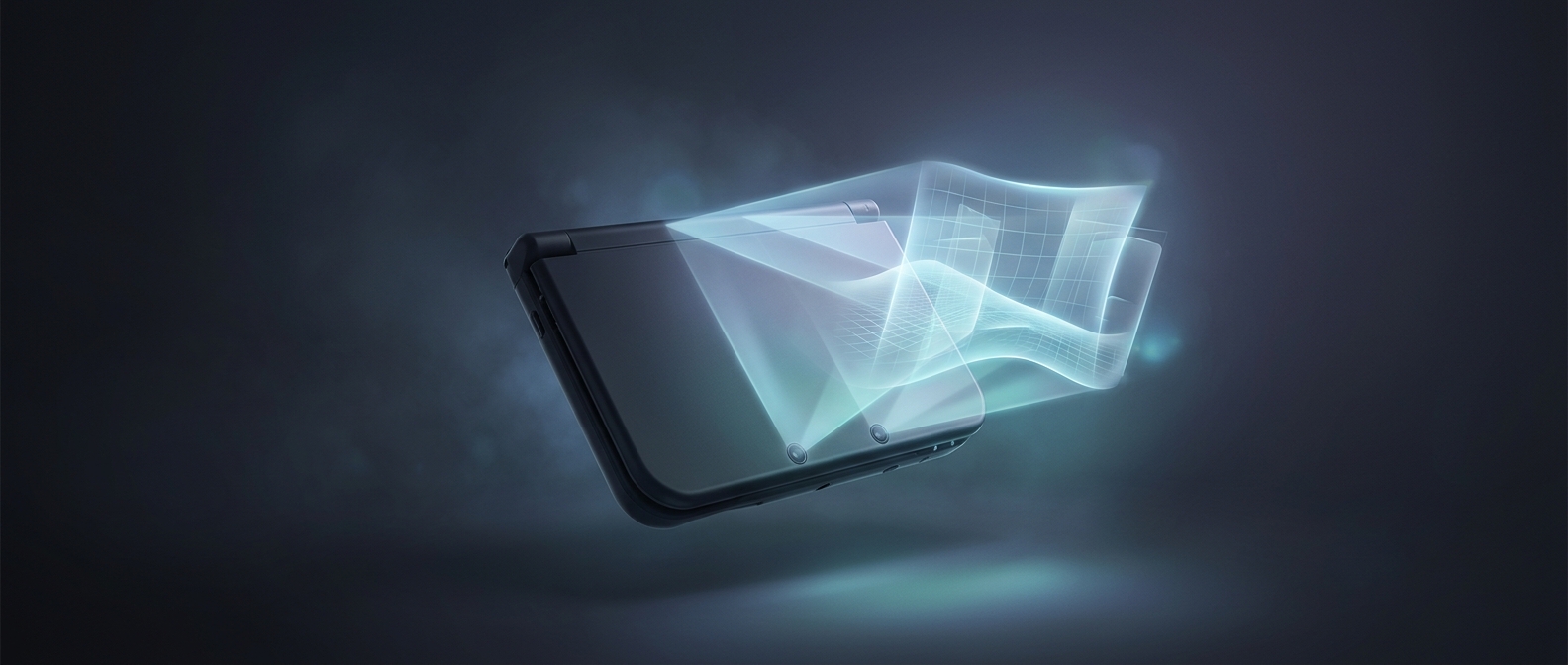
How the 3DS Kept Its Glasses-Free 3D in View
The Nintendo 3DS created depth by showing each eye a slightly different image. Its screen used a parallax barrier—a fine optical layer that directs different columns of pixels toward the left and right eyes. The brain combines those views into a sense of depth, much as it does when looking at the real world.
That trick depends on position. If a player’s eyes move out of the intended viewing area, each eye may receive part of the wrong image. The result can be blurred or doubled 3D, making the effect harder to follow.
Why Face Tracking Helped
Later New Nintendo 3DS models added face tracking to make that viewing area more forgiving. A camera detected the player’s face, and the system adjusted the displayed image to keep the left- and right-eye views aligned as the player shifted. The camera did not create the depth itself; it helped the screen aim its two views at the player’s eyes.
This mattered during ordinary play: a small lean or a change in how the handheld was held was less likely to break the effect. The system still worked best when the player faced the screen, and the 3D could remain uncomfortable for some people. But tracking reduced one common source of visual strain—having the two images slip out of alignment—without requiring glasses.## The Tradeoff Behind the Effect
The 3DS’s 3D was therefore not simply an image that “popped out” of the screen. It was a carefully directed pair of images, and the player’s position was part of the display system. Face tracking made that arrangement more tolerant of movement, but it could not make every viewing angle equally effective. A slight head shift could be accommodated; turning away from the screen still meant turning away from the carefully aimed illusion.