Orbit has no natural movie night
On the International Space Station, “evening” is something the crew schedules, not something the sky provides. The station circles Earth roughly every 90 minutes, so astronauts see repeated dawns and sunsets throughout a workday. A shared clock and planned sleep periods help keep life organized despite that rapid cycle of daylight and darkness.
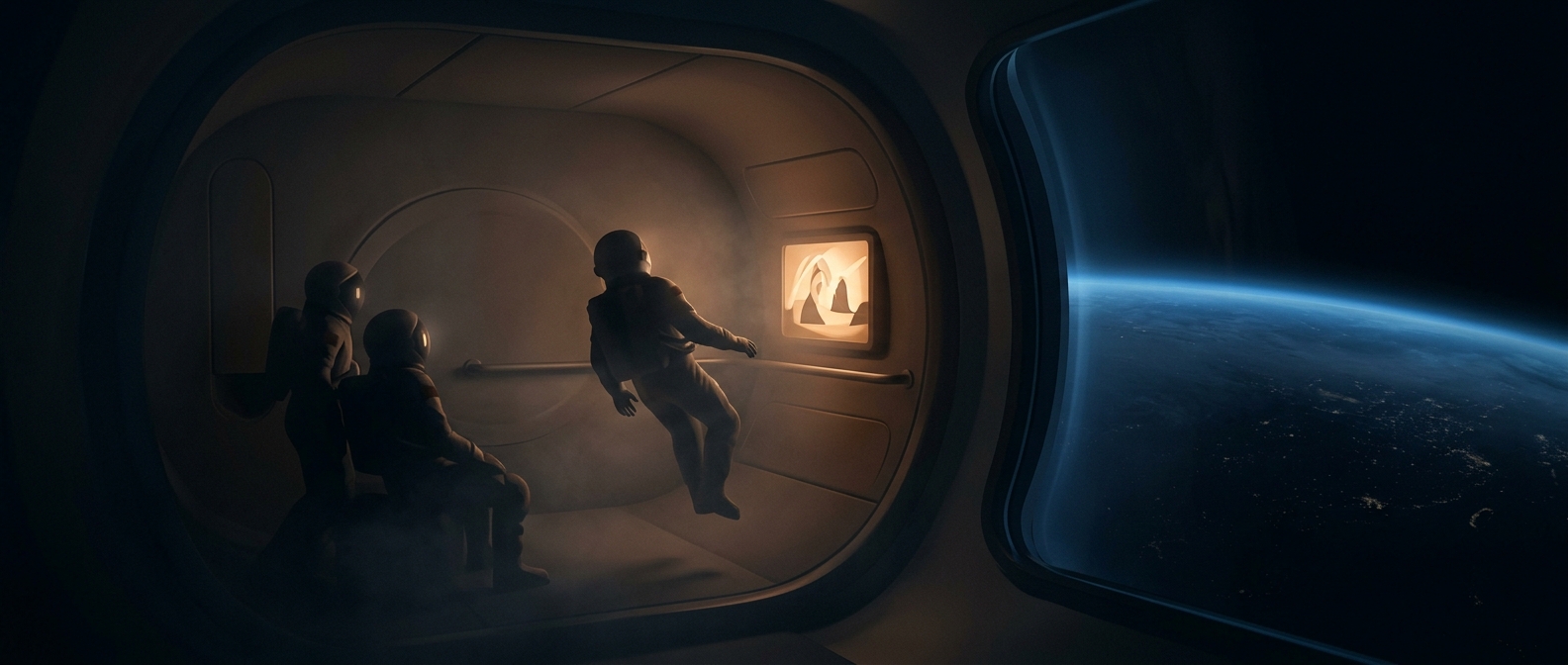
A film therefore has to fit around a tightly arranged day: experiments, equipment upkeep, exercise, meals, and other duties all compete for time. A free stretch may be brief or may not line up with everyone else’s schedule. Watching a movie is less a spontaneous end-of-day ritual than a small break carved out of the timetable.
Headphones solve only part of the problem
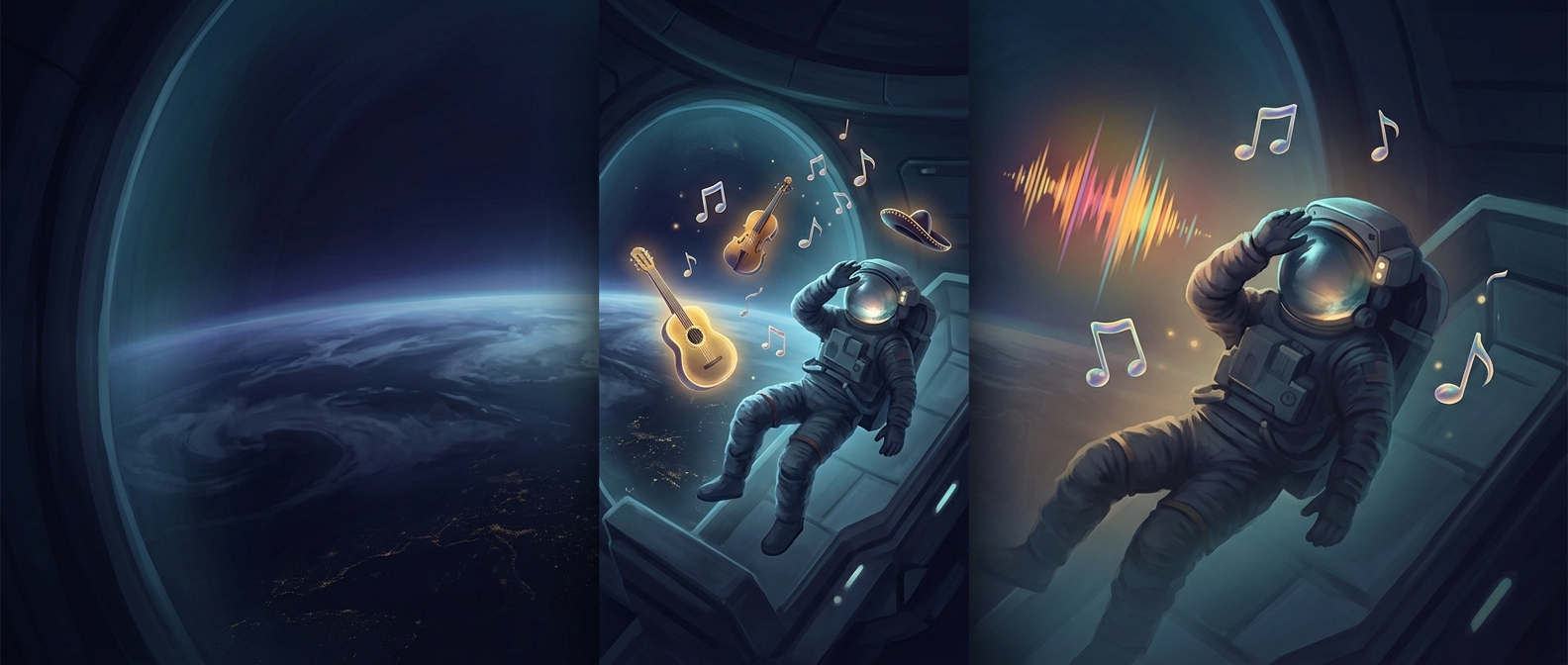
Headphones keep a soundtrack from becoming everyone’s soundtrack, which matters in a compact station where crew members live and work close together. But they do not make the surroundings silent. Fans and other equipment run continuously, and another astronaut may still be working or sleeping nearby.
That makes a movie night depend on two kinds of privacy: control over the sound and a period when the schedule—and the rest of the crew—allows a person to relax. In orbit, the hard part is not keeping the screen in place. It is finding a stretch of time that feels like an evening at all.