A camera turned the track into a moving viewpoint
A phantom ride was built around a simple illusion: show the journey from the front of a moving vehicle, and the audience could experience motion without leaving its seats. The camera faced down the railway line, so rails seemed to stream toward the viewer while the landscape slid past on either side. That forward-facing perspective made the film feel less like a view of a train and more like a ride aboard one.
The operator had to travel with the shot
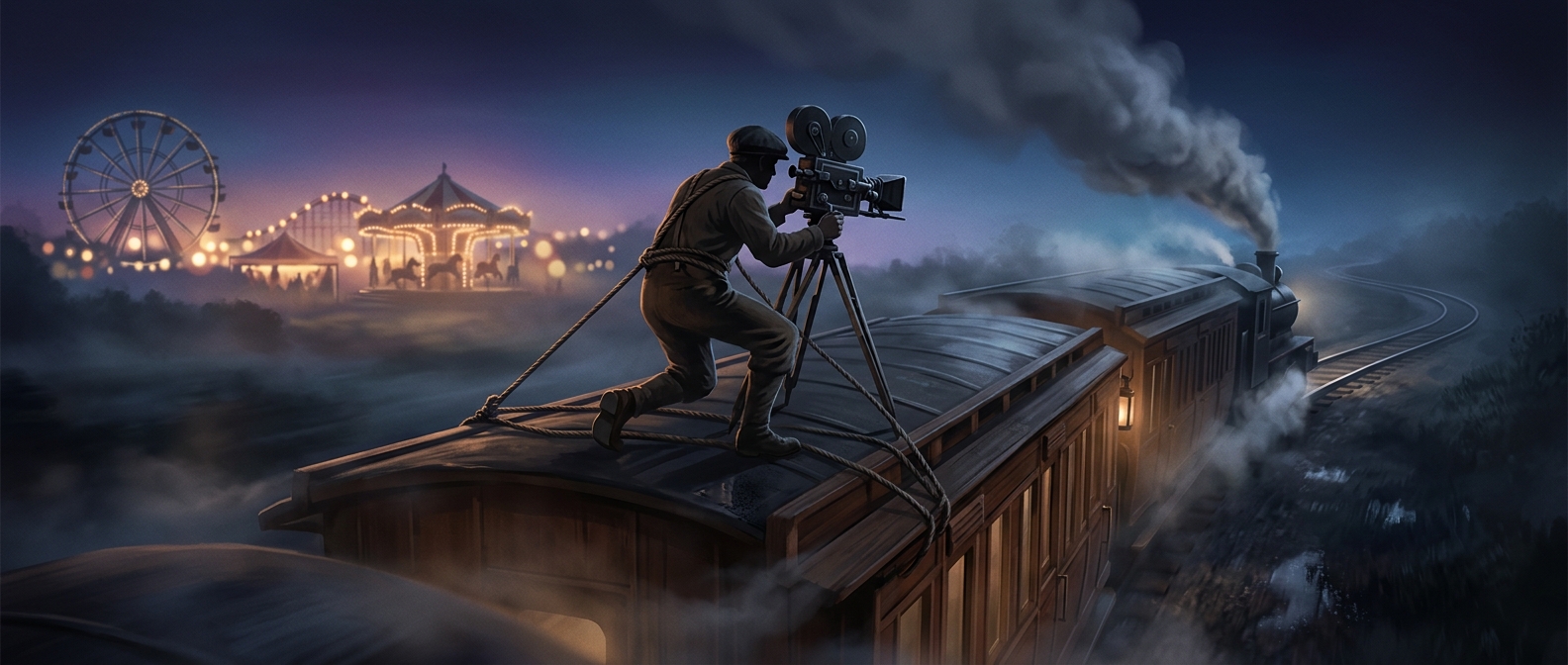
The effect depended on filming from the locomotive itself. Early cameras were bulky wooden machines, so mounting one at the front meant carrying both the equipment and the person operating it onto a moving train. The camera had to keep recording as the locomotive advanced; a view filmed from the platform could not reproduce the same continuous rush along the rails.
That setup also made the camera’s position part of the filmmaking. Rather than moving the camera through a scene in a studio, filmmakers used the train’s real motion to create the movement on screen. The locomotive supplied the forward drive; the camera supplied the audience’s point of view.
A fairground ride without a moving seat
Projected for fairground audiences, the footage offered a thrill through sight alone. As the view pressed onward along the tracks, viewers could read the changing landscape as a journey unfolding in front of them. The striking trick was that the train did not have to be recreated for the screen: the filmmakers brought its motion into the theater by riding along with the camera.