How a dancer makes a fall look uncontrolled
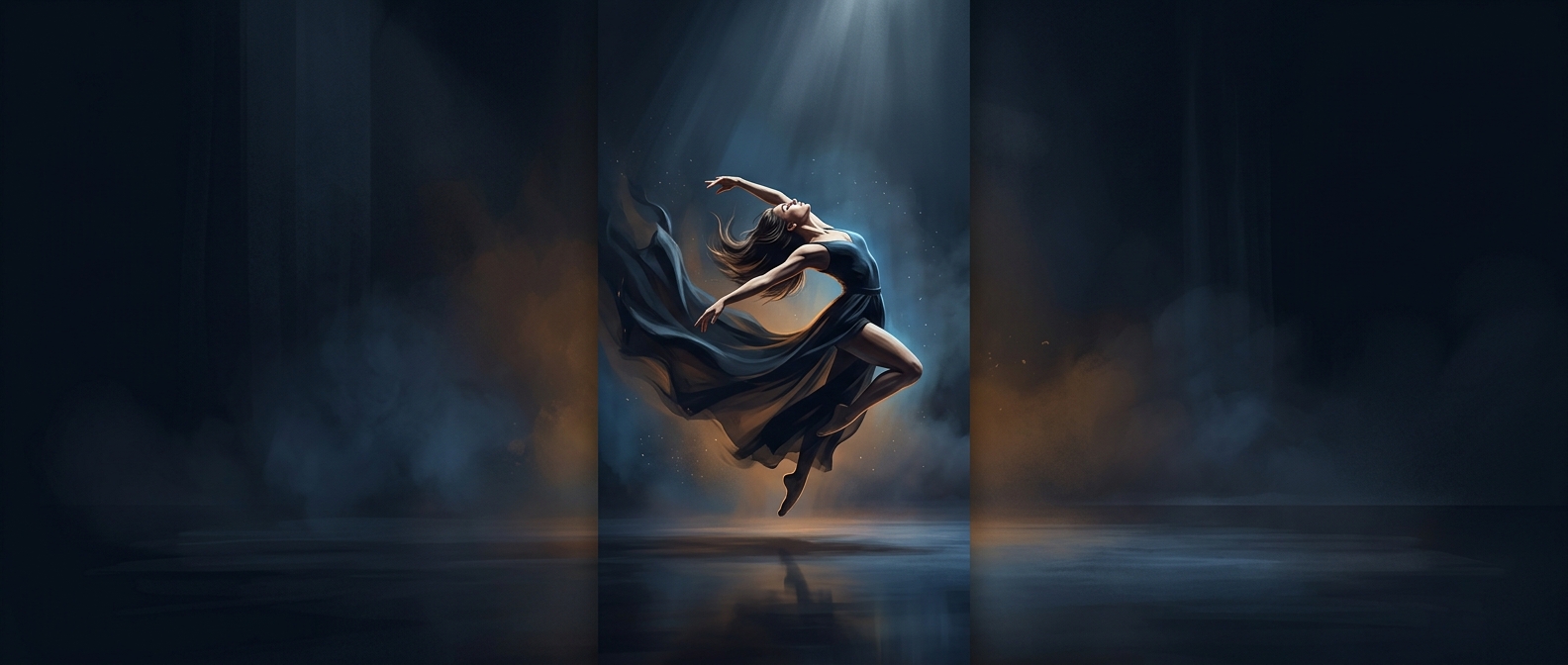
A stage fall can appear sudden, but the dancer has usually planned where the body will go and how it will meet the floor. Instead of stiffening and striking straight down, a performer may bend through the knees, turn the torso, or roll across a shoulder or hip, spreading the impact over a larger area. Momentum—the body’s motion once it is moving—can carry the dancer into a slide, spiral, or recovery step.
This control does not make the movement look cautious. Choreographers can vary its speed, height, and direction: a slow descent may feel like exhaustion, while a sharp drop can interrupt a phrase of movement like a shock. In a duet, one dancer may redirect another’s weight, making the fall seem to emerge from their relationship rather than from a solo choice.
Why let the body hit the floor?
A collapse changes the audience’s sense of what the dancer can control. Upright movement often suggests balance and agency; a body giving way can make effort, conflict, or vulnerability visible without depicting a literal event. The fall also changes the dance’s physical vocabulary: the floor becomes a surface to roll across, push away from, or rise against.
Sometimes the landing is audible. A foot, hand, or body meeting the stage adds a sharp sound to the movement, making the impact part of the rhythm rather than something hidden by music. The fall is both an image and an action: gravity supplies the force, while the dancer’s timing and pathway shape what that force means.