Eurovision’s stage sound is built before the show
When a Eurovision entry reaches the live broadcast, its instrumental arrangement is already fixed in a prerecorded track. That track carries the parts that would otherwise come from players onstage—including drum patterns, bass lines, and guitar solos. The singer’s voice, by contrast, is performed live.
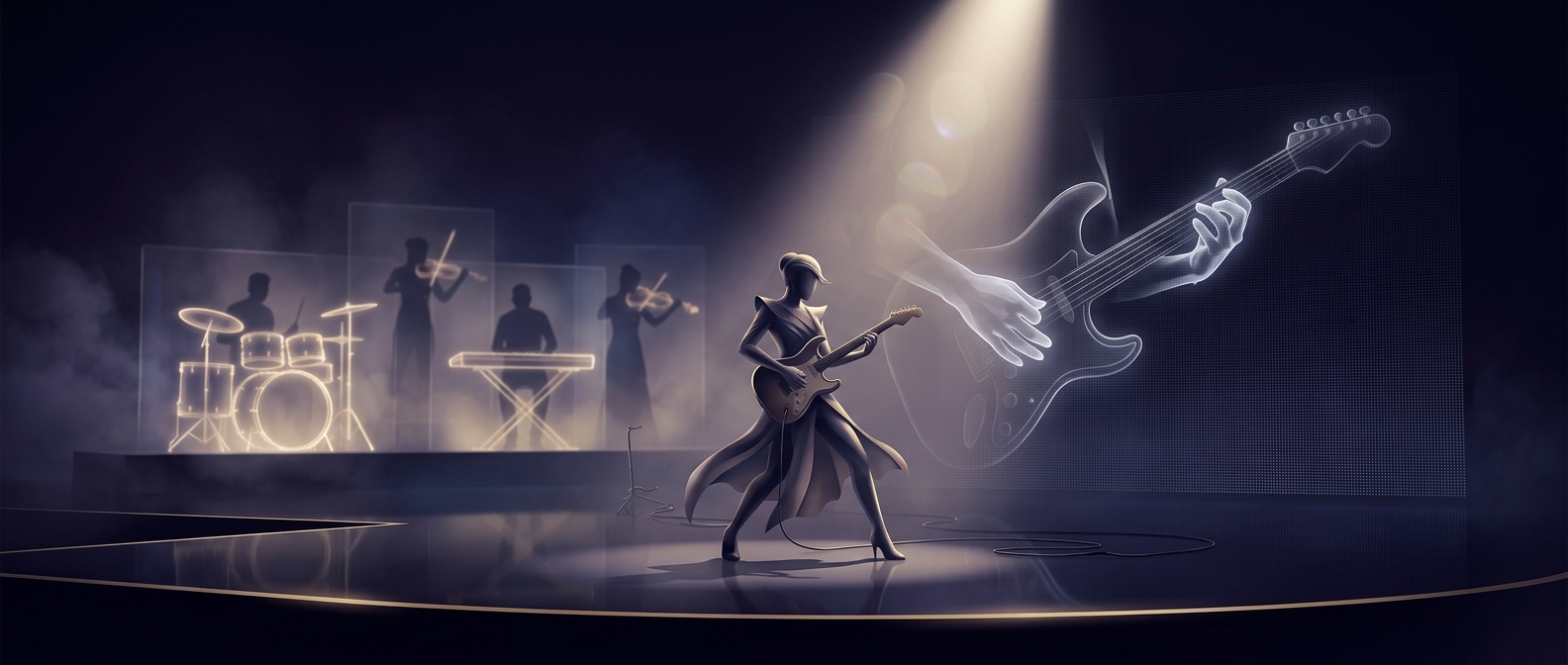
This separates the visible performance from the source of its instrumental sound. A contestant may hold a guitar and play along, but the guitar solo heard by viewers comes from the playback, not from a live guitar signal. The same is true of the drums: a drummer can contribute movement and visual energy without producing the broadcast’s drum part.
A performance designed for the camera
The arrangement has to work as a finished recording while performers act it out in real time. Players rehearse their gestures and timing against the track so a guitar flourish, drum fill, or dramatic pause lines up with what the audience hears. That coordination matters especially in a tightly timed television production, where songs must fit a fixed running order and the stage must be cleared quickly between acts.
The tradeoff is control: prerecorded instruments deliver a consistent sound, but they cannot change course if a performer varies the tempo or a live player makes a mistake. What looks like a band producing every note onstage is therefore partly a visual performance synchronized to a carefully prepared soundtrack.