An elevator became a loading buffer
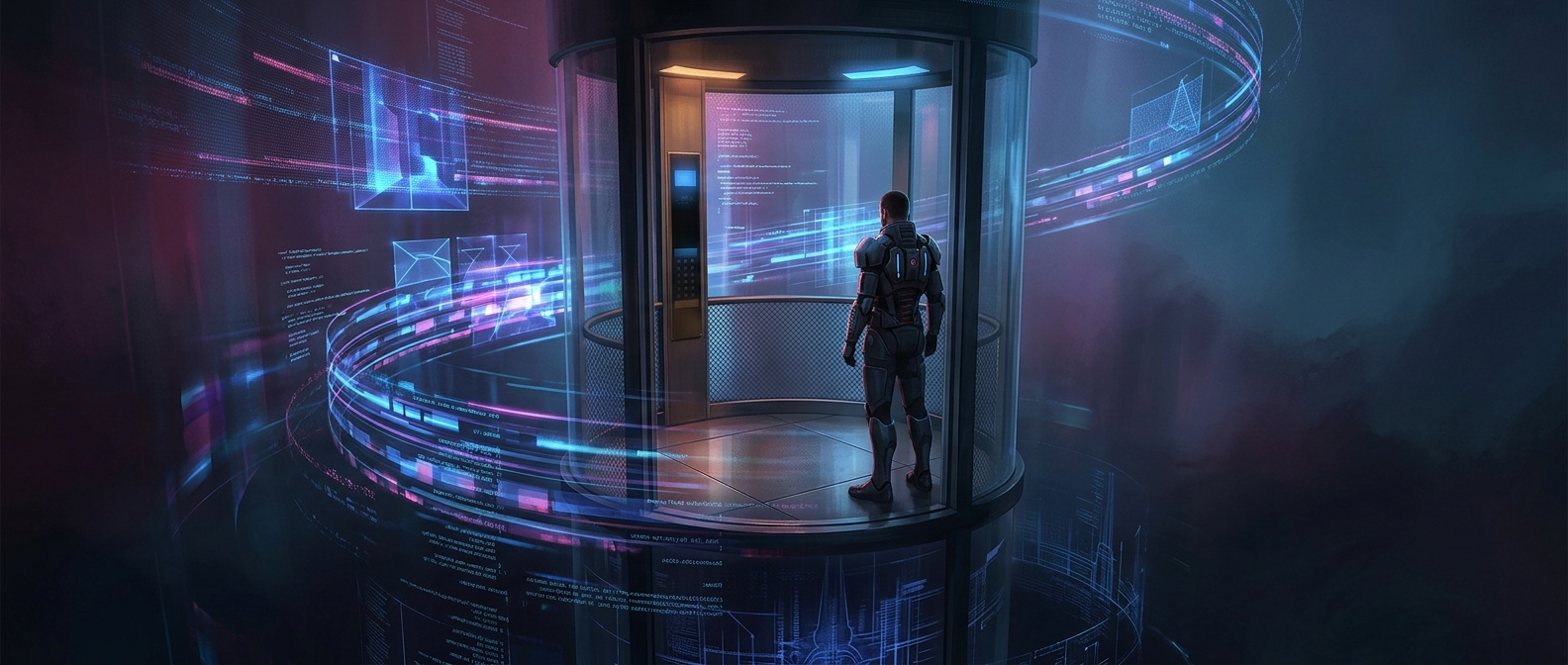
When Mass Effect moved the squad between major areas, the game had to bring the next space into memory before it could show it. The console’s storage and memory limits made that handoff take time. Rather than stop the action for a separate loading screen, BioWare put the wait inside the world: the squad rode an elevator while the game prepared what came next.
That made the ride a kind of buffer. Its duration gave the system room to finish loading, while the doors provided a natural moment to hide the change from one playable area to another. The tradeoff was visible: players spent longer traveling than a real elevator journey would demand. But the delay felt less like a technical interruption because it had an in-world explanation.
Turning dead time into character time
The elevator conversations did more than fill silence. Squadmates could comment on events or talk among themselves, so players learned about the crew while waiting. The dialogue also made the squad feel present between missions, rather than like characters who existed only during combat or formal story scenes.
There was a practical limit: conversation could not always make a ride feel short, especially if the loading took longer than the available dialogue. Still, the design changed what the wait meant. A loading screen says, in effect, “the game is not ready”; a conversation lets the player experience the same interval as part of the crew’s journey. The elevators became memorable not because they moved quickly, but because the game gave the loading time a place in the story.