When a loop sounds like a chorus
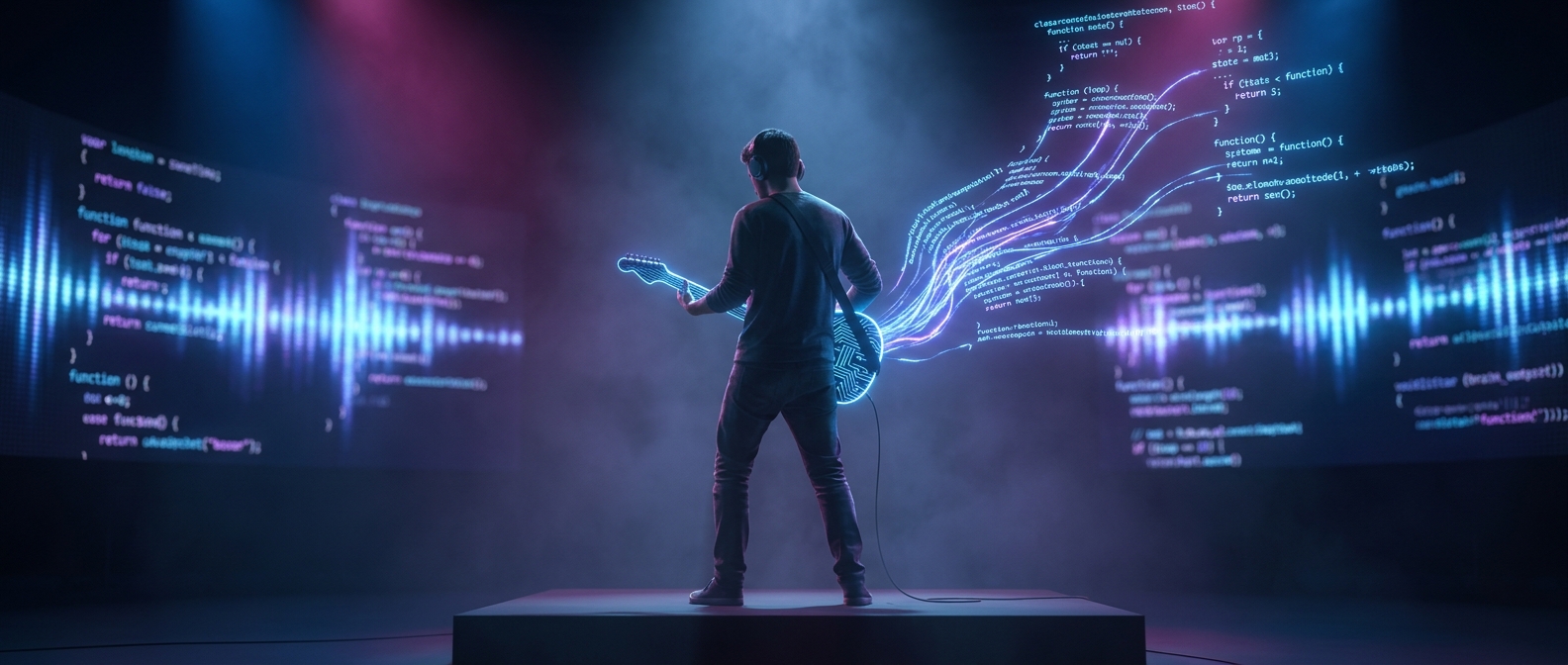
Rockstar is an esoteric programming language: a language made partly for the fun of seeing how far code can be pushed away from ordinary-looking instructions. Its source code is meant to resemble lyrics from an extravagant 1980s rock ballad. The trick is that the dramatic phrasing is not decoration added after the program runs. It is the program’s actual syntax—the words and patterns the interpreter reads to determine what to do.
Lyrics with rules underneath
A computer still needs precise directions. In Rockstar, phrases that look expressive must follow conventions that give them specific meanings. The interpreter recognizes those patterns and translates them into familiar operations, such as storing a value, checking a condition, or repeating a section of code.
That means a loop—the instruction to run a block again while a condition remains true—can be dressed up in the language’s lyrical style. To a reader, the code may sound like a theatrical refrain; to the interpreter, its structure marks a test and a repetition. The lyric-like surface works because a strict grammar sits underneath it. A phrase that merely sounds plausible is not necessarily valid code: its wording has to match the language’s rules.
The joke depends on the machinery
This contrast is the point. Rockstar makes a normally spare, utilitarian activity—writing exact instructions—look like an overblown performance. But the spectacle does not remove the need for logic. A loop can still repeat forever if its condition never changes, and a program still has to arrange its instructions correctly.
So the power-ballad effect is more than a playful visual style. It turns the gap between human expression and machine precision into the experience of programming: the lines can sound passionate, but the computer follows only the rules encoded in them.