A plant diet without a plant-eater’s gut
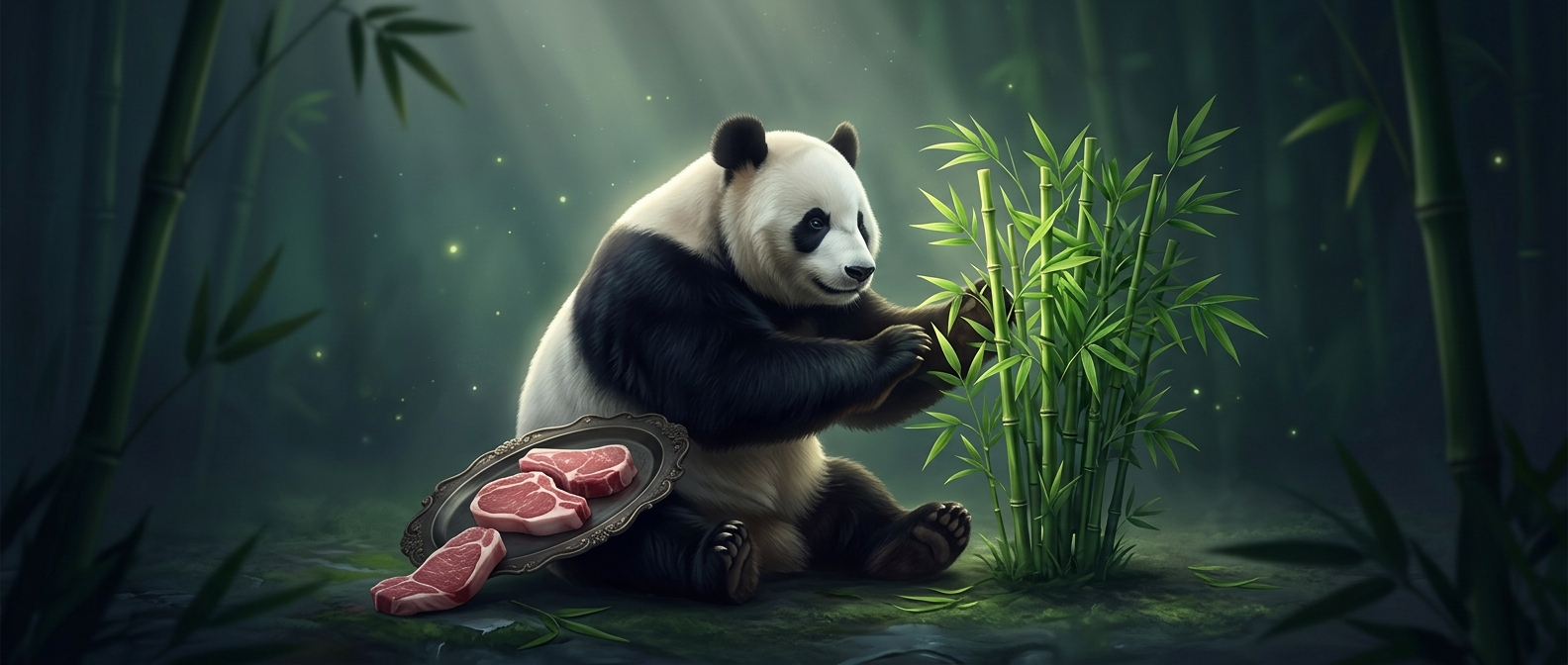
Giant pandas belong to the order Carnivora, and their digestive tract still resembles that of a meat-eating relative: it is comparatively simple, without the enlarged fermentation chambers that help animals such as cows extract energy from tough plants. Pandas can chew bamboo, but they cannot efficiently turn its fibrous structure into fuel.
Bamboo’s cells contain digestible nutrients, but much of the plant is locked behind cellulose, a tough material that human and panda digestive enzymes do not break down well. Microbes in a panda’s gut can help process some plant material, but not enough to make bamboo a high-energy food. Much of what the animal eats therefore passes through without yielding much usable nutrition.
The cost of specializing in bamboo
Pandas compensate by choosing nutritious parts when they are available and eating large quantities. Their powerful jaws and broad molars crush the stems and leaves, exposing more of the plant’s contents to digestion. A modified wrist bone helps grip bamboo while they strip and handle it; it works like a thumb, though it is not a true one.
The strategy ties daily life to an abundant but low-return food. Eating and digesting occupy much of the day, while the panda’s relatively low-energy lifestyle helps limit how much fuel it needs. The tradeoff is clear: a panda can thrive on bamboo not because its gut is built to digest grass-like plants exceptionally well, but because it has adapted its behavior and body around eating enough of them.