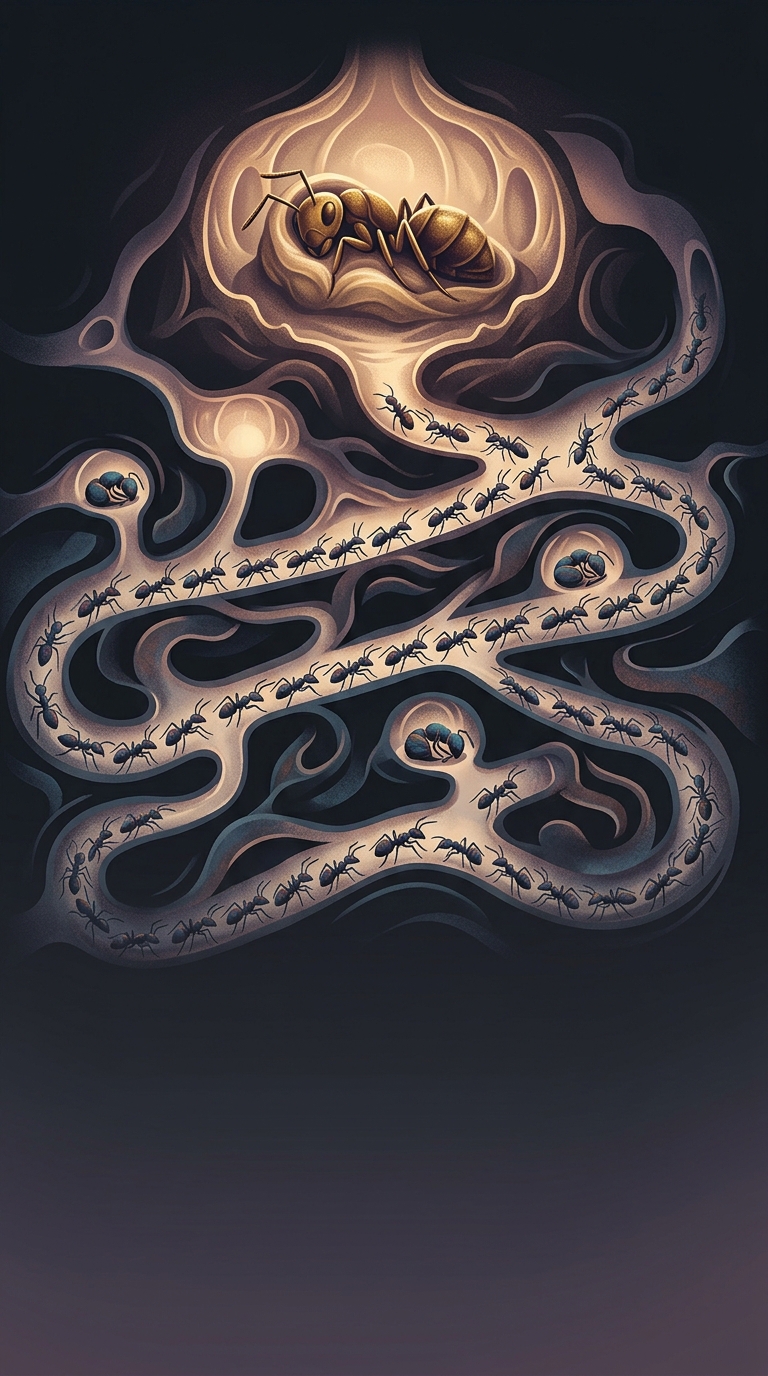
How a Colony Rests Without Shutting Down
An ant colony has no single bedtime. Workers perform shared tasks—such as caring for young, tending the nest, and gathering food—so if they all stopped at once, essential work would pause. Instead, rest is distributed among individuals: while some ants take brief naps, others remain active.
These short rests are not simply moments when an ant stands still. During sleep, responsiveness to the outside world drops, so a resting ant is less likely to react immediately to a disturbance. The naps are brief, but workers repeat them across the day and night, adding up to meaningful rest without requiring a colony-wide shutdown.
Why the Nest Still Looks Busy
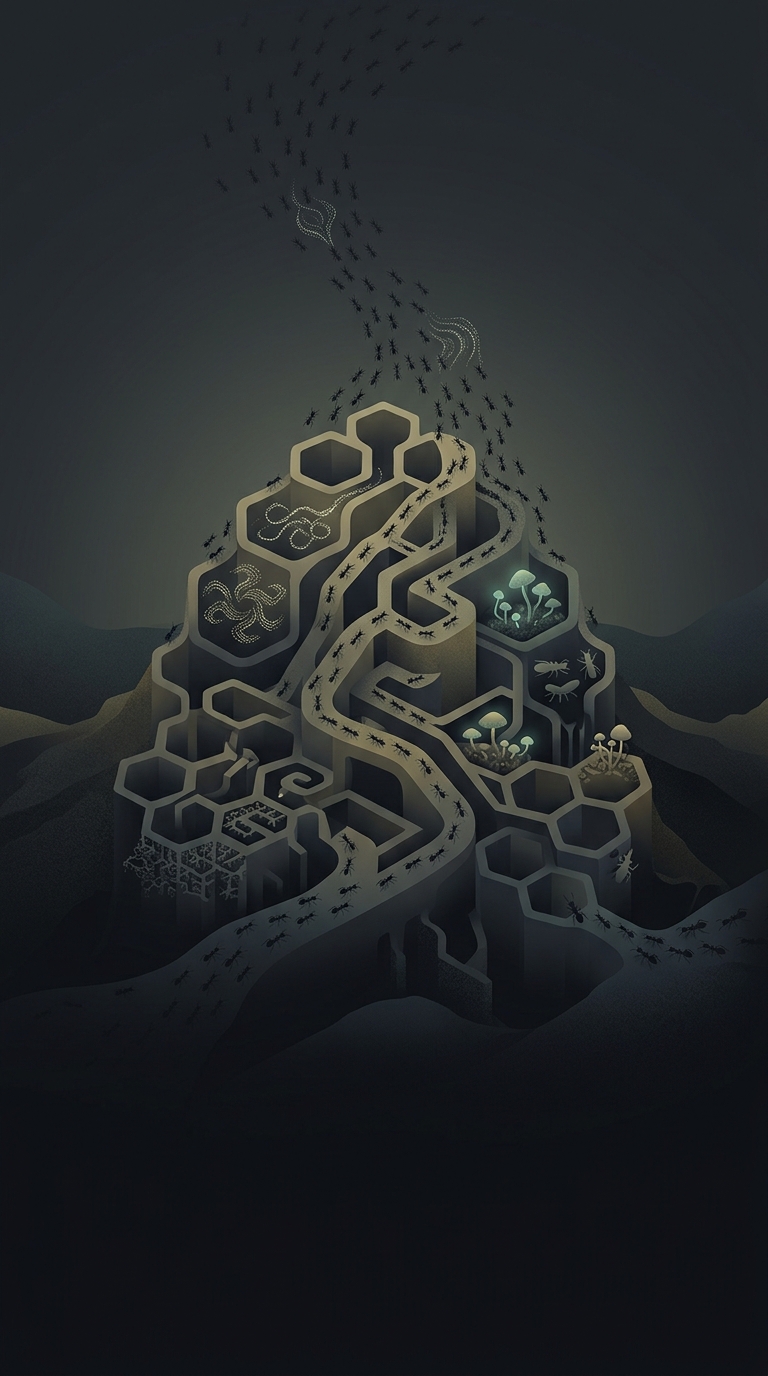
Because workers rest at different times, activity continues even when many ants are asleep. An ant returning from a task may pause while others carry on; later, those workers may rest as another group takes over. This staggered rhythm helps keep labor available around the clock, rather than concentrating every worker’s effort into one shared waking period.
The result can be misleading to a human observer: a nest that appears constantly active does not mean every ant is awake. The colony’s continuity comes from overlapping shifts of activity and rest, not from individual workers staying alert without interruption.