How cooling makes the Moon shake
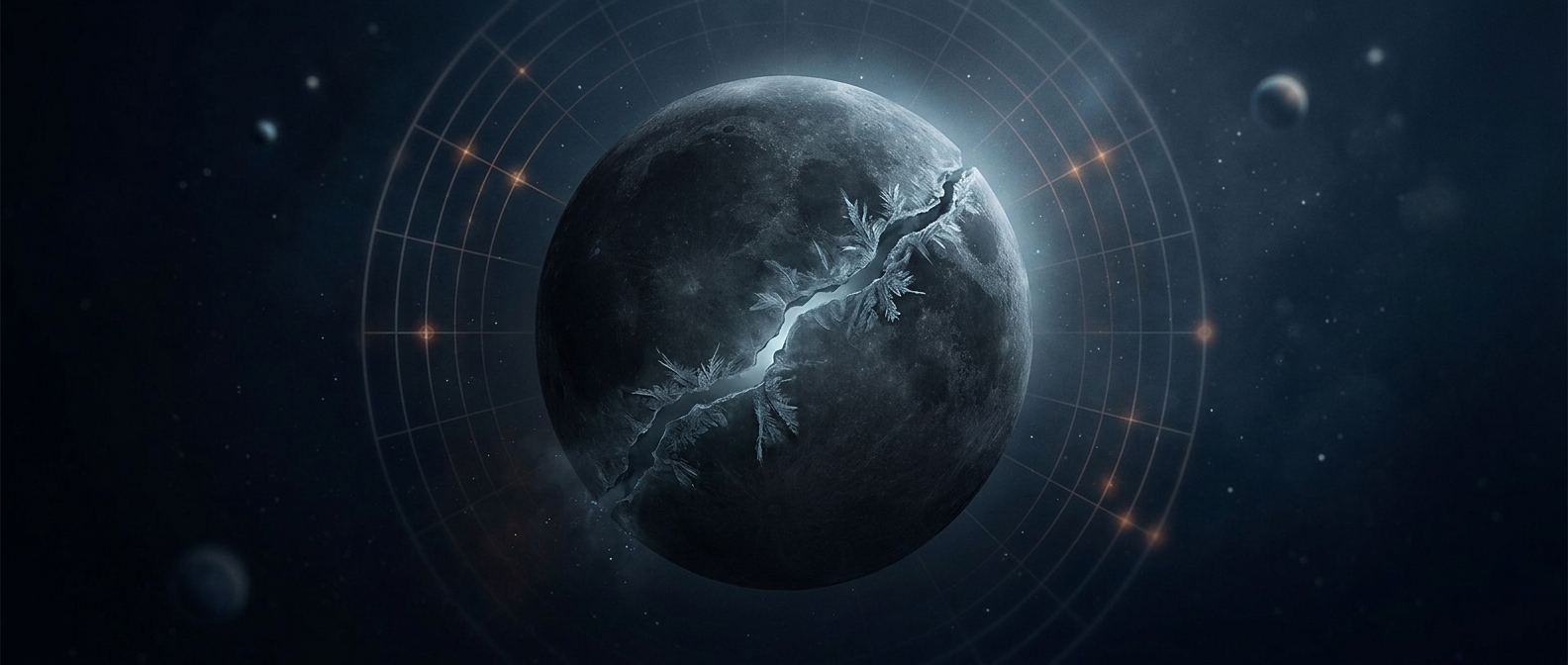
The Moon is gradually losing heat from its interior. As rock cools, it contracts, much as a material shrinks when it cools on Earth. The Moon’s outer shell cannot simply shrink smoothly everywhere, so the crust is put under compression: neighboring sections are pushed toward one another.
That pressure can be released along a thrust fault, a break where one block of crust is forced up and over another. The movement may be small, but it can shift the surrounding ground abruptly, producing a moonquake. These quakes are not driven by the familiar cycle of moving tectonic plates that causes many earthquakes on Earth; they arise in part from the Moon’s slow cooling and contraction.
A quake can disturb the surface, too
Fault movement does more than shake the ground at the fault. A jolt can unsettle loose material on a steep slope, sending rocks downhill. That matters because the Moon has no rain or flowing water to steadily wear away and clear such debris. A rockfall can therefore leave evidence of a disturbance long after the shaking itself has ended.
The same squeeze that slowly alters the Moon’s crust can thus have two effects: a sudden jolt below and a rearranged slope above. Its shrinking is gradual, but its consequences can arrive in an instant.