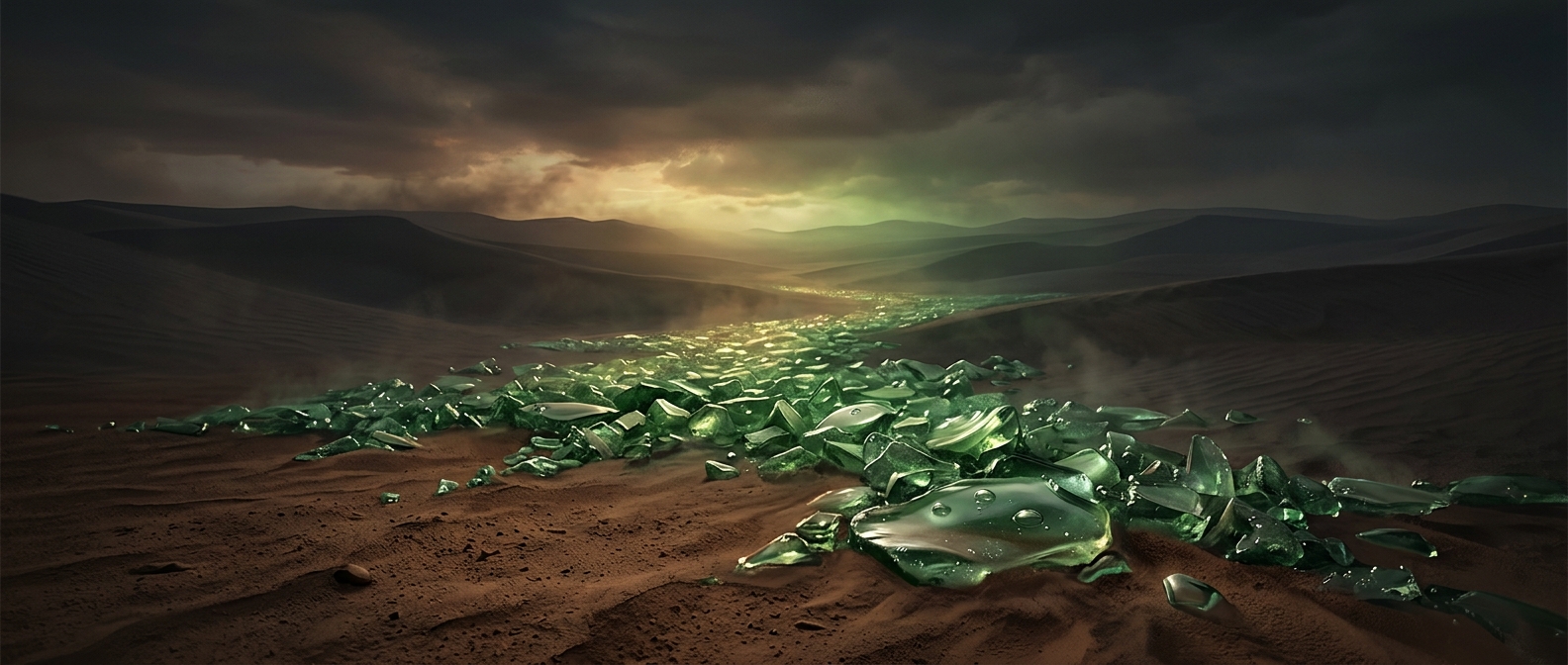
How a blast made glass from the ground
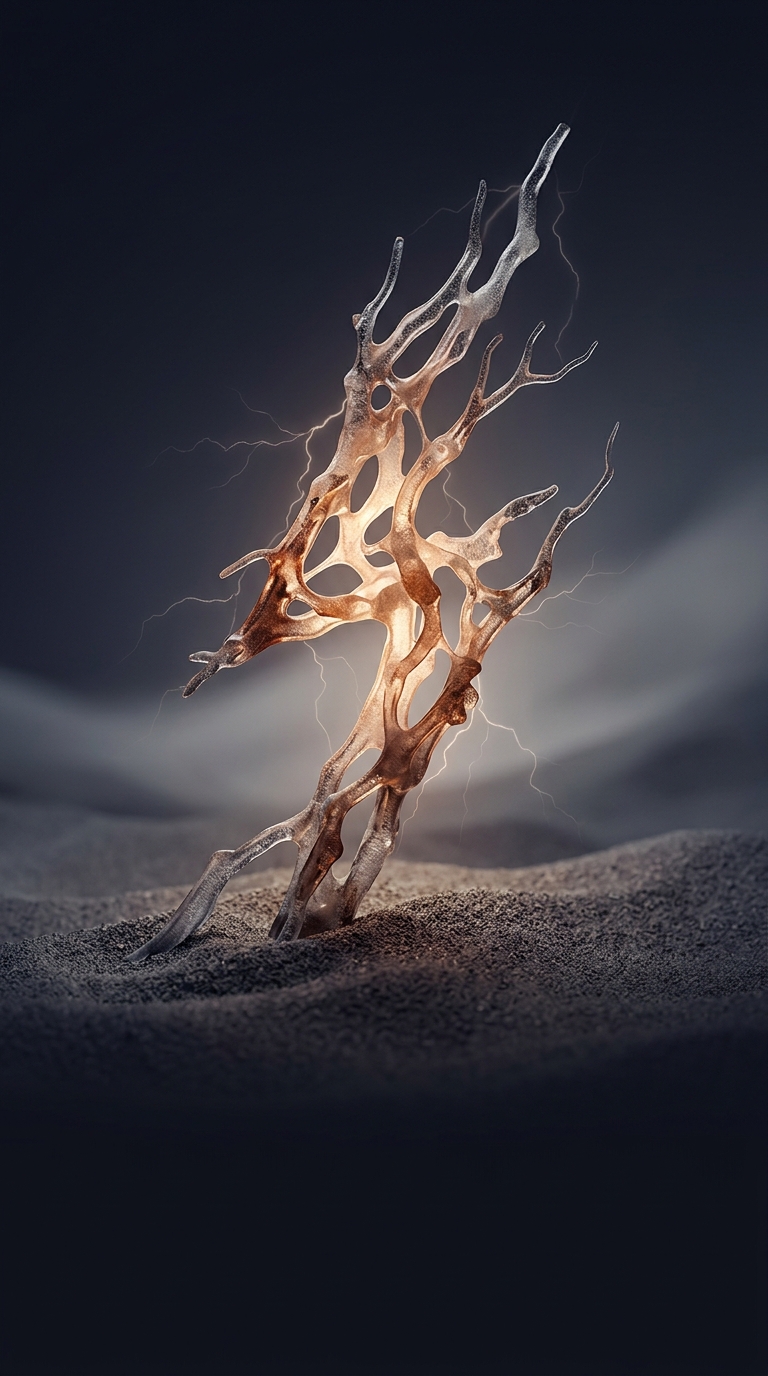
In the 1945 Trinity test, the explosion did more than scorch the desert surface. Its intense heat melted grains of sand together with bits of material from the test tower and device. The molten mixture was thrown into the air and spread over the ground; as it cooled quickly, it solidified into a glass now known as Trinitite.
Ordinary glass is made by heating silica-rich material until it melts, then cooling it into a rigid, noncrystalline solid. At Trinity, the explosion supplied the heat in an instant, while the mixture’s varied ingredients gave the resulting glass its uneven color and texture. Much of it appears green, though pieces can differ because they formed from different combinations of sand and debris.
A record of the explosion, not just its heat
As the glass formed, radioactive material from the test could become trapped within it or cling to its surface. That makes Trinitite a physical record of the blast’s effects: the desert was not simply left with a darkened patch, but with material transformed and mixed together on a scale that ordinary fires cannot achieve.
The glass is also fragile evidence. Collecting pieces removes part of the site’s record, and radioactive contamination is another reason not to handle or keep fragments casually. What looks like a small, polished pebble began as desert ground swept into a fireball and cooled before it could return to sand.