How a geyser turns underground heat into a fountain
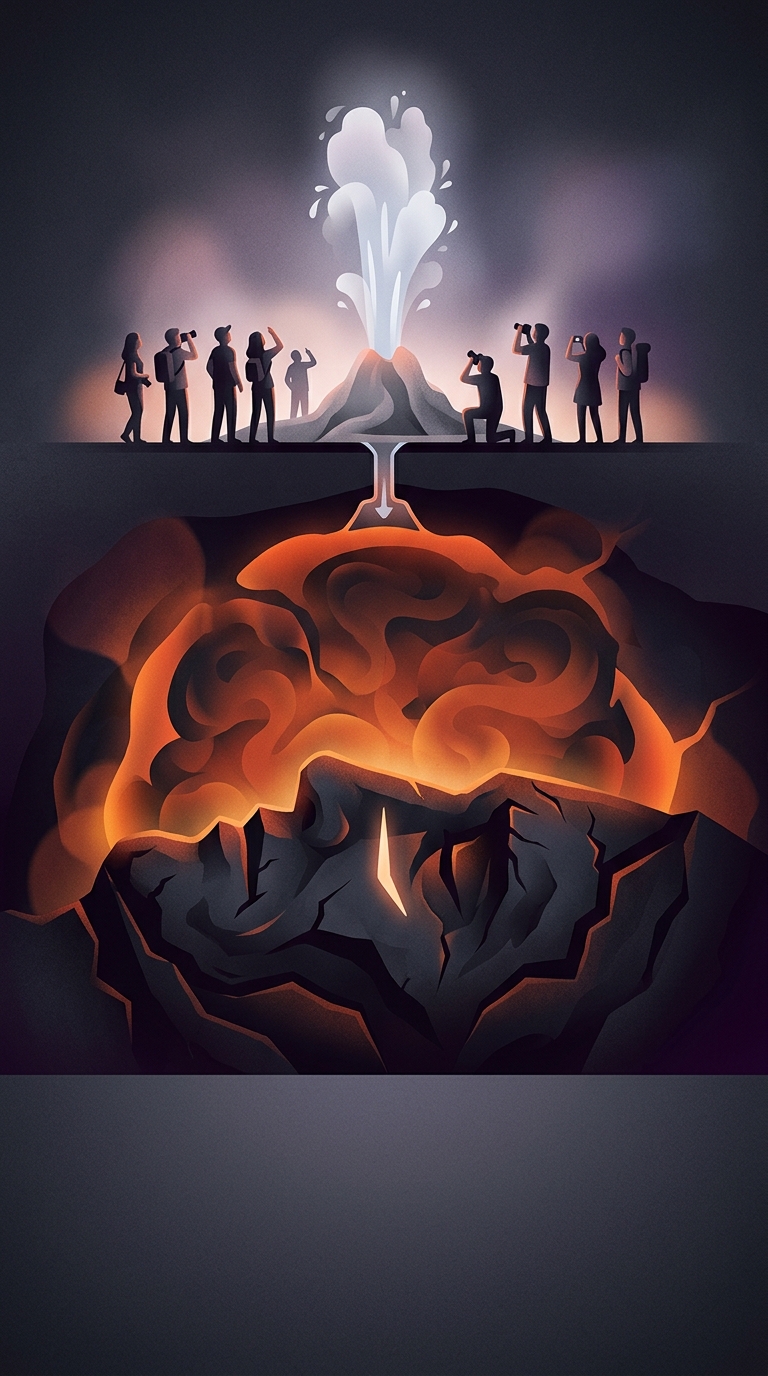
A geyser is not simply a hot spring that happens to splash. It needs a particular underground arrangement: water-filled cracks and cavities, a source of heat, and narrow passages that can trap pressure. Deep underground, pressure keeps water from boiling even when it is hotter than boiling water at the surface. As pockets of steam form and expand, they push water upward. The pressure falls, more water flashes into steam, and the trapped water erupts through the vent.
The plumbing helps determine whether the result is a geyser or a steady hot spring. In a more open route, heated water can circulate continuously. In a constricted one, pressure can build until it forces water out in a burst. Mineral deposits can gradually change those passages, so an eruption’s timing is a product of a shifting underground system—not a perfectly wound clock.
One heat source, many kinds of activity
The park’s geothermal features are powered by heat moving through rock and groundwater. That does not mean every geyser sits above a pocket of molten rock, or that the underground system is one continuous reservoir. Hot water can travel through fractures far from the rock that supplied its heat, while local differences in water flow and plumbing produce very different surface features.
That distinction matters when scientists assess volcanic activity. A geyser eruption reflects conditions in its own shallow hydrothermal plumbing; by itself, it is not a countdown to a major volcanic eruption. Researchers instead look for broader changes—such as patterns in earthquakes, ground movement, and volcanic gases—that could indicate the deeper system is changing.
The same landscape therefore holds two stories at once: a vast, slowly evolving source of heat and small, intricate plumbing systems that can send a column of water skyward. A geyser’s spectacle is dramatic, but its schedule belongs to the water and rock immediately beneath it.