How Limestone Turns Into Plumbing
Rainwater is slightly acidic before it reaches the ground: as it passes through soil, it absorbs carbon dioxide and forms a weak acid. Over long periods, that water dissolves limestone along fractures, widening tiny seams into passages large enough to carry flowing water. This landscape, called karst, is less like a surface cut by ordinary streams and more like a hidden network of drains.
A River Can Lose Its Channel
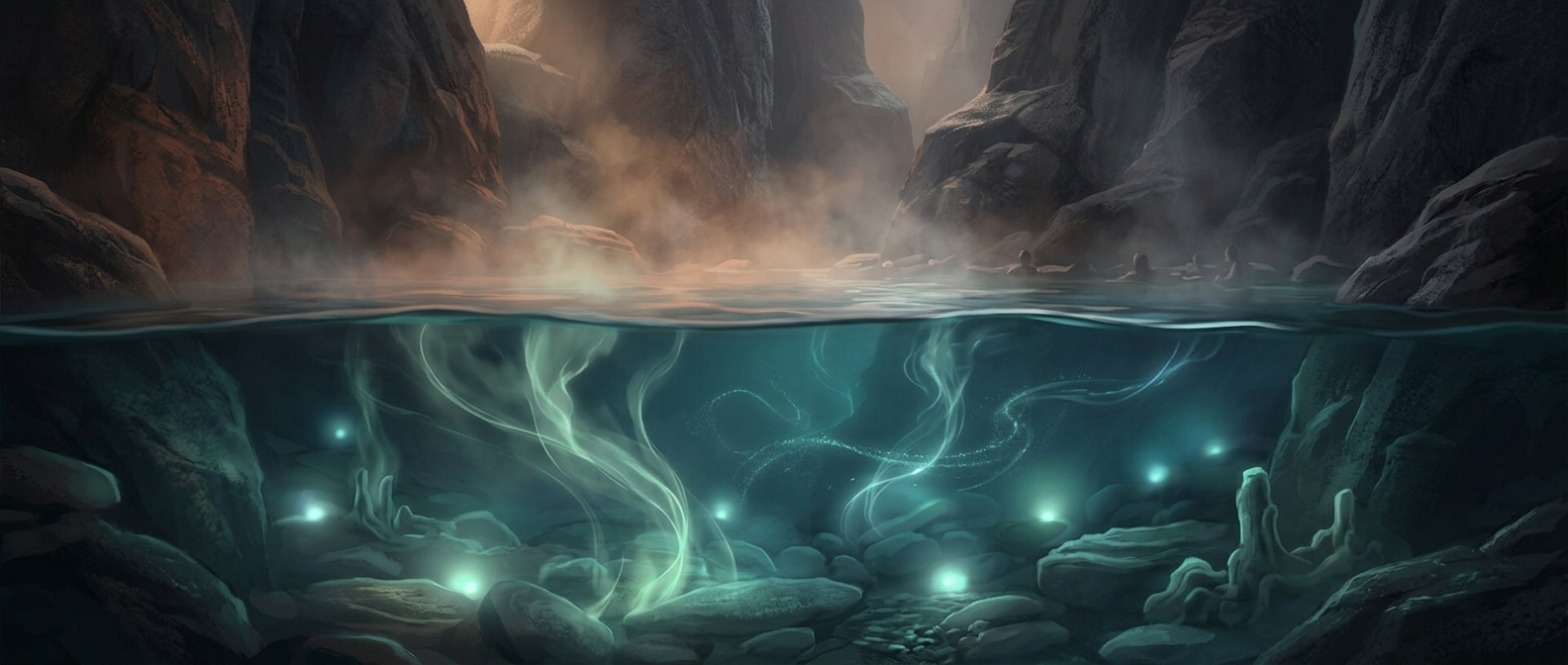
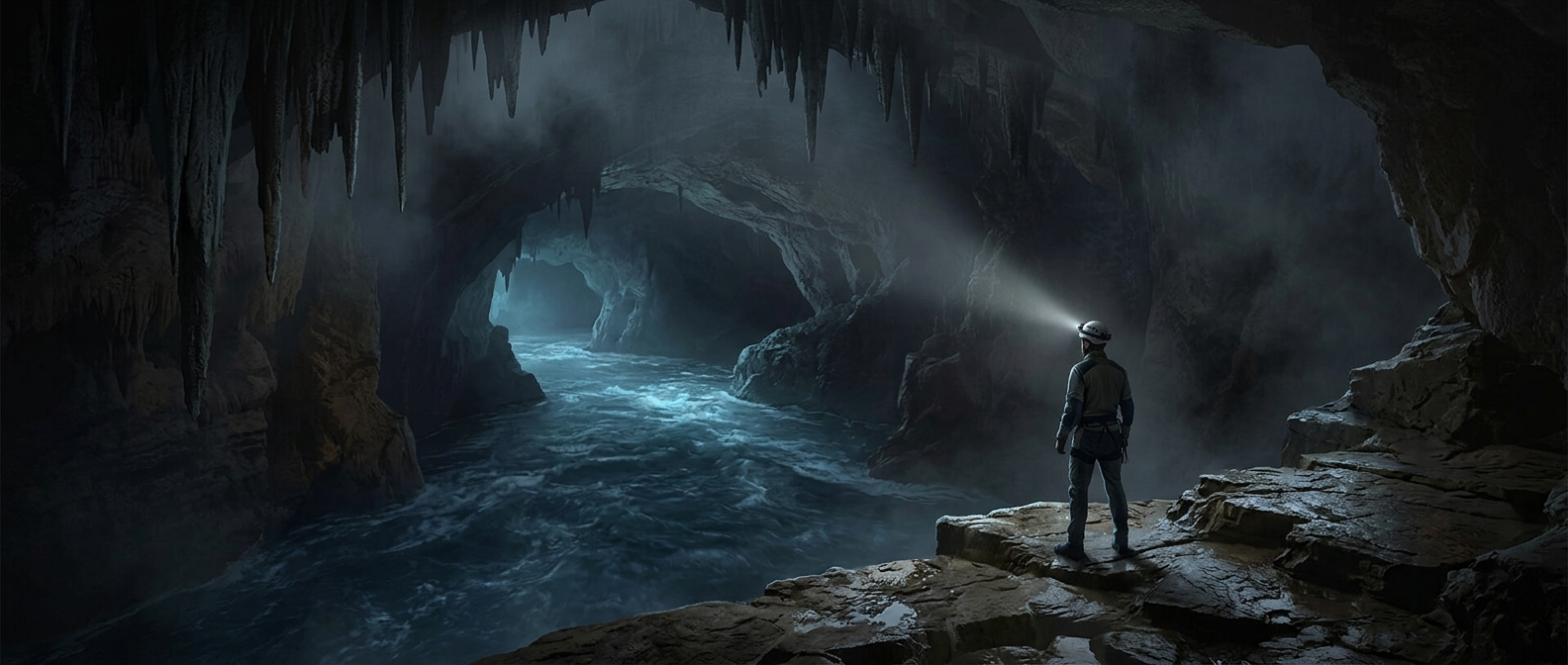
In many places, water runs across the land until it meets a sinkhole or a crack that opens into the underground system. Below ground, streams follow the easiest routes through connected cavities and conduits. Their paths may bend, join, or split, and they do not necessarily follow the direction suggested by the surface terrain.
The water can emerge where the underground passage meets the land again, often at a spring. The spring is not a new source of water so much as a visible outlet for water that entered elsewhere. Between the sinkhole and the spring, the river has crossed a watershed—a region drained by a connected water system—without being visible at the surface.
Why the Hidden Route Matters
Because the rock’s passages can connect distant places, rain or water entering a sinkhole may reach a spring quickly compared with water moving through soil and small pores. That also means pollutants spilled into a karst landscape can travel underground with limited natural filtering. A clear spring may therefore depend on conditions far upstream, including places where no surface stream appears to connect to it.
The landscape’s map has two versions: the visible hills and valleys, and the unseen drainage network beneath them. In limestone country, a river that disappears is often still on its way somewhere.