A mineral is more than a chemical formula
In geology, a mineral is generally a naturally occurring, inorganic solid with a characteristic chemical composition and an orderly internal structure. That last requirement matters: a substance can have the right atoms yet fail to qualify if those atoms do not form a stable crystal.
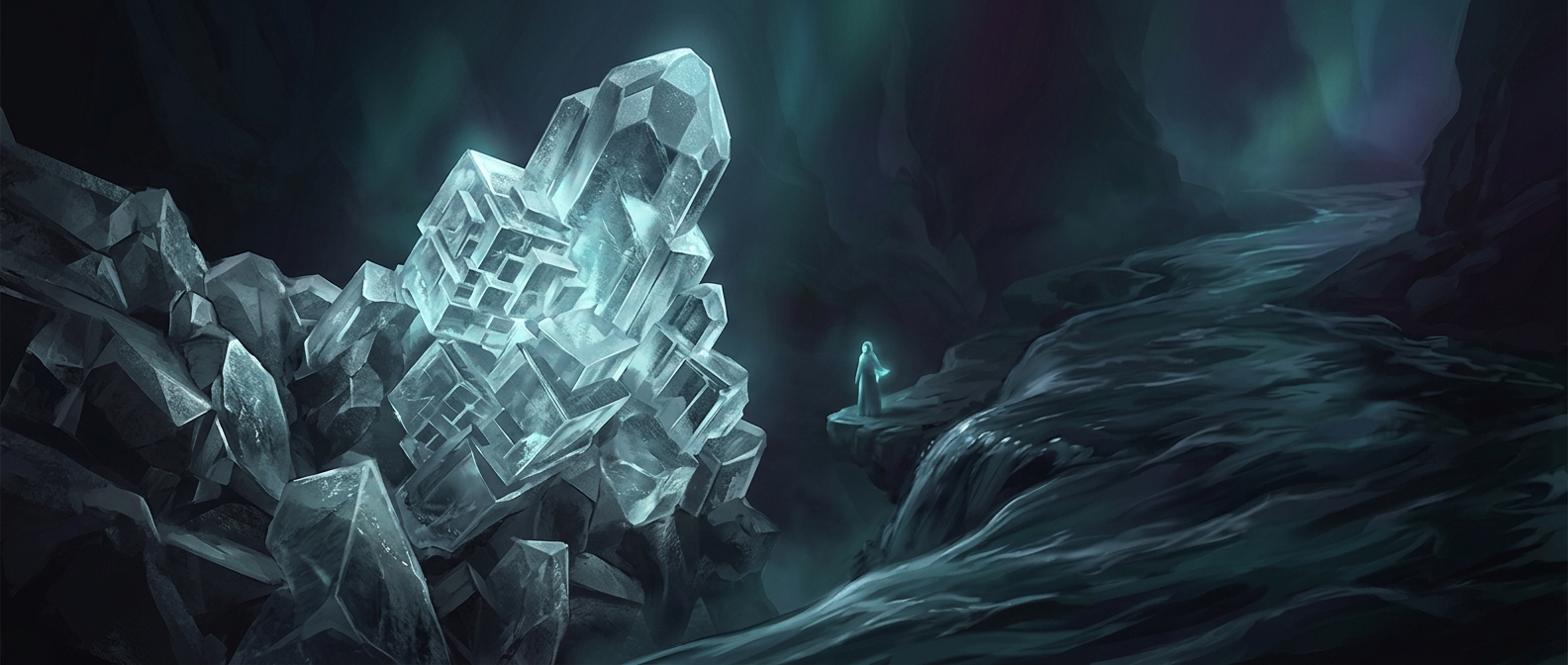
In liquid water, H₂O molecules constantly shift past one another. They attract and briefly link through hydrogen bonds, but the links continually break and reform, so the molecules do not keep a fixed arrangement. As water cools and freezes, those attractions help guide the molecules into a repeating crystal lattice—a three-dimensional pattern that extends through the solid. The molecules still move slightly, but they remain arranged around set positions.
The structure changes ice’s behavior
In common ice, the lattice leaves more open space than the close packing found in liquid water. That is why ice is less dense and floats. This unusual structure also helps explain why lakes tend to freeze from the surface downward: a floating layer of ice can cover the water beneath it, slowing further heat loss.
The mineral label has a boundary, too. Natural ice in glaciers, snowfields, and frozen lakes fits the geological definition; ice made in a freezer has the same crystalline structure but is not naturally occurring. The distinction is not about whether the molecules are “real” ice—it is about what counts as a mineral in geology.