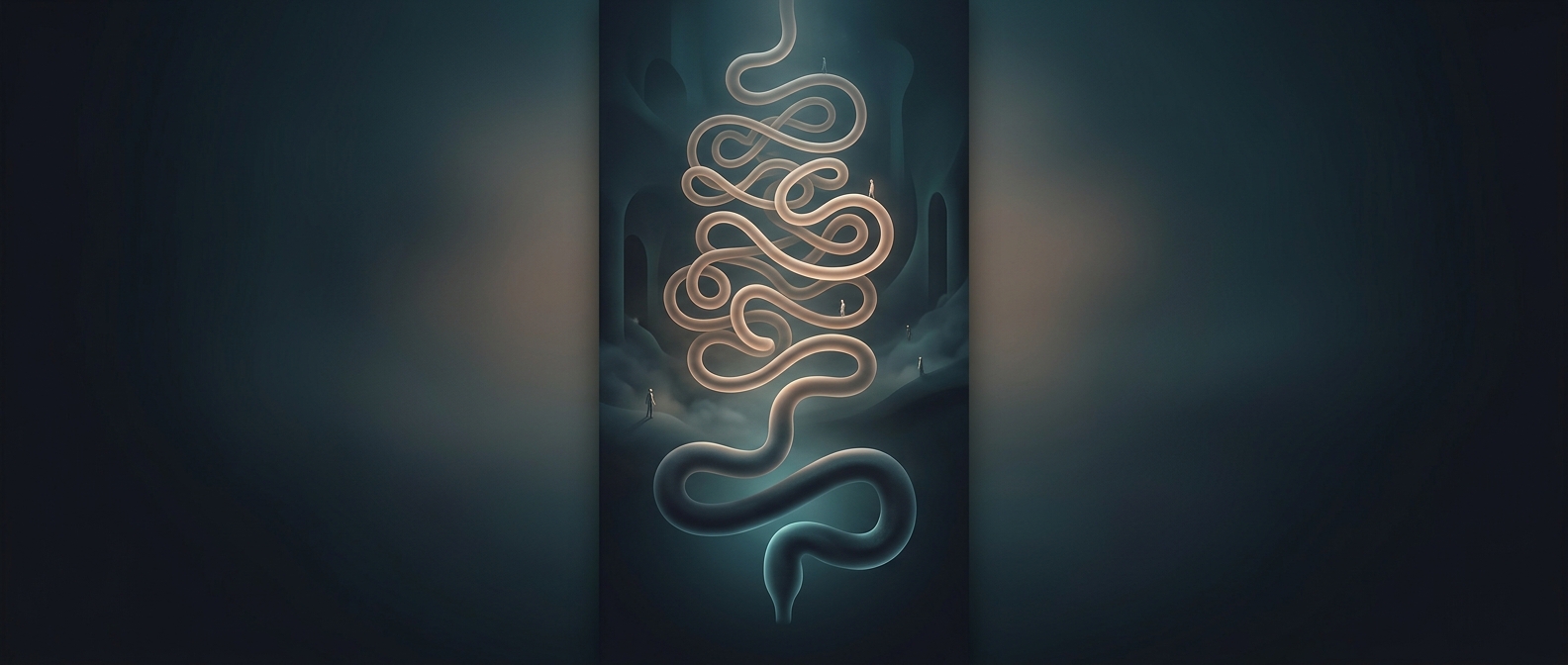
How a long tube fits inside the abdomen
The small intestine is not packed in as a straight length. It lies in many loops, held in place by the mesentery—a fold of tissue that anchors the intestine to the back of the abdominal cavity and carries its blood vessels, nerves, and lymph vessels. The arrangement lets a long, flexible organ fit inside the body while still moving as digestion proceeds.
Muscle layers in the intestinal wall contract in coordinated waves, gently squeezing and shifting the contents onward. These movements mix food with digestive juices and bring it into repeated contact with the inner surface. The route is not simply a passageway: much of digestion and nutrient uptake happens along it.
Turning food into materials the body can use
The lining is folded and covered with tiny projections called villi; each villus has even smaller projections that increase the area available for absorption. Sugars and amino acids enter blood vessels in the lining, while most digested fats enter small lymph vessels. From there, nutrients can be transported to tissues that need them.
By the time the remaining material reaches the large intestine, much of the usable nutrient supply has already been absorbed. The large intestine’s wider shape suits a different job: reclaiming water and salts and compacting what remains. The contrast is a reminder that an organ’s name can describe its width, not the distance its contents travel.