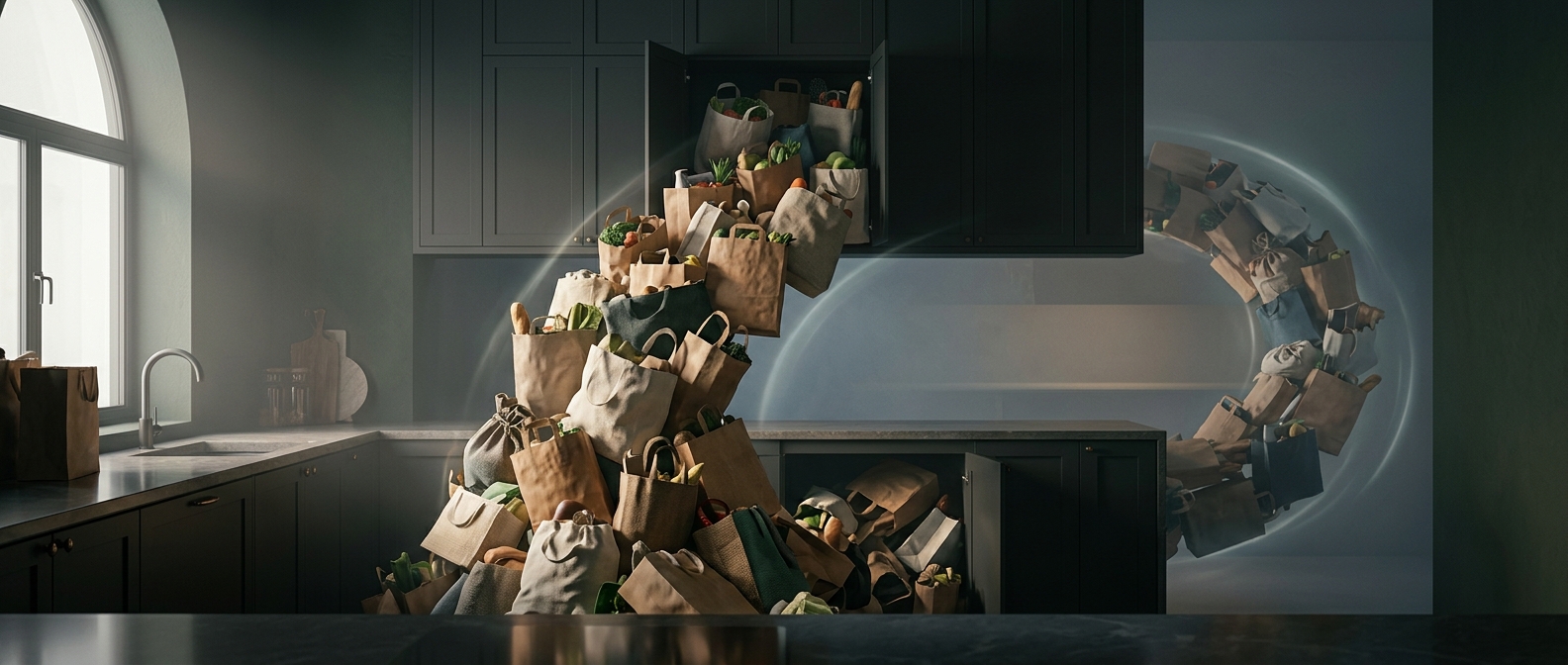
The Reuse Bottleneck Behind the Bag Stash
A bag stash grows whenever bags arrive faster than they leave. The key is not how many bags a household receives on one trip, but how many it puts back into circulation before the next trip. If a shopper brings home several bags and reuses only one or two, the rest become surplus—even when reuse is the intention.
That gap is easy to create. Reuse requires remembering to take bags along and having enough of the right kind for the next errand. New bags, meanwhile, arrive automatically with purchases. The household’s supply rises whenever incoming bags outpace reuse or disposal.
Why the Cabinet Keeps Them
Under-sink storage makes the surplus easy to ignore: bags fold or nest into a small space, and the cabinet door hides the growing pile. That convenience delays the decision to reuse, recycle where accepted, or discard them. A bag that might have been dealt with immediately can instead stay available for a vague future need.
The practical fix is to make the stash visible and manageable: keep only the number likely to be used, and bring that supply along on shopping trips. Otherwise, the cupboard acts like a tiny warehouse with no reliable way to ship its inventory back out.