The half-second beat behind a Fortnite emote
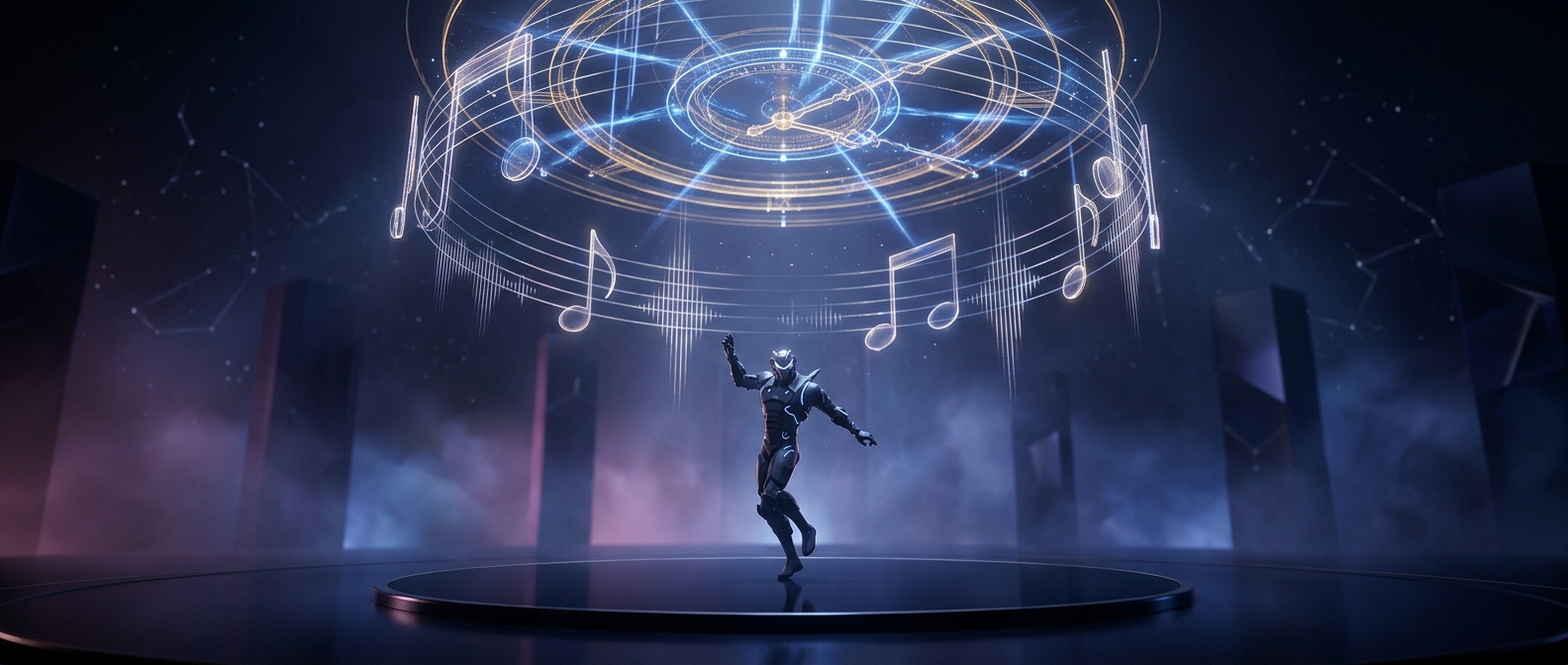
At 120 beats per minute, a beat arrives every half-second. That regular pulse gives an emote’s movements a dependable musical grid: a step, arm swing, or turn can land on a beat instead of drifting across the rhythm.
This matters because animation and music are separate streams. If they run at different tempos, even movements that begin together will gradually fall out of sync. Matching the dance timing to a 120-BPM pulse lets it line up with background music built around that same pace.
A shared tempo makes the timing portable
A tempo is the speed of a musical beat, not a particular melody. So setting dances to a common pace makes their timing easier to pair with compatible tracks without designing each emote around one specific song. The music can change while the dance keeps its underlying rhythm.
The tradeoff is that this is a common timing standard, not a guarantee that every track will fit. A song with a different pulse may make the same movements feel early, late, or simply less natural. But when the tempos match, the half-second beat gives players a subtle payoff: the dance looks as if it belongs to the music, even when the two were made separately.