Why a Bus Can Belch Smoke When It Pulls Away
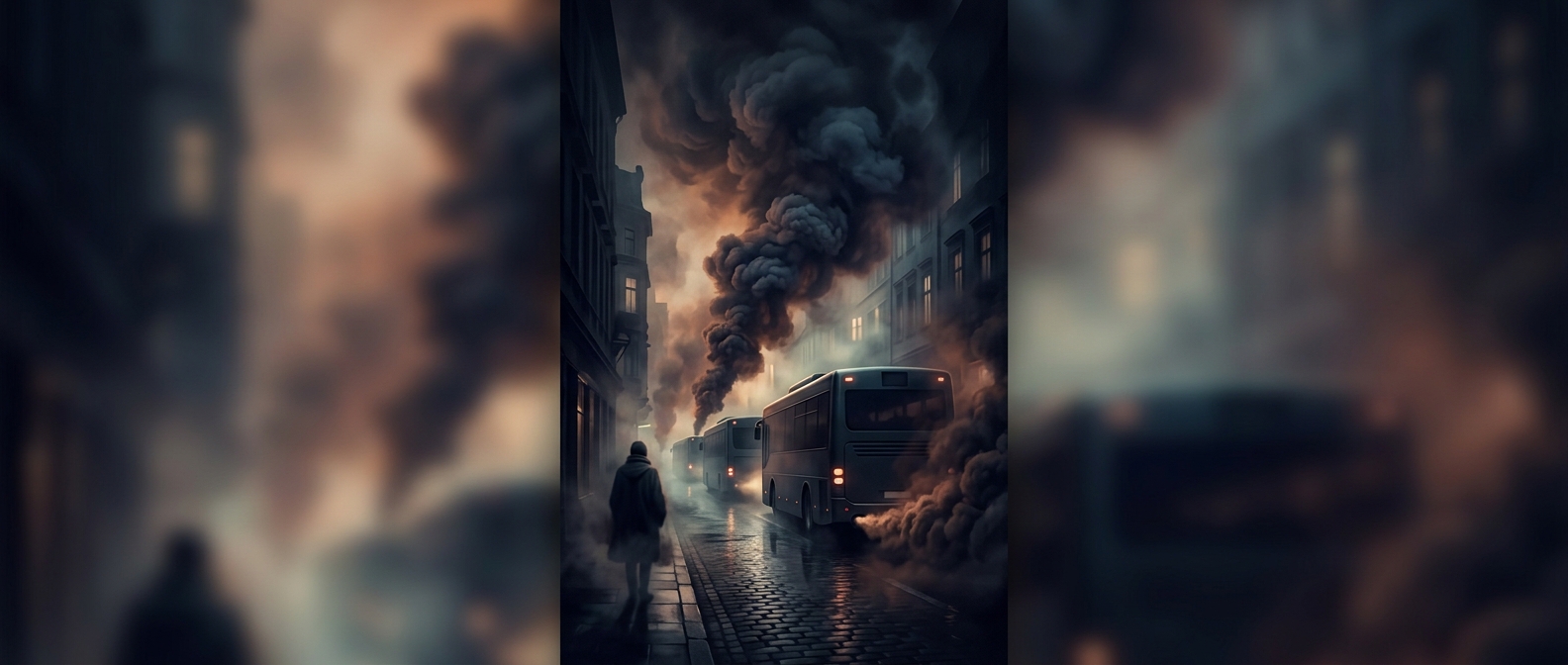
A diesel engine burns fuel by spraying it into hot, compressed air. When the driver presses the accelerator, the engine suddenly needs more power, so it injects more fuel. If that fuel does not mix with enough air quickly enough, some carbon-rich particles form instead of burning completely. The result can be a dark puff of soot—the visible part of a much larger exhaust plume.
That does not mean the cloud is simply liquid fuel vapor. Diesel exhaust is a mixture of gases and tiny particles, including soot; its smell comes from a range of combustion products. Older engines, a heavy load, poor maintenance, or a fault in the fuel or air system can make visible smoke worse. Modern exhaust controls reduce emissions, but they do not make every bus emission-free.
Why the Curbside Moment Matters
A bus pulling away often does so beside a sidewalk, bus stop, or crosswalk, where people are close to the tailpipe. Exhaust can linger briefly in still air or drift toward a waiting crowd, making the burst noticeable even though the bus is moving on. Fine particles are small enough to be inhaled deep into the lungs, so repeated exposure near busy roads is a public-health concern, especially for people who spend long stretches there.
The practical difference is not just whether a bus looks smoky. Cleaner engines and well-maintained exhaust systems reduce what comes out, while moving a waiting area away from the tailpipe can reduce what passengers breathe. A short burst at the curb is a reminder that a vehicle’s pollution is most immediate to the people standing right behind it.