How the magnetotail stores energy
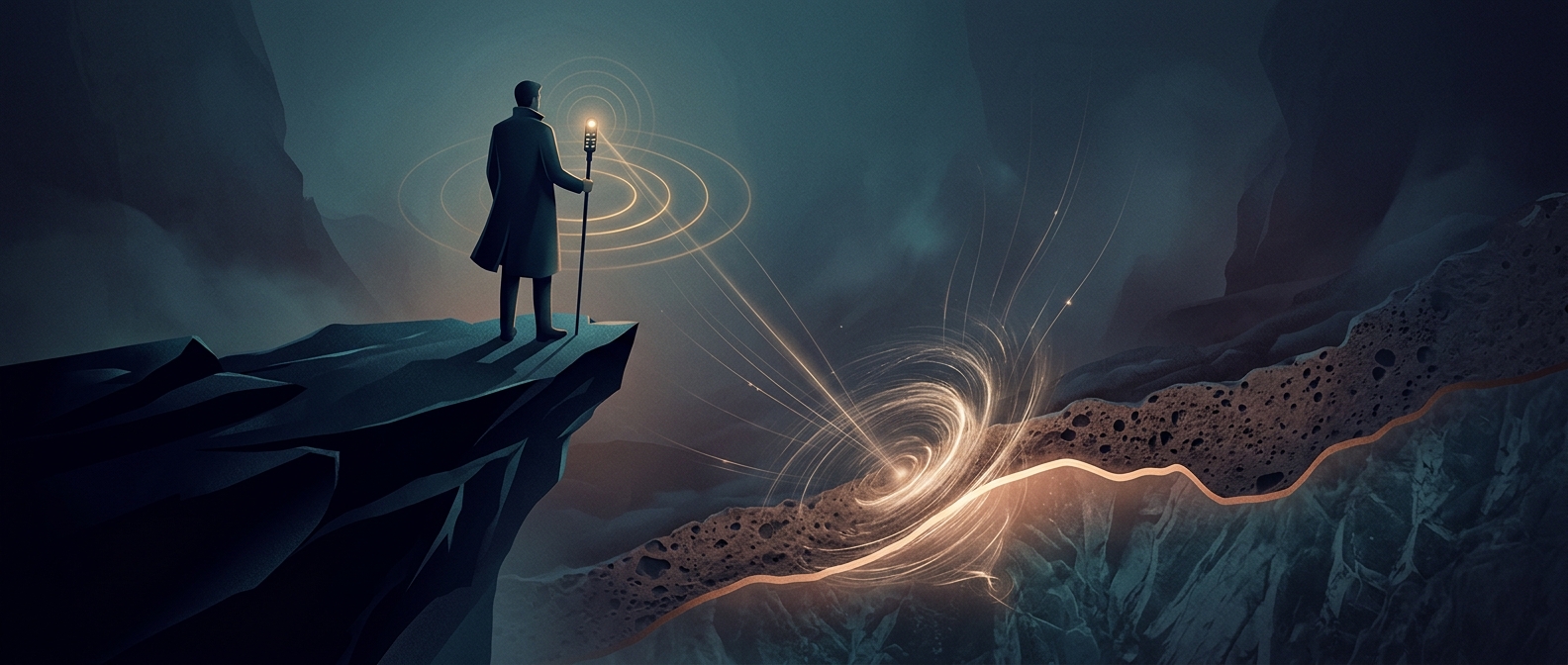
The Sun constantly sends a stream of charged particles called the solar wind past Earth. Our planet’s magnetic field deflects much of that flow, but on the side facing away from the Sun, the field is dragged into a long, narrow magnetotail. Under the solar wind’s pressure, magnetic field lines in the tail can stretch and store energy, much as a pulled elastic band stores tension.
Reconnection releases the stored energy
When oppositely directed magnetic fields in the tail meet, they can rearrange and join in a process called magnetic reconnection. The field is not a solid object that snaps; rather, its structure changes, converting stored magnetic energy into fast-moving particles and heat. Some of those particles are guided toward Earth along magnetic field lines.
The THEMIS mission—five spacecraft arranged to study the space around Earth—tracked changes in the magnetotail and linked these reconnection events to substorms, the episodes that produce sudden, intense auroral brightening. Its measurements helped show how activity far out in space can rapidly alter conditions nearer Earth.
From space event to visible aurora
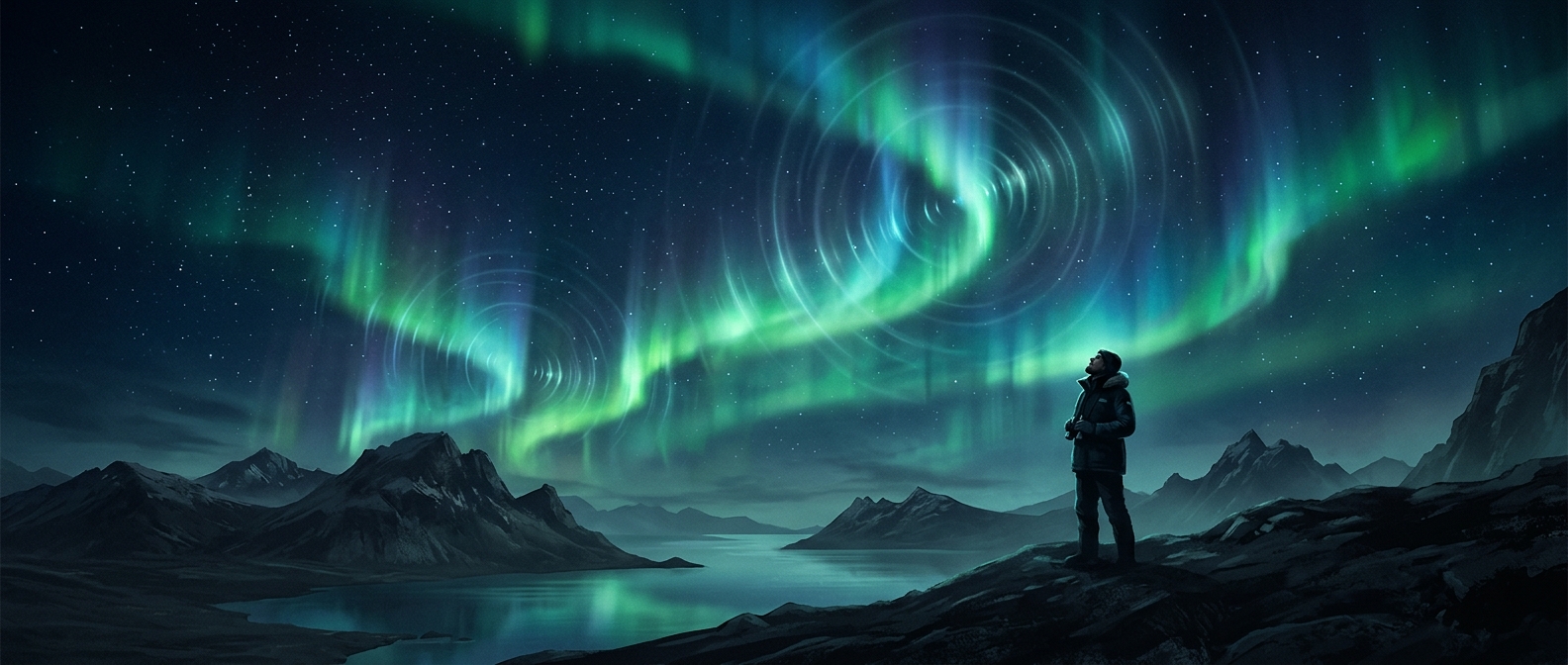
As energized electrons stream into the upper atmosphere, they collide with oxygen and nitrogen. These collisions excite the atoms and molecules, which then release light as they return to lower-energy states. The aurora is therefore not the magnetic field itself glowing: it is atmospheric light produced by particles accelerated during the space-weather event.
That chain connects a distant change in Earth’s magnetic environment to a sudden flare in the sky. The brightening can appear dramatic to an observer, but it is the final, visible step in a process that began in the dark magnetotail.