A journey with no route home
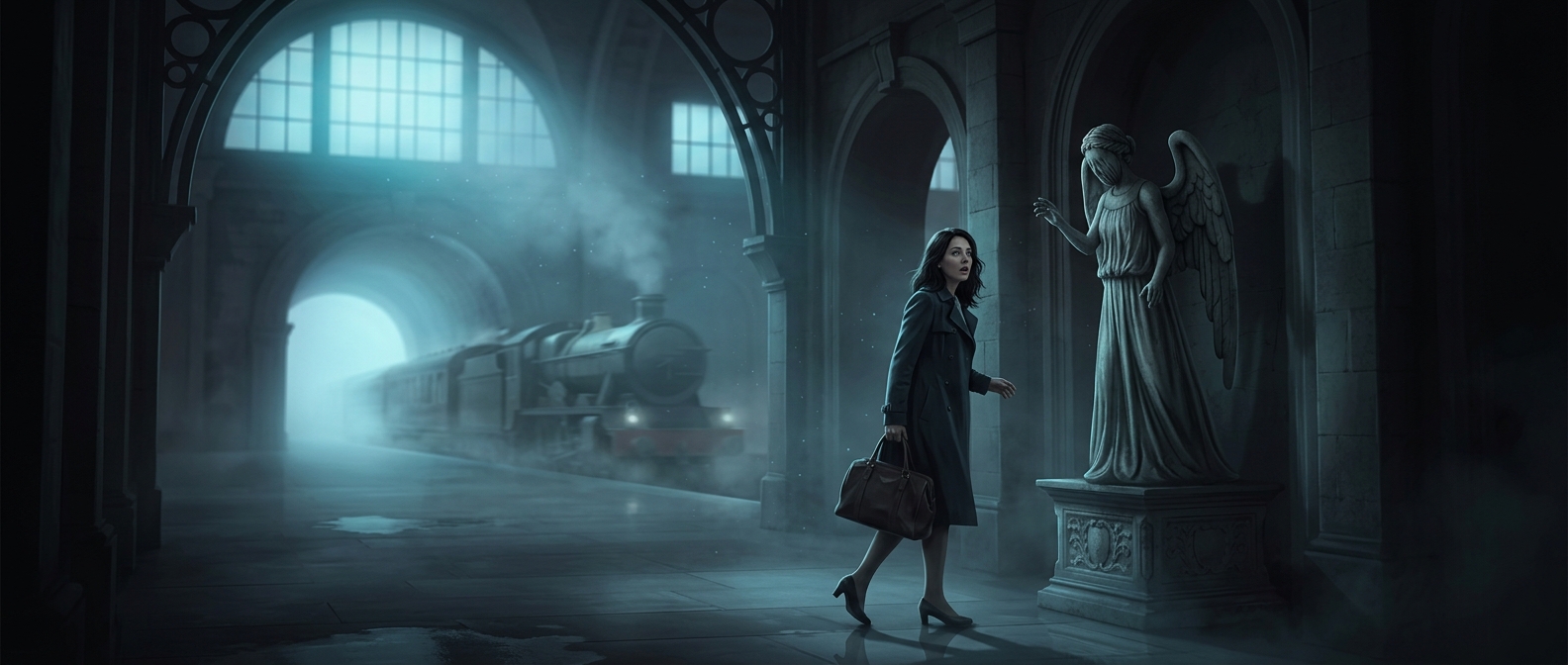
The Weeping Angels’ attack works less like a chase than a forced change of destination. Their victim is removed from the present and deposited in an earlier time, still alive but separated from everyone and everything they knew. The displacement is the weapon: the Angel can remain in the present while its target is left to live out a life that cannot rejoin the original one.
In Doctor Who, the Angels draw energy from the time their victims would otherwise have spent in the present. That makes the attack a kind of predatory fare: the victim pays in years, while the Angel gains the energy to survive. It also explains why the danger is not simply being struck or killed on the spot. A person may have decades ahead—but those years now unfold somewhere else.
Why the statue has to be watched
The Angels’ stillness creates the trap’s second part. While someone keeps looking, the statue cannot advance; the moment attention breaks, it can cross the distance. That rule turns an ordinary human reflex—blinking—into a transport hazard. Watching one Angel is not enough if another is nearby, so people must keep sight of every statue at once, often under pressure and in poor light.
The result is a particularly cruel kind of one-way travel. There is no vehicle to catch, no route to retrace, and no guarantee that anyone in the destination era can help. The victim’s home may still exist in the present, but for them it has become unreachable.