How two colored images create depth
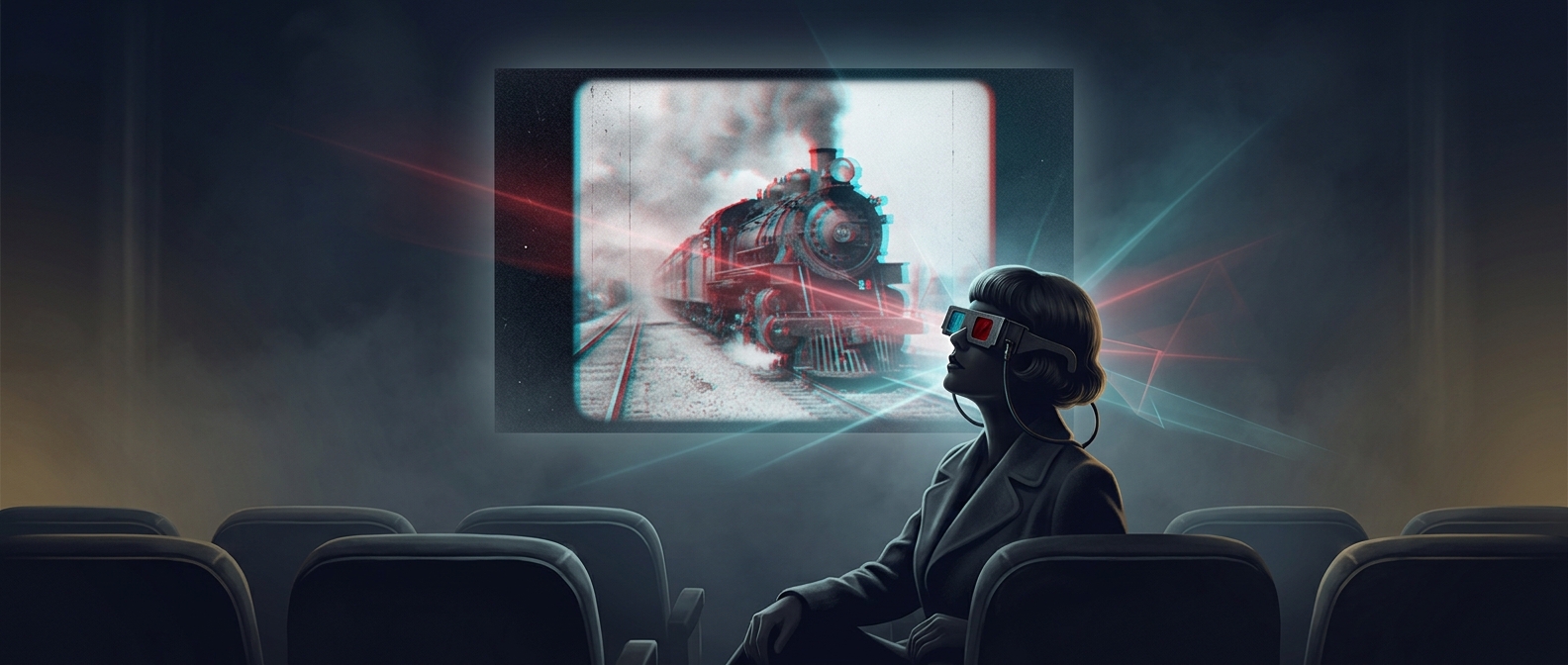
The trick behind early 3D cinema was to give each eye a slightly different view of the same scene. Human eyes are set apart, so each sees objects from a subtly different angle; the brain combines those views and reads the difference as depth. A 3D film imitates that arrangement by presenting two versions of each image, offset to match the viewpoints of the eyes.
In an anaglyph system, those views are printed in different colors—here, red and green. Glasses with matching colored filters let each eye see mainly the image intended for it. The brain then fuses the two pictures into one scene that seems to extend beyond the flat screen.
The tradeoff built into the glasses
The method was comparatively simple to present, but it came with a visible cost: color. Because the filters separate the images by color, they also distort the colors viewers see. The effect depends on the audience wearing the glasses correctly, too; without them, the two offset images can look doubled or blurred.
That compromise helps explain why 3D cinema has repeatedly returned in different forms rather than settling on one permanent solution. The basic goal stays the same—deliver a separate view to each eye—but filmmakers and projection systems have used different ways to keep those views apart, each with its own practical limits.
An old idea with a lasting problem to solve
The 1922 release shows that 3D film was not a digital-era invention. Its central challenge was already clear in the cinema’s early years: how to make a flat image feel spatial while keeping the experience comfortable and the picture convincing. The colored glasses were a clever workaround, but they also made the technology’s compromise part of the moviegoing experience.