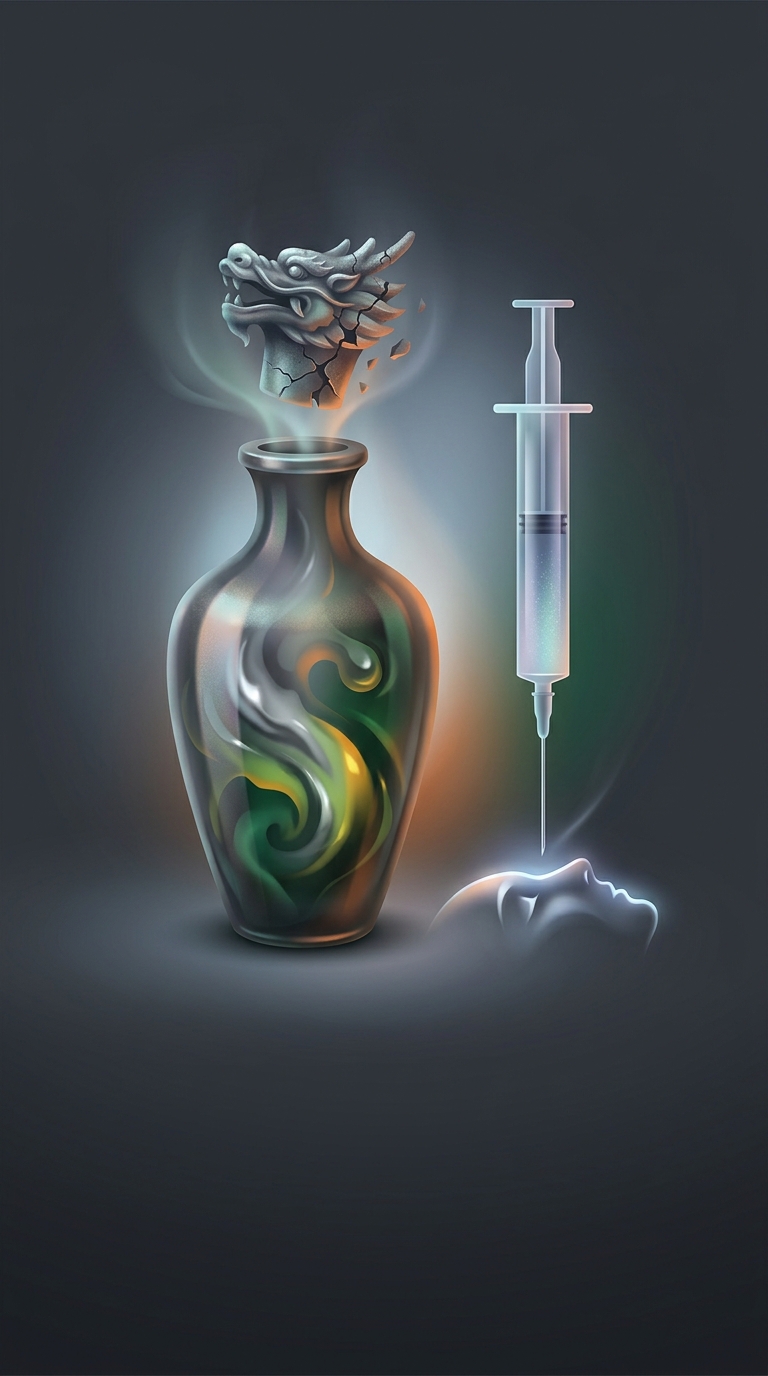
Why alchemists thought a potion could outlast the body
Tang-era seekers of immortality practiced what is often called external alchemy: they heated and combined minerals in hopes of making a substance that could transform the human body. The reasoning was not simply that a rare ingredient might be medicinal. If metals and minerals could survive fire and resist decay, alchemists believed their enduring qualities might be transferred to a person who consumed a preparation made from them.
This made the furnace a place of both experimentation and danger. Recipes could involve mercury, arsenic-bearing minerals, sulfur, and other substances processed through heating and chemical reactions. Their appearance or behavior could change in the furnace, but that transformation did not make them safe to swallow. Some mercury and arsenic compounds are highly poisonous; repeated doses can damage organs and the nervous system.
The emperor’s search carried the risk to the throne
Imperial interest gave the quest unusual stakes. A ruler who hoped to extend his life could commission alchemists, receive their preparations, and consume them in pursuit of a promise that ordinary medicine could not fulfill. Yet the same authority that made the search prestigious also put the ruler in direct contact with its most hazardous products. Historical accounts associate some Tang emperors’ illnesses or deaths with elixirs, though the circumstances of individual deaths are not always certain.
The danger was difficult to recognize by observation alone. A potion might produce no immediate, unmistakable poisoning, while harm accumulated with repeated exposure. And because alchemists interpreted mineral endurance as a sign of life-giving power, a substance’s resistance to decay could look like evidence in its favor rather than a warning about its toxicity.
That is the central tragedy of the search: the ingredients seemed to embody permanence, but the body had no way to safely absorb that promise. The emperor seeking an immortal life could instead be harmed by the very preparation meant to preserve it.