A word has to become a visual clue
When you draw a word for someone else to guess, you are doing more than making a picture. You are choosing which parts of the idea another person is most likely to recognize. A sketch of a “bicycle,” for example, may need only two circles and a frame: those features distinguish it from many other objects, even if the drawing is rough.
This is a kind of selective communication. You cannot include every detail, so you decide what to leave out and what to emphasize. The best clue is not necessarily the most accurate image; it is the one that narrows the other person’s guesses.
The viewer supplies the rest
A drawing is ambiguous on its own. The person guessing combines its shapes with familiar visual conventions and possible answers. Two circles might suggest wheels; a small set of lines could stand for motion, a handle, or a face. If the intended word comes to mind, the viewer often fills in details the artist never drew.
That means success depends on matching the other person’s expectations. A symbol that feels obvious to one person may be unfamiliar to someone else. Choosing a common feature—or adding a second clue—can make the intended interpretation easier to reach.
Feedback reveals the gap
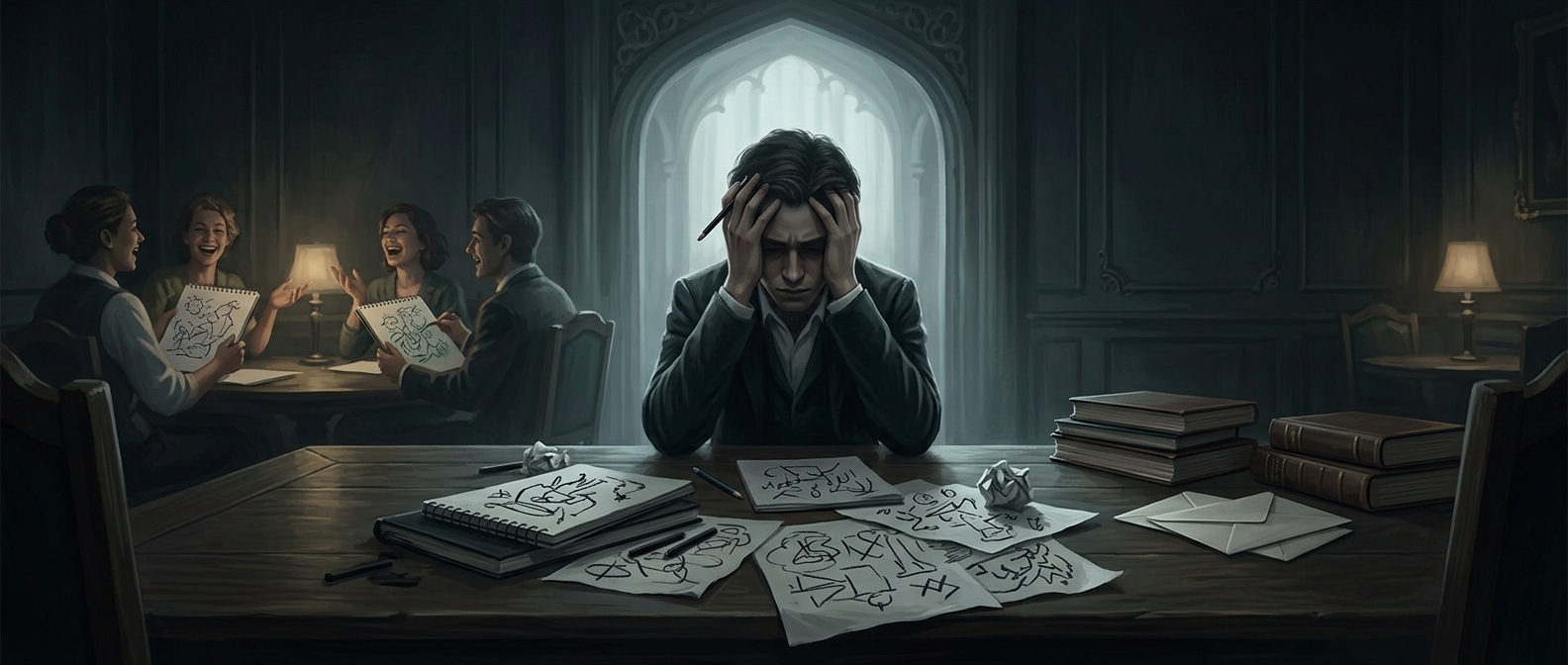
A guess shows whether the visual clues led the viewer toward the same idea the artist had in mind. A wrong answer can point to a missing distinction: perhaps the drawing suggests a related object, or the key feature is too small to notice. The next attempt can be adjusted accordingly.
That is why drawing games can reveal habits of communication: what someone notices, which details they treat as essential, and how they respond when a message is misunderstood. They offer a small, playful test of how an idea travels between people—not a measure of intelligence overall.