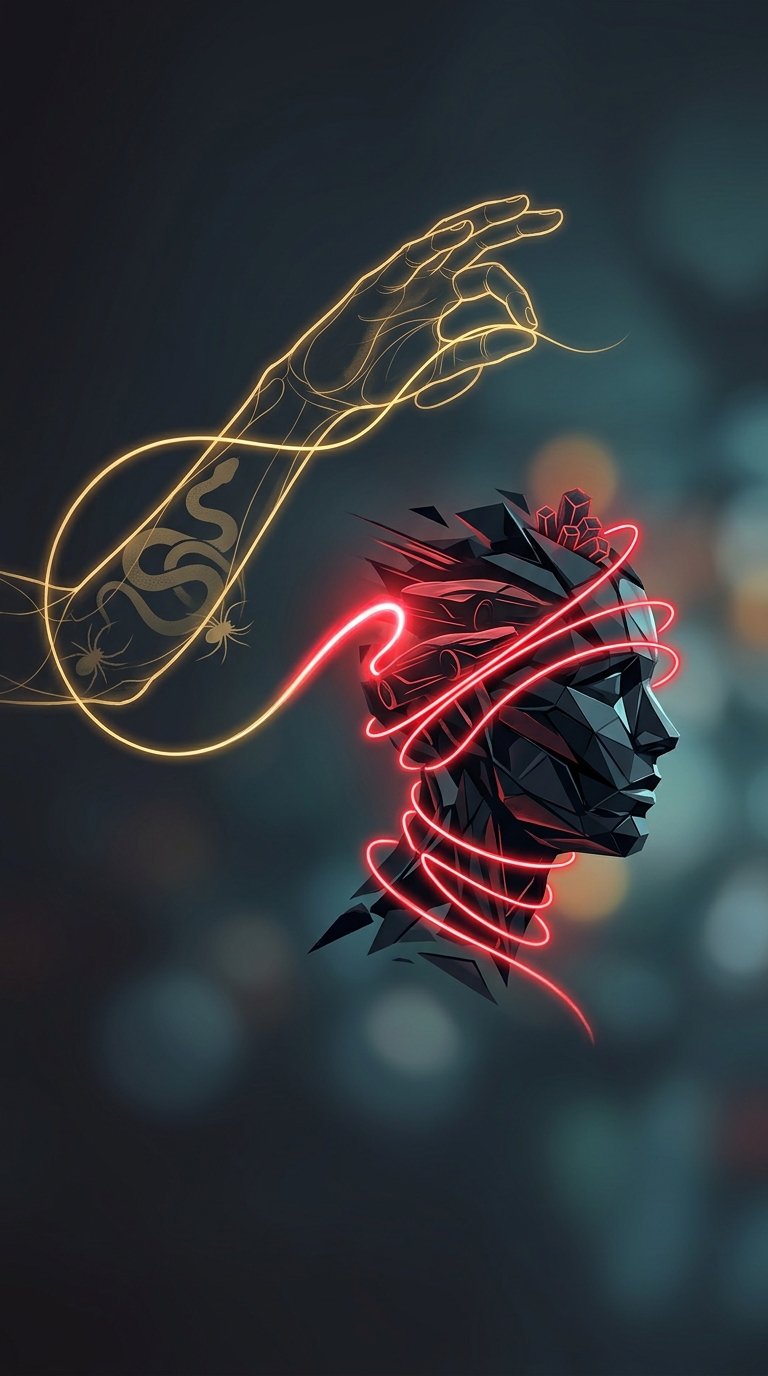
The brain notices some dangers before we can explain them
A snake-shaped object can grab attention in a fraction of a glance. That does not mean every person is born afraid of snakes; it means human perception is especially ready to detect cues that, across much of our evolutionary history, could signal immediate danger. Snakes and spiders are visually distinctive, and missing a nearby threat could have had a sharp cost.
This readiness is sometimes called prepared learning: the brain can more readily connect certain cues with danger than with neutral events. A person may still need experience to develop a strong fear, and many snakes and spiders pose no danger at all. The point is that these cues can get a head start in attention and learning.
Modern hazards arrive in a different format
A fast car is dangerous, but its risk is harder to read in a glance. It depends on speed, distance, road conditions, and decisions made by drivers and others. The danger is also a product of a modern environment, not a recurring feature of the landscape over human evolutionary time. Our threat-detection systems were not designed with traffic in mind.
Junk food presents a different mismatch. Sweet, fatty, and salty foods can strongly engage appetite because energy-rich food was valuable when calories were harder to obtain. Today, the same appeal is available in abundance. The brain responds to the immediate taste and reward; the health costs of frequent overeating accumulate gradually and are less vivid in the moment.
Immediate signals beat distant consequences
Fear is not a reliable ranking of real-world danger. It tends to rise with cues that are sudden, vivid, and close, while risks that are statistical, delayed, or shaped by repeated choices are easier to underestimate. People can fear spiders and still take sensible precautions around traffic; they can also enjoy appealing food without being unaware of its effects.
The mismatch is the memorable part: our instincts are tuned to notice certain ancient, immediate threats, while many modern risks unfold slowly or depend on context.