Why a Book of Mystical Knowledge Can Become a Burden
A reference work is built to gather information in one place, not necessarily to be easy to carry. Esoteric traditions—systems of spiritual or hidden knowledge—often involve many concepts, practices, symbols, and interpretations. When editors or compilers collect that material into a single volume, the result can be less like a pocket guide and more like a dense archive.
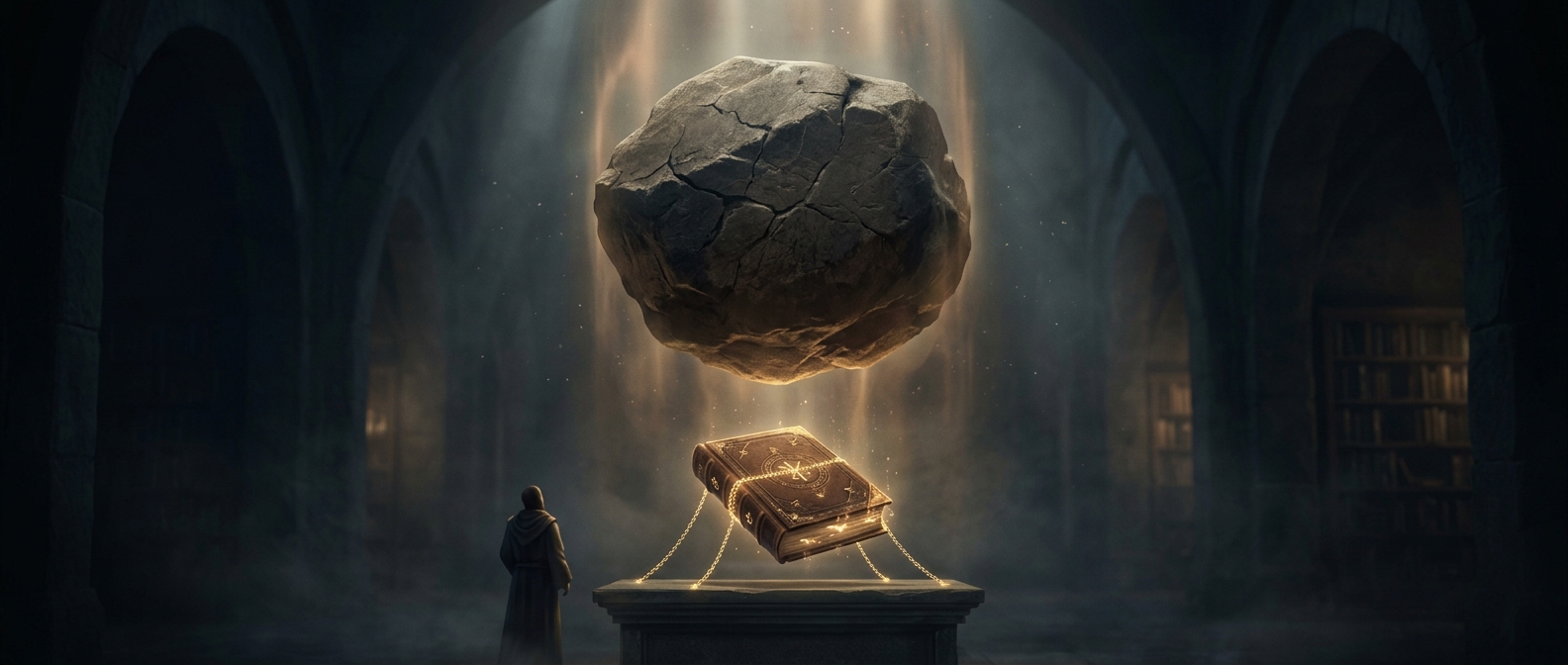
The weight comes from ordinary physical causes: many pages, thick paper, and a binding sturdy enough to hold them together. A large book also puts leverage on its shelf: the farther its weight extends from the shelf’s support, the more strain it can create. That is why even a solid bookshelf may sag or become unstable under an unusually heavy volume.
The Difference Between Old Knowledge and an Old Object
A text may preserve ideas associated with ancient traditions without the particular copy being ancient. The surviving object could be a later edition or compilation, and its size reflects how the material was assembled and printed as much as the age of the ideas. Keeping that distinction clear helps explain the surprising contrast: knowledge described as mysterious can still have a very practical footprint.
For a reader, the consequence is simple: a massive reference book is often better treated like a piece of furniture than a book to move casually. Its contents may invite study, but its weight can make the shelf beneath it part of the story.