The Blank Space Becomes the Threat
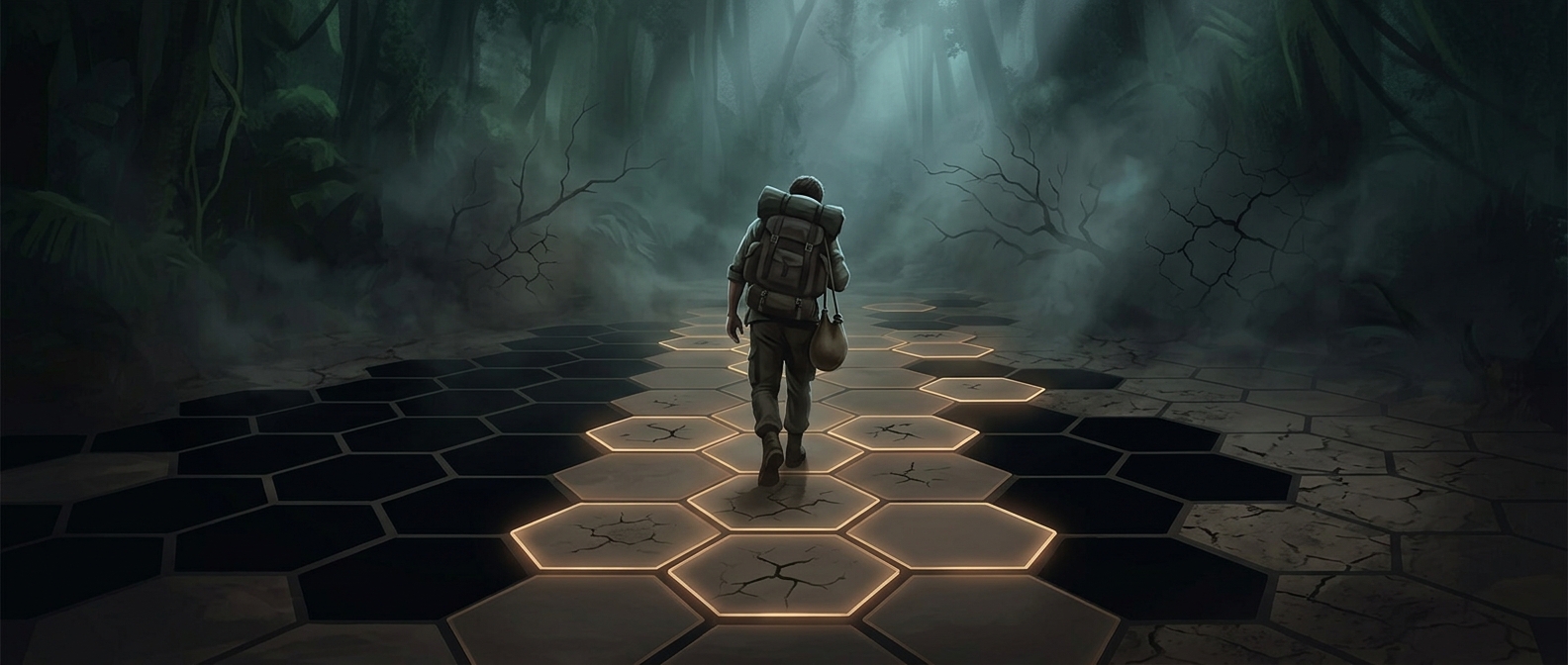
A map with empty hexagons does more than hide what lies ahead: it turns travel into a series of decisions. Each move commits the party to a patch of jungle whose hazards and landmarks are not yet known. The players may know how far a hex spans, but distance alone cannot tell them whether the route is passable, whether they can find water, or whether they are still heading the right way.
That uncertainty makes navigation a source of pressure. A successful roll can keep the expedition on course; a mistake can cost time or send the group somewhere unintended. In dense jungle, those outcomes matter because the party must keep moving while managing necessities such as clean water and insect repellent. The map’s blankness therefore has practical consequences: the group cannot plan around terrain it has not discovered.
Why a Wrong Turn Can Feel Worse Than a Monster
A monster creates a recognizable problem: the characters can try to fight, flee, or negotiate. A wrong turn is harder to confront. It may leave the party unsure of its position while supplies continue to matter and the next destination remains out of reach. The danger accumulates through choices and setbacks rather than arriving as one dramatic encounter.
For the game master, the hex grid gives this uncertainty a structure. Exploration can unfold one area at a time, with navigation and preparation shaping what the players learn and how safely they travel. For the players, every unmarked hex becomes a wager: press onward, spend resources, or risk losing the route. That is how a simple blank map can make the jungle feel frightening before anything attacks.