Why the Camera Needed a Helping Hand
Early photographic portraits could require a sitter to remain still for much longer than a modern snapshot. A baby, of course, could not follow instructions to hold a pose. Even a small movement during the exposure—the period when light reached the camera’s image-making surface—could blur the child.
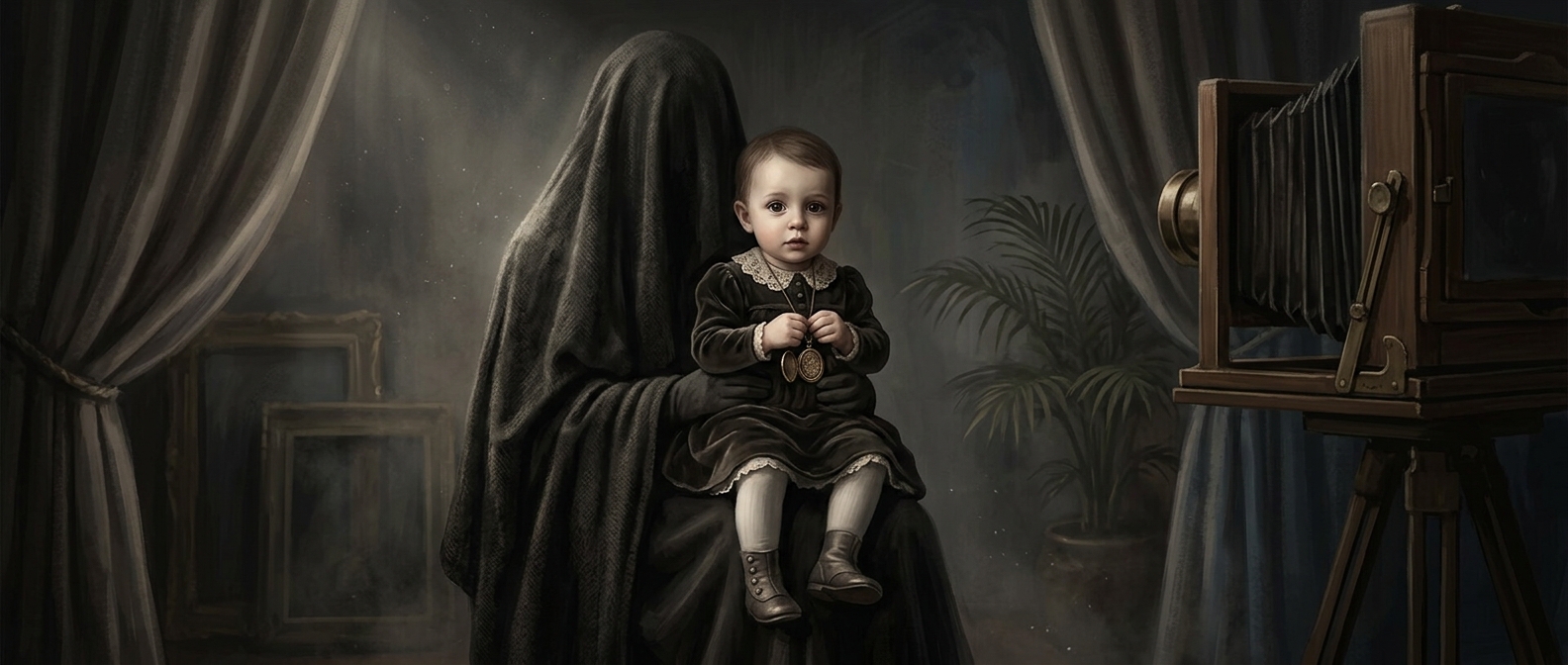
A mother solved the practical problem by staying close enough to steady the baby. But the portrait was meant to show the child, not the adult holding them. Studios therefore used drapes, chairs, or other furniture to conceal the mother while she supported the infant.
The Person the Portrait Tried to Hide
Concealment did not always work completely. A fold of fabric might cover the mother’s face and body while leaving an arm or hand visible; furniture could hide most of her but not erase her outline. In some portraits, the covered figure looks like a shadow or ghost beside the child.
That strange appearance is not necessarily evidence of a supernatural belief or a deliberate trick. It is the visible trace of a very ordinary studio arrangement: the baby needed a steadying adult, and the conventions of portraiture pushed that adult out of view.
A Record of the Work Behind the Image
The hidden mother reveals a tension built into these photographs. The camera’s limitations made a caregiver useful, while the portrait’s composition made her presence seem like something to disguise. The result preserved both the polished image the family wanted and, unintentionally, the effort required to make it.
Look closely at the furniture and drapery in these portraits, and they stop being mere decoration. They become part of the equipment—and the covered figure becomes the clearest sign that someone was holding the baby still.