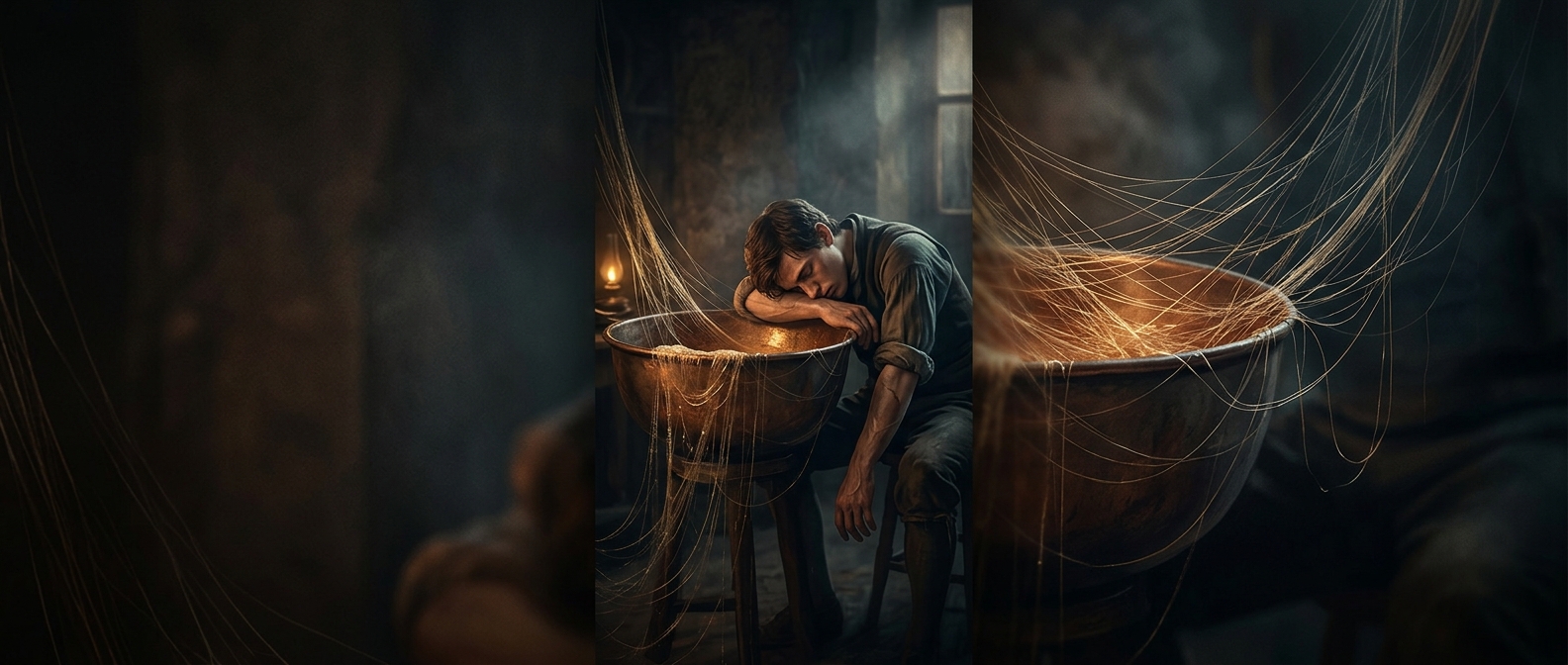
Why Hand-Spun Sugar Took So Much Work
Hot sugar syrup changes quickly as it cools. While warm, it can flow; as it loses heat, it thickens and then hardens into glassy strands. To make spun sugar by hand, a cook had to catch the syrup at just the right stage and flick or draw it into very fine threads. The strands cooled almost as soon as they left the syrup, so the motion had to be repeated before the mixture became too stiff to work.
That narrow window made the task demanding. Syrup that was too hot could run rather than form threads; syrup that had cooled too much would resist being drawn out. The cook was managing heat, timing, and a repeated hand movement at once, often working near a hot pot and sticky sugar. A single successful strand was not enough: the threads had to accumulate into a light-looking mass.
Airiness Built One Strand at a Time
The apparent weightlessness came from the structure, not from sugar becoming lighter. Thin threads spread through a large space and trapped air between them, creating volume with relatively little solid material. But that airy form had to be assembled manually, strand after strand.
Machines changed the scale of the task by making the repeated spinning motion continuous. Before that, the finished sugar’s delicate appearance concealed a slow, physical process: a cook had to keep producing fragile threads while the syrup remained workable.