Turning an invisible struggle into a creature
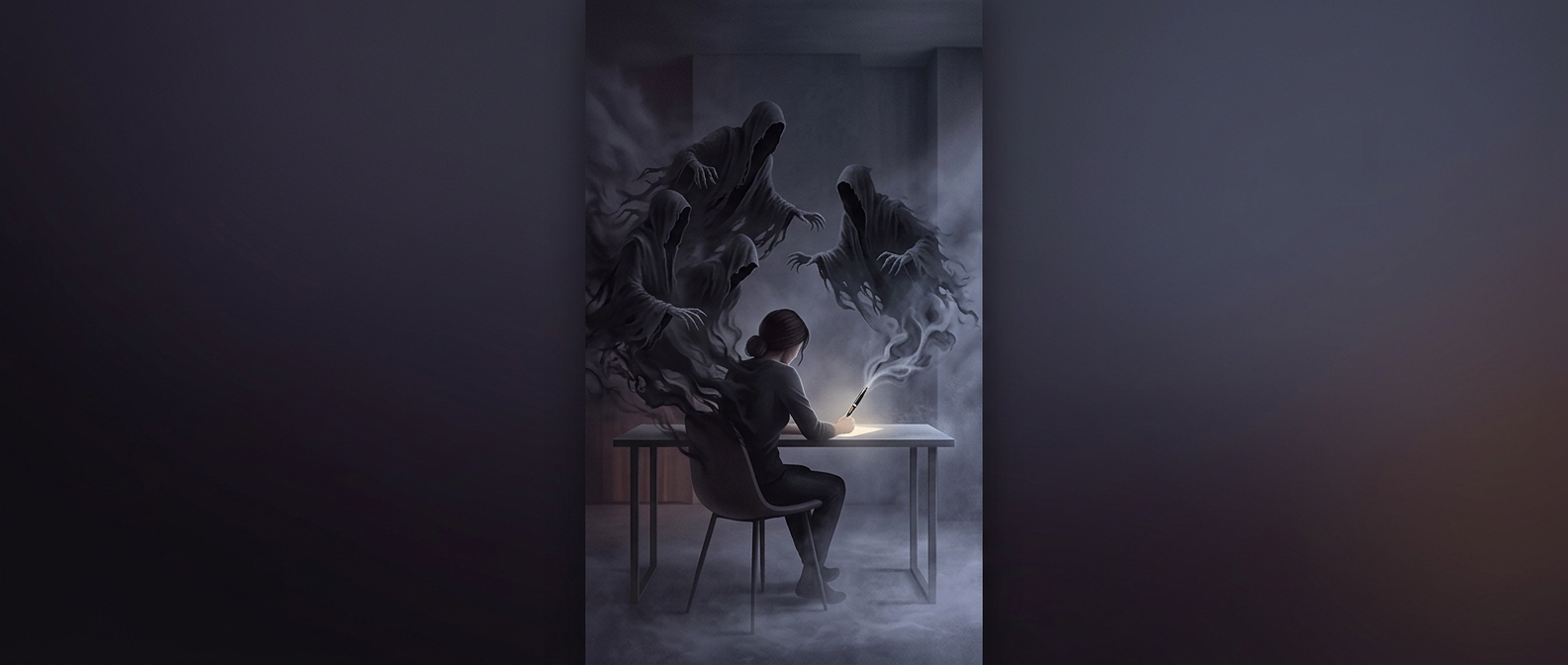
J.K. Rowling has described the Dementors as drawing on her experience of depression. The idea gave the story a way to make an internal state physically present: a Dementor brings cold, drains happiness, and leaves people overwhelmed by despair. Instead of merely telling readers that a character feels hopeless, the narrative lets that hopelessness enter the room and affect everyone nearby.
That choice also captures a distinction between depression and ordinary sadness. Sadness often has a clear cause and can lift when circumstances change; depression can feel like a pervasive loss of pleasure and hope. The creatures’ power is therefore not just to frighten people, but to make even their warmest memories seem distant.
Why the Patronus matters
The counter to a Dementor is a Patronus, produced by focusing on a powerful happy memory. In the story, that turns memory into more than nostalgia: it becomes an active defense against a force that makes joy feel unreachable. The spell gives Harry a concrete task when he is under attack—hold on to something sustaining strongly enough to act on it.
The metaphor is not a clinical account of depression, and a happy thought is not a real-world cure. Its narrative strength is more specific: it makes emotional suffering visible without making it a personal failing. A Dementor can descend on a whole group, but resisting it depends on a person’s own effort to reach for what the creature is trying to obscure.