Why a carmaker makes sausage
Volkswagen’s currywurst began as a practical answer to a factory problem: thousands of employees needed filling, affordable meals near the places where they worked. The company’s kitchens supplied food for its canteens, and the sausage became a durable favorite. That made it more than a bit of corporate whimsy: it was a product built into the everyday life of Volkswagen’s workforce.
From canteen staple to catalog item
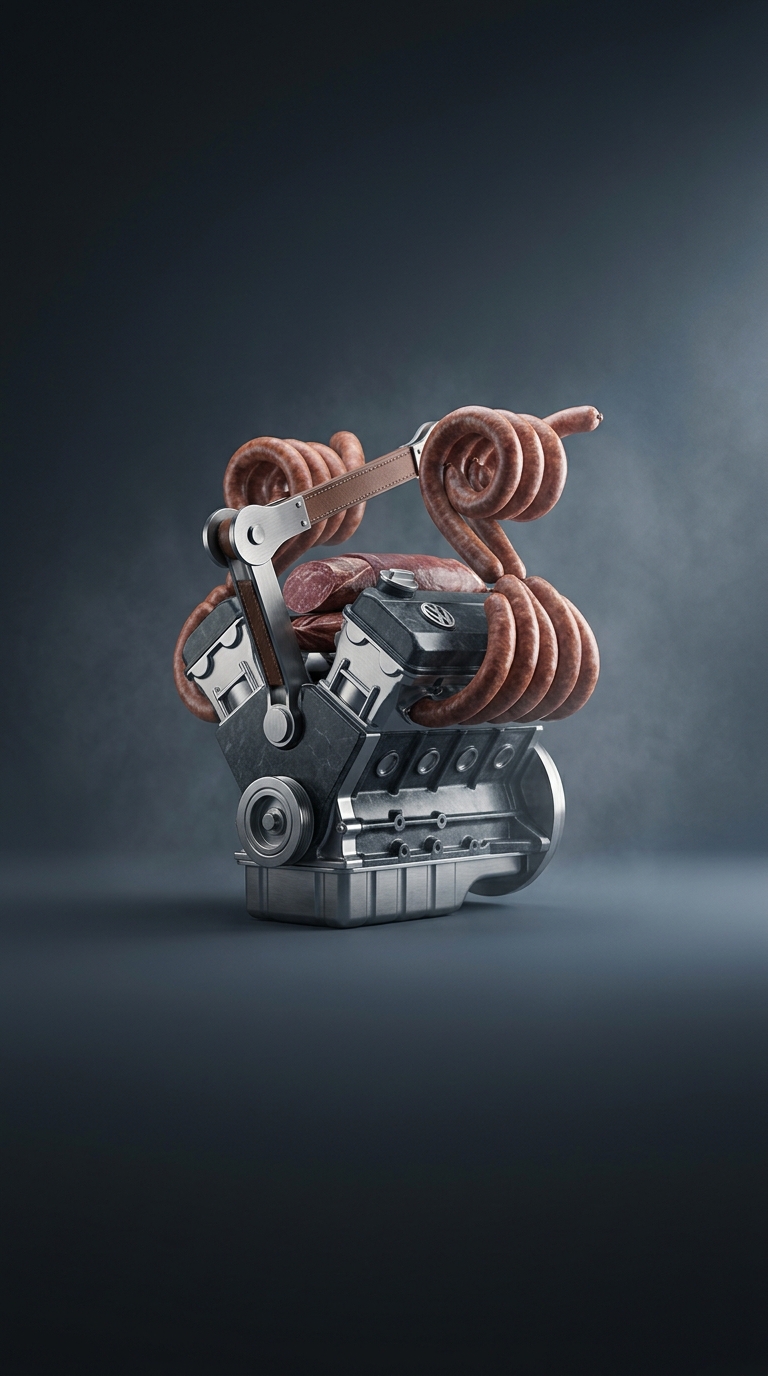
Volkswagen makes the sausage for its food-service operations and sells it through its own channels. It has even been assigned a Volkswagen parts-catalog number. That number does not make the currywurst a component for a vehicle; it reflects the company’s unusually broad product catalog, which can include items made for its internal operations as well as automotive parts.
The sausage is prepared as a currywurst: a cooked sausage served with a tomato-based sauce seasoned with curry powder, often accompanied by mustard. Its appeal is easy to understand in a factory setting: it is quick to serve, substantial, and familiar. Once employees began buying it beyond the canteen, Volkswagen had a food product with a life of its own.
A different kind of Volkswagen bestseller
The currywurst is widely described as outselling Volkswagen cars, though the comparison is between sausages and vehicles—different products measured in different units. The memorable point is not that lunch has overtaken automotive engineering. It is that a company best known for making cars also maintains a successful food operation rooted in the needs of its workers.
A Volkswagen parts number usually suggests something destined for a vehicle. In this case, it points to a sausage—evidence that the company’s industrial world includes the canteen as well as the assembly line.