Why a TV kitchen might need planted diners
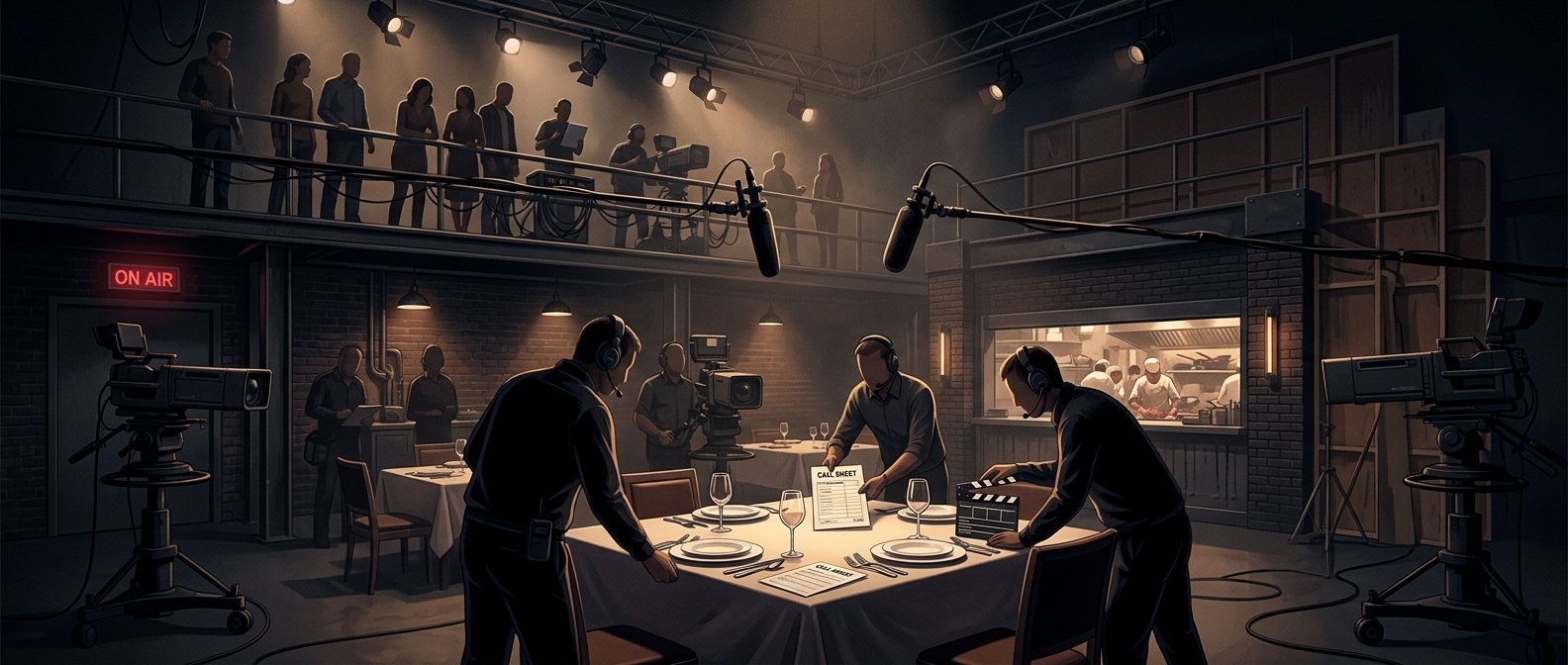
A restaurant service depends on more than the people cooking: tables must be occupied, food has to reach guests, and the room needs to feel alive. On a competition show, that ordinary rhythm also has to fit a production schedule. If some diners are paid extras, they can help ensure seats are filled and the service has people in the room to witness the pressure.
A real meal, with a television job
An extra is hired to appear on camera, not necessarily to deliver a scripted performance. A diner might genuinely react to slow service, a mistake, or a chef’s outburst while also helping create the crowded restaurant atmosphere the scene needs. That differs from an ordinary customer, who arrives for a meal and has no production role.
The distinction matters because the show combines a working dinner service with a filmed competition. A full dining room makes delays and kitchen conflict visible beyond the contestants; planned attendance can make that setting more reliable than depending entirely on walk-in customers. A paid seat can help stage the conditions around the competition without proving that every reaction—or the cooking challenge itself—is staged.